Private transport across Saudi Arabia
support@saudicabco.comTravel and partnership desk

eSIM and Connectivity for Coordinating Pickups in Saudi Arabia

Reviewed travel guidance. This article is general planning guidance for visitors arranging connectivity ahead of travel to Saudi Arabia. Always check current pricing and coverage with your chosen provider before you rely on it for time-sensitive coordination such as an airport pickup.

Coordinating a pickup, whether an airport transfer, a hotel collection, or a driver meeting you between venues, depends on being reachable the moment you land. For visitors to Saudi Arabia, arriving with a working data connection already active, rather than searching for a local SIM after a long flight, makes that first hour noticeably less stressful. This guide covers how eSIM and other connectivity options work for Saudi travel, and how to use them specifically to keep pickups running smoothly.

Why Connectivity Matters Most in the First Hour

The moment you land is exactly when you need reliable data the most and exactly when you are least likely to have it, unless you have planned ahead. You need to message your driver or transport provider, confirm arrival details, find your pickup point, and potentially deal with any last-minute change to gate or terminal. Arriving with no data connection means relying on airport Wi-Fi, which can be inconsistent, or waiting until you find a local SIM vendor, both of which delay exactly the communication that matters most in that window.

An eSIM solves this cleanly because it can be installed and activated before you travel, meaning your phone can connect to a local or regional data plan the moment you land, without needing to find a physical SIM card, queue at a kiosk, or fumble with a SIM ejector tool in an arrivals hall.

How eSIM Works for Saudi Arabia Specifically

Check device compatibility before you buy

Most recent smartphones support eSIM, but it is worth confirming your specific model and carrier allow it before purchasing a plan, since some devices sold with carrier locks in certain markets restrict eSIM use even if the hardware supports it. This is a five-minute check worth doing well before departure, not at the airport.

Choose a plan that covers your actual itinerary

If your trip includes Saudi Arabia alongside other Gulf countries, a regional plan may be more cost-effective than a Saudi-only option, but check the data allowance carefully against how you actually plan to use it, particularly if you intend to use your connection for video calls, navigation, or extended messaging with a transport provider throughout your stay rather than just for the first pickup.

A mobile phone SIM card close up

Using Connectivity to Coordinate a Smooth Pickup

Once you have a working connection, the practical benefit is straightforward: you can message your driver or transport provider the moment you land, share your exact terminal or gate if it has changed, and receive live updates if there is any delay on either side. This matters most for airport transfers, where a driver may be waiting at a specific point and needs to know if your flight has landed early, late, or at a different gate than originally scheduled.

It is equally useful for coordinating pickups between venues during a multi-stop day, such as a business trip with several meetings or an event with more than one venue, where confirming your next pickup location a few minutes in advance keeps the whole day running to schedule rather than leaving a driver guessing where to wait.

Before you rely on any connection for a time-sensitive pickup, send a test message to your provider once you land, confirming you are connected and giving your exact location, rather than assuming the connection is working and waiting to hear back only if something goes wrong.

Backup Options Worth Knowing About

Even with an eSIM active, it is sensible to have a fallback plan for connectivity. Airports in Saudi Arabia generally offer Wi-Fi in arrivals and departure areas, which can serve as a backup if your data connection is briefly unavailable, and it is worth checking current facilities through the relevant airport operator, such as Riyadh Airports Company for King Khalid International Airport, before you travel. A physical local SIM remains a reasonable backup for longer stays or for travellers whose device does not support eSIM, though it does involve the queue and paperwork an eSIM is designed to avoid.

Whichever option you choose, share your transport provider’s contact details with a travel companion or a family member before you fly, so someone else can help coordinate a pickup on your behalf if your own device has any issue on arrival.

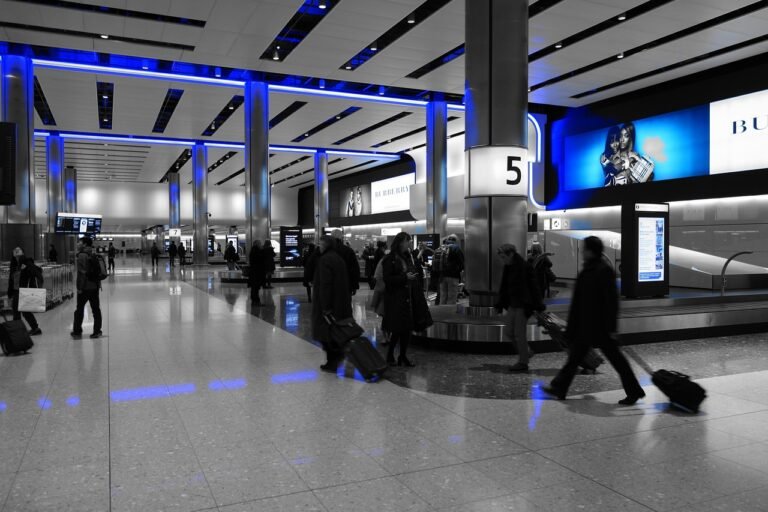
An airport departure lounge where travellers can connect and coordinate pickups

Setting Up Before You Fly, Not After You Land

The single most useful piece of advice in this whole guide is timing: set up and test your eSIM before you leave home, not after you land. Install the profile, confirm it connects to a network, and send a test message while you still have your home connection as a fallback. Trying to troubleshoot an eSIM installation for the first time in an arrivals hall, with a flight’s worth of tiredness and a driver waiting, is a far worse experience than spending ten minutes on it the night before you travel.

This is particularly worth doing if you are relying on connectivity to coordinate a driver meeting you at a specific point, since a short delay in getting connected can mean missing an initial message about a gate change or a shifted pickup location. A small amount of preparation removes that risk entirely.

Frequently asked questions

Q: Should I install my eSIM before I fly or wait until I land? A: Install and test it before you fly, so any issue can be resolved while you still have a working connection, rather than discovering a problem after landing.

Q: Does my phone definitely support eSIM? A: Most recent smartphones do, but check your specific model and confirm your carrier has not locked eSIM functionality before you purchase a plan.

Q: Is a regional Gulf eSIM plan better than a Saudi-only plan? A: It depends on your itinerary. A regional plan can be more cost-effective if you are visiting multiple Gulf countries, but check the data allowance matches how you actually intend to use it.

Q: What should I do if my data connection is not working when I land? A: Use airport Wi-Fi as a backup to send an initial message to your driver or provider, and have their contact details shared with a travel companion as a further fallback.

Q: How does connectivity help with pickups between multiple venues, not just airports? A: A working connection lets you confirm your next pickup location a few minutes ahead of time, which keeps a multi-stop day running smoothly rather than leaving a driver guessing where to meet you.

Related guides

Checked sources


If you would like a driver confirmed and ready to coordinate directly with you on arrival, Saudi Cab Co can arrange your pickup details in advance so you are met without delay. Get in touch before you travel and we will match your booking to exactly what you need.

Business Dress and Meeting Etiquette: What Visiting Professionals Should Know

Reviewed travel guidance. This article is general planning guidance for visitors arranging ground transport in Saudi Arabia. Always check current entry requirements and airline policies before you travel.

Saudi Arabia’s business environment has opened up considerably over the past few years, but visiting professionals still benefit from understanding how dress and meeting etiquette work locally before they arrive. Getting the basics right, from what to wear to how a first meeting typically unfolds, helps you make a good impression and avoid the small missteps that can distract from the business at hand. Norms also vary between industries and between conservative government offices and international corporate campuses, so this guide focuses on sensible defaults that work well in most settings rather than a single rigid rule. It covers the practical points that matter most for delegates, executives and consultants attending meetings, conferences or site visits in Saudi cities.

What to wear to a business meeting

Conservative, formal dress remains the norm in Saudi corporate settings, even as social dress codes have relaxed in tourist and leisure contexts. For men, a suit and tie or a smart shirt with tailored trousers is standard for a first meeting, particularly in government, banking, energy and traditional family-business settings. Lighter business dress, such as a blazer without a tie, is increasingly accepted in tech, media and some multinational offices, but it is safer to dress formally until you have a read on the specific company’s culture.

For women, tailored trousers or a knee-length or longer skirt with a jacket, or a modest dress with sleeves, works well for most meetings. An abaya is not compulsory for foreign businesswomen in the way it once was, but many women, both Saudi and visiting, still choose to wear one over business clothes as a practical and respectful option, especially outside major hotel and conference venues. A headscarf is not generally required for business meetings, though it is worth carrying a light scarf in your bag in case a specific venue, mosque visit or cultural site calls for one.

  • Keep shoulders and knees covered for both men and women in business settings.
  • Avoid clothing with slogans, large logos or anything that could be read as provocative.
  • Pack one formal outfit even for a trip billed as informal, in case a meeting is upgraded or a client invites you somewhere more traditional.
  • Bring a light jacket or shawl for heavily air-conditioned offices and conference centres.
  • Choose closed shoes rather than sandals for office visits, even in the heat.

Government ministries and larger corporate offices in cities such as Riyadh, Jeddah and Dammam often have security screening and visitor registration at the entrance, and some sites will ask for identification before issuing a visitor badge. Smart, professional dress also tends to make this process smoother, since reception staff are used to identifying scheduled visitors partly by how they present themselves. If your itinerary includes a factory, port or industrial site visit alongside office meetings, pack separate practical clothing and closed, sturdy shoes for that leg of the trip rather than trying to make one outfit work for both settings.

Business professionals in formal attire shaking hands in a Saudi office meeting

The working week and meeting schedule

The Saudi working week runs Sunday to Thursday, with Friday and Saturday as the weekend. Visiting professionals should plan flights and meeting schedules around this rather than assuming a Monday to Friday pattern, as arriving on a Thursday evening expecting a Friday meeting will not work in most companies. Business hours typically start later in the morning than in Europe or North America and can run into the early evening, with a natural pause around midday prayer times that most offices build into the day without treating it as an interruption.

Ramadan changes the working day significantly, with shorter office hours and meetings generally avoided close to iftar, the evening meal that breaks the fast. If your visit falls during Ramadan, confirm meeting times directly with your host rather than assuming a standard schedule, and be prepared for a slower overall pace to business during that month.

Greetings, introductions and business cards

A handshake is the standard greeting between men in business settings, often accompanied by direct eye contact and a warm verbal greeting. When meeting a Saudi businesswoman, or when a Saudi man is greeting a foreign businesswoman, it is best to wait and see whether she extends her hand first rather than assuming a handshake is expected. A polite nod or verbal greeting is a safe fallback if you are unsure.

Business cards are exchanged early in a meeting, usually with the right hand or both hands rather than the left. Having a card printed with English on one side and Arabic on the other is a small gesture that is well received, though not essential for a single meeting. Titles matter: use full names and professional titles until invited to move to first names, which often happens quickly once a relationship starts to form.

Seniority is taken seriously in introductions and seating. In a group meeting, greet the most senior person present first, and expect the most senior Saudi counterpart to lead the conversation even if a more junior colleague is your usual day-to-day contact.

How meetings actually unfold

Relationship-building typically comes before the transaction. Expect the early part of a meeting to include general conversation, tea or Arabic coffee, and questions about your journey or your company, rather than moving straight to the agenda. Rushing this stage can come across as impatient. Coffee is often served in small cups and refilled repeatedly; a light shake of the cup when handing it back is the customary way to signal you have had enough.

Meetings can run longer than scheduled and start times can slip, particularly for meetings involving government departments or larger organisations. Build buffer time into your day rather than scheduling back-to-back appointments with no margin, and avoid showing visible frustration if a meeting overruns or a decision-maker is called away partway through. Interruptions, including phone calls and colleagues stepping in and out, are common and not generally considered rude in the way they might be elsewhere.

Decisions are frequently made by the most senior person in the room after the meeting concludes rather than during it, so do not expect a firm commitment on the spot. Following up with a clear written summary after the meeting, sent to your main contact, is a reliable way to keep momentum without appearing pushy.

Arabic coffee and dates served during a formal business meeting in Saudi Arabia

Conversation topics and general conduct

Family, hospitality and general wellbeing are common opening topics and are worth engaging with genuinely rather than treating as small talk to get through. Avoid raising politically sensitive topics, and steer away from criticism of local customs, religion or government even in a light-hearted way. Alcohol is not part of business entertaining in Saudi Arabia, and meals or dinners with clients are usually held in restaurants or hotels without it.

Punctuality on your part is still expected even where your host’s timing is more flexible. Arrive on time, dress appropriately for the whole day rather than just the first meeting, and confirm the exact venue in advance, since large business districts and government complexes can be harder to navigate than they first appear. Before travelling, it is worth checking the latest general guidance on local laws and customs on the gov.uk foreign travel advice page for Saudi Arabia, which is updated regularly and covers practical points beyond etiquette, such as photography restrictions and local regulations that can affect a business trip.

Practical planning around your meetings

Because the working week, prayer breaks and meeting flow all differ from what many visitors are used to, it helps to plan transport with some flexibility built in. A meeting that overruns by thirty minutes should not turn into a missed flight or a late arrival at your next appointment. General visitor planning information, including guidance for those combining business with some sightseeing, is available on visitsaudi.com, the official Saudi Tourism Authority site, and current airport and civil aviation guidance can be checked on gaca.gov.sa before you fly.

If your itinerary includes multiple cities or a mix of meetings and site visits, having transport pre-arranged for each leg removes one variable from a day that already has enough moving parts. A driver who is expecting a flexible schedule and knows the meeting locations in advance is generally more useful on a business trip than trying to arrange transport on the spot between appointments. This matters more than it might sound: a delegate juggling a tight conference schedule, a client dinner and an early flight the next morning has little margin for uncertainty over how a car will be arranged at short notice.

It is also worth thinking through how you will move between a conference venue, a hotel and a client office on the same day, particularly in larger cities where distances between business districts can be greater than they first appear on a map. Confirming pickup points and approximate journey times in advance, rather than assuming a car will simply be available outside a venue, avoids unnecessary stress on a day already built around fixed appointment times.

Frequently asked questions

Q: Do foreign businesswomen need to wear an abaya in meetings? A: It is not compulsory, but modest, conservative clothing with sleeves and a longer hemline is expected, and many women choose to wear an abaya over business clothes as a practical option.

Q: Is it acceptable to shake hands with someone of the opposite gender in a business meeting? A: It is common between men, but with women it is best to wait and see whether the other person extends their hand first, or offer a polite verbal greeting instead.

Q: What is the Saudi working week for business travellers? A: Sunday to Thursday, with Friday and Saturday as the weekend, so meetings should be scheduled accordingly rather than around a Monday to Friday pattern.

Q: Should I bring gifts to a first business meeting? A: A small gift is appreciated but not required for a first meeting. If you do bring one, keep it modest and avoid alcohol or anything overtly personal.

Q: How should I handle Arabic coffee if I do not want a refill? A: A light shake of the small cup as you hand it back is the customary signal that you have had enough.

Q: Does Ramadan affect how business meetings are conducted? A: Yes, office hours are typically shorter and the pace of business slows, so it is best to confirm meeting times directly with your host if your trip falls during Ramadan.


If you would like a fixed-price quote tailored to your itinerary, Saudi Cab Co can arrange the right vehicle for your trip in advance. Get in touch before you travel and we will match your booking to exactly what you need.

Roaming, Data and Staying Connected for Business Travellers on Arrival

Reviewed travel guidance. This article is general planning guidance for visitors arranging ground transport in Saudi Arabia. Always check current entry requirements and airline policies before you travel.

For a business traveller, the minutes after landing are often the busiest of the whole trip. You need to confirm your driver, message a colleague or client, check a hotel booking, and possibly join a call, all before you have cleared the terminal. Getting your connectivity sorted before you fly, rather than scrambling for it after you land, makes that first hour considerably smoother and lets you focus on the meeting ahead rather than your phone signal. This matters more on a business trip than a leisure one, because the cost of a missed message or a driver who cannot reach you is not just inconvenience, it is a delayed meeting, a client left waiting, or a colleague who assumes you have missed a connection.

Why connectivity matters from the moment you land

Ground transport, hotel check-in and meeting logistics in Saudi Arabia increasingly run through apps, WhatsApp messages and shared links rather than phone calls or paper confirmations. If your pre-booked driver needs to reach you, or you need to confirm a pickup point at a large airport, having working data on arrival removes a layer of friction that can otherwise eat into a tight schedule. It also matters for basic practicalities such as checking a hotel’s exact address, converting currency, or reading a confirmation email while you are still walking through arrivals.

For a leisure traveller, a few minutes without signal after landing is rarely more than a minor irritation. For someone travelling for work, the same gap can mean missing a driver’s message about a changed meeting point, arriving at a hotel without the booking reference to hand, or being unreachable at exactly the point a client or colleague is trying to confirm plans. None of this is unique to Saudi Arabia, but it is worth planning for specifically here, since a first-time business visitor is less likely to already know which network, terminal layout or local app conventions apply.

  • Confirming a pre-arranged airport pickup with your driver or transport provider
  • Sharing your live location with a colleague or host meeting you locally
  • Accessing digital hotel bookings, e-visa documents or corporate travel itineraries
  • Joining a call or replying to messages before your first meeting

Roaming with your home SIM

The simplest option for a short trip is to check whether your home network offers a roaming package for Saudi Arabia before you travel. Many UK and international carriers offer add-on bundles that cover a fixed amount of data, calls and texts for a set number of days, and activating one in advance avoids the risk of your phone defaulting to a far more expensive pay-as-you-go roaming rate the moment it connects to a Saudi network. If you are travelling on a corporate plan, it is worth confirming with your company’s travel or IT team what roaming arrangement is already in place, since many corporate contracts include reasonable data allowances for frequent business destinations.

The main drawback of roaming on your home number is cost for heavy data use over a longer trip, and the possibility of patchy coverage in certain locations if your home carrier’s local network partner is not the strongest option in that area. For a single overnight trip or a short two or three day visit, though, roaming is often the least hassle: your number stays the same, your existing apps and two-factor authentication continue to work without any changes, and there is no need to swap SIM cards on arrival.

It is also worth checking, before you leave, exactly what your roaming bundle covers. Some plans include generous data but cap voice calls, or include calls but charge separately for tethering a laptop, which matters if you plan to review documents or dial into a video call from your hotel room rather than just messaging from your phone. A quick check of your provider’s app or website before departure is enough to confirm this, and it is far easier to sort out at home than after you have already landed and are trying to make sense of a local rate card.

Business traveller checking phone for directions after arriving at a Saudi airport

Local SIM cards and eSIMs

If your trip is longer, involves heavy data use, or you would simply rather not pay roaming rates, a local SIM or eSIM is usually the more economical route. Saudi Arabia’s main airports have telecom operator counters in the arrivals area where you can buy a prepaid SIM with a data package, generally requiring your passport for registration. Counters can have queues at busy arrival times, so factor that into your plan if you have a tight connection to a meeting or an onward transfer.

An eSIM is worth considering if your phone supports it, since it lets you set up a Saudi data plan digitally before you fly and activate it the moment you land, without needing to physically swap a card or queue at a counter. This is particularly useful if your itinerary is tight and you want data working the instant you switch your phone on after landing. Whichever option you choose, a local SIM or eSIM will generally give you a far larger data allowance for the same price as a roaming add-on, which matters if you plan to use maps, video calls or cloud-based work tools throughout your stay.

One practical point for business travellers specifically: if you swap to a local SIM, your usual number will not receive calls or texts while it is out of your phone, which can be awkward if a client, colleague or driver is trying to reach you on the number you gave them before you left. An eSIM avoids this entirely, since most modern phones can run a local data plan alongside your home SIM at the same time, meaning your existing number keeps working for calls and texts while your Saudi data plan handles everything else.

Wi-Fi and staying connected for meetings and transport

Most business hotels, conference venues and airports in Saudi Arabia’s major cities offer Wi-Fi, and it is reasonable to expect a reliable connection at any established international hotel or conference centre. That said, Wi-Fi alone is not a substitute for mobile data when you are moving between locations, particularly for confirming a ground transport pickup or sharing your location with a driver while you are still in transit. A working mobile data connection is the more dependable option for anything time-sensitive that happens outside a fixed venue.

This distinction matters most in the exact window this article is about, the period between stepping off the aircraft and getting into your vehicle. Terminal Wi-Fi, where it exists, can be inconsistent in busy arrivals halls, and you are also likely to be walking rather than sitting still, which makes a patchy Wi-Fi signal more frustrating than useful. Treat any airport Wi-Fi as a bonus for checking email at the gate on departure, not as something to rely on for coordinating a pickup on arrival.

Before you travel, it is worth checking the latest general entry and travel guidance for Saudi Arabia on gov.uk’s foreign travel advice pages, which cover practical considerations for visitors alongside the more commonly referenced entry requirements. If you are a US-based traveller, the equivalent advisory is published by the US State Department. Neither source is telecoms-specific, but both are useful starting points for confirming your trip is otherwise in order before you focus on smaller logistics like a SIM card.

Traveller using a smartphone with a ground transport app inside an airport terminal

Building connectivity into your arrival plan

The most reliable approach for a business trip is to treat connectivity as part of your arrival logistics, not an afterthought once you have landed. If you have arranged a pre-booked driver, confirm in advance how they expect to reach you, whether that is a WhatsApp message, a phone call, or a meeting point with a name board, so you know what you need working data for the moment you step off the aircraft. General visitor planning information, including practical notes for first-time visitors, is available through the Saudi Tourism Authority’s official visitsaudi.com, and airport-specific operational information is published by the General Authority of Civil Aviation.

There is no single right answer between roaming and a local SIM, and the right choice depends mostly on how long you are staying and how you expect to use your phone while you are there. A one or two night trip with light data needs is usually simplest handled through your existing roaming plan, keeping your number and messaging apps unchanged throughout, with nothing to set up on arrival and nothing to remember to remove before you fly home. A longer stay, a multi-city itinerary, or a trip where you expect to rely heavily on maps, video calls or file sharing will usually work out cheaper and more comfortable with a local SIM or eSIM, since the data allowance goes considerably further and you are less likely to find yourself watching a data counter partway through a work trip.

Whichever route you choose, a short checklist before you fly removes most of the risk of arriving without a working connection:

  • Activate a roaming bundle or an eSIM before you fly, rather than on arrival, if your schedule is tight
  • Keep your driver’s contact details or booking confirmation saved offline, in case your data connection takes a few minutes to activate
  • Download offline maps of your arrival city as a backup in case of a slow connection in the terminal
  • Confirm with your company whether a corporate roaming plan or preferred provider is already set up for Saudi Arabia
  • Note down your hotel address and driver’s name or vehicle details somewhere you can read offline, in case an app fails to load in the terminal

Either way, the goal is the same: working data before you clear the terminal, so that confirming your ride, checking your hotel address and replying to a colleague are one less thing to think about on a working trip. Building this into your pre-departure routine, alongside packing and checking your travel documents, means connectivity stops being a variable and becomes just another item you have already ticked off.

Frequently asked questions

Q: Do I need to buy a local SIM card if my trip is only overnight? A: For a very short trip, a roaming bundle from your home network is usually simpler than queuing for a local SIM, provided your carrier offers a reasonable rate for Saudi Arabia.

Q: Can I set up an eSIM before I leave home? A: If your phone supports eSIM, you can typically purchase and configure a Saudi data plan digitally before you fly, then activate it as soon as you land, avoiding a counter queue at the airport.

Q: Will I have signal the moment I land, or does it take time to connect? A: Roaming and local SIMs generally connect within a few minutes of switching your phone on, but it is sensible to have your driver’s contact details or pickup instructions saved offline as a backup.

Q: Is airport Wi-Fi enough to confirm my transport, or do I need mobile data? A: Airport Wi-Fi can work for a quick message while you are still in the terminal, but mobile data is more dependable once you are moving through arrivals or outside the building, which is when you are most likely to need to reach your driver.

Q: Where can I buy a local SIM at the airport? A: Saudi Arabia’s main international airports have telecom operator counters in the arrivals area, where prepaid SIMs with data packages are available on presentation of your passport.

Q: Should I rely on my corporate travel policy for connectivity? A: It is worth checking with your company’s travel or IT team before you fly, since many corporate mobile plans already include a roaming allowance or a preferred provider for frequent business destinations.


If you would like a fixed-price quote tailored to your itinerary, Saudi Cab Co can arrange the right vehicle for your trip in advance. Get in touch before you travel and we will match your booking to exactly what you need.

Currency, Payments and Tipping for Business Travellers in Saudi Arabia

Why this differs from tipping and etiquette in general

General etiquette guides for Saudi Arabia tend to cover a broad range of everyday norms, from dress to greetings to social customs. This guide takes a narrower, more practical view aimed specifically at business travellers, focused on the mechanics of currency, payments, and the smaller question of tipping within that, rather than the wider cultural picture. Business travellers with limited time before a trip may find this narrower focus more directly useful for the specific logistics of paying for things during a short, schedule-heavy visit.

Getting the payments side sorted before you land

For a business traveller, the practical questions around money in Saudi Arabia usually come down to three things: what currency you need in cash, where cards work without friction, and how to handle tipping without overthinking it. None of this is complicated, but getting it settled before the trip saves small pieces of friction across a busy schedule.

The Saudi riyal currency symbol, the local currency used across Saudi Arabia

The currency

Saudi Arabia’s currency is the Saudi riyal (SAR), which has been pegged to the US dollar for many years, giving it a stable, predictable exchange rate that is useful for budgeting and expense forecasting on a business trip. Riyal notes and coins are used everywhere, though in practice most business travellers in major cities will use cash far less than cards.

Cards and digital payments

Card payments, including contactless, are widely accepted across hotels, restaurants, and retail in Saudi Arabia’s major business cities, and this has expanded significantly in recent years as digital payment infrastructure has grown. For a typical business trip confined to Riyadh, Jeddah, or the Eastern Province, a traveller can reasonably expect to pay by card for the large majority of transactions, from hotel bills to meals to transport.

Where cash still helps

  • Smaller vendors, particularly outside major hotels and business districts
  • Situations where a card terminal is temporarily unavailable
  • Tipping in cash, which remains the more practical method in most situations

A sensible approach for a business trip is to carry a modest amount of riyal cash, sourced either at the airport or an ATM shortly after arrival, as a backup rather than a primary payment method.

Making a digital card payment on a smartphone while travelling for business

Tipping for business travellers

Tipping in Saudi Arabia is customary rather than obligatory, and business travellers generally do not need to worry about getting it precisely right. A modest cash tip for hotel staff handling luggage, and a smaller discretionary amount for a driver on a longer or particularly helpful journey, is generally well received without being expected on every single interaction.

A simple approach for business trips

  • Keep a small amount of low-denomination riyal notes on hand specifically for tipping, separate from your main spending cash
  • Tip hotel porters and drivers modestly rather than following a strict percentage rule
  • For pre-booked transport with a fixed, all-in fare, a tip is a courtesy rather than an expectation, and is entirely at your discretion

For expense reporting, it is worth keeping a simple note of any cash tips given during the trip, since these are not usually itemised on a card receipt and can otherwise be forgotten when reconciling expenses later.

A short checklist before you travel

  • Confirm your card provider’s foreign transaction fees before relying on cards for the whole trip
  • Withdraw a modest amount of riyal cash shortly after arrival, rather than carrying large amounts from home
  • Keep small denomination notes separate for tipping
  • Note any cash tips as you go, for later expense reconciliation

Card networks and acceptance

Most major international card networks are widely accepted across hotels, restaurants, and transport providers in Saudi Arabia’s business cities, though it remains sensible to carry more than one card where possible, in case a specific network has limited acceptance at a particular vendor. A second card, kept separately from the first, is also a reasonable precaution against loss or an unexpected block, so that a business trip is never entirely dependent on a single payment method working without issue.

What changes if you are travelling for an extended assignment

Business travellers on a longer assignment in Saudi Arabia, rather than a short trip, have different currency needs to a two or three day visitor. For an extended stay, it is worth considering a local bank arrangement or a corporate arrangement handled through your employer, rather than relying on repeated foreign card withdrawals for weeks at a time, since foreign transaction fees compound noticeably over a longer period. This is a conversation worth having with your employer’s finance team before an extended assignment begins, rather than defaulting to the same short-trip habits over a much longer stay.

Currency exchange versus ATM withdrawal

Travellers arriving with foreign currency in hand sometimes default to a currency exchange counter, but for most major currencies an ATM withdrawal directly into riyal, using a standard debit or credit card, tends to offer a more straightforward and often more competitive rate than exchanging cash at an airport counter. It is still worth checking your card provider’s specific foreign withdrawal fees before relying on this as a default, since these vary considerably between providers and can add an unexpected cost if not checked in advance.

Finding an ATM after arrival

ATMs are widely available at Saudi airports, in hotel lobbies, and throughout business districts in Riyadh, Jeddah, and the Eastern Province, making it straightforward to withdraw riyal cash shortly after landing rather than arranging currency before departure. As with any country, it is sensible to use ATMs in well lit, staffed locations such as a hotel or a bank branch rather than an isolated standalone machine, and to check with your home bank about withdrawal fees before relying on ATMs as your main source of cash.

Budgeting for a multi-day business trip

Because the riyal has been pegged to the US dollar for an extended period, currency budgeting for a Saudi business trip is comparatively predictable compared with destinations where exchange rates move significantly during a trip. For expense planning, a simple approach is to estimate daily cash needs, covering incidental purchases and tipping, separately from the larger hotel and transport costs that are usually settled by card or through a corporate account. This keeps cash carried to a sensible minimum while still covering the situations where cash remains the more practical option.

Paying for transport specifically

For pre-booked professional transport, payment is typically settled by card at the time of booking or through a corporate account, which removes the currency question from the journey itself entirely. This is one of the more underrated conveniences of pre-booked transport for a business traveller: no need to have local cash ready the moment you land, since the fare is already handled, with only an optional tip left as a small cash consideration for the driver at the end of the trip.

Handling group and client expenses

Business travellers hosting clients or travelling as part of a delegation should think through how shared expenses, including transport, meals, and tipping on behalf of a group, will be tracked and split for expense reporting. Where a corporate transport account is in place, this is generally simpler, since journeys are already itemised on a consolidated invoice rather than needing to be reconstructed from memory and receipts after the trip. For individually booked trips, keeping a simple running note of who paid for what, particularly for cash tips given on behalf of a group, avoids awkward gaps when expenses are reconciled later.

Related guides

Checked sources

Connectivity and Navigation Apps for Visitors Travelling Around Saudi Arabia

Staying connected is the first practical task of any trip

Before worrying about maps or apps, most visitors to Saudi Arabia need to solve connectivity first, since almost everything else, from ride bookings to translation to navigation, depends on having reliable mobile data. This guide covers both getting connected and the specific apps worth having ready before you land.

Using a navigation app on a smartphone to plan a route in Saudi Arabia

Getting connected on arrival

Local SIM or eSIM

Visitors can buy a local prepaid SIM card at Saudi airports on arrival, which typically gives the most reliable local data speeds. An eSIM, set up before departure through a mobile provider or a dedicated eSIM service, is a convenient alternative that avoids needing a physical SIM swap and can often be activated the moment you land, provided your phone supports it.

International roaming

Roaming on a home network is the simplest option but usually the most expensive for any significant data use, and is generally best treated as a backup rather than a primary connectivity plan for a longer trip.

Navigation apps worth having ready

General mapping and navigation

Standard mapping apps work well across Saudi Arabia’s major cities and intercity highways, with reliable coverage for driving directions, estimated travel times, and points of interest. Downloading offline map areas for your destination city before you travel is a sensible backup in case of a connectivity gap.

Ride and transport booking apps

Licensed ride-hailing and pre-booked transport apps operate widely across Saudi Arabia’s cities, and having your preferred provider’s app set up and ready before arrival, rather than trying to download and configure it after landing, saves time at the airport when you most need a straightforward pickup.

Setting up an eSIM or local SIM for connectivity while travelling

Translation apps

A translation app with offline language packs downloaded in advance is genuinely useful for reading signage, menus, and official documents, and works even in the moments when data connectivity is patchy.

A practical connectivity checklist

  • Confirm whether your phone supports eSIM, and set one up before departure if it does
  • Or plan to buy a local SIM at the airport on arrival, and have a form of payment ready for it
  • Download offline maps for your main destination city before you travel
  • Set up your preferred ride-booking or pre-booked transport app in advance, including payment details, rather than on arrival
  • Download an offline translation language pack as a backup

Why this matters more for transport than it might seem

Connectivity is not just a convenience for browsing, it is directly tied to how smoothly your transport works. A pre-booked driver relies on being reachable, a ride app relies on data to confirm pickup, and offline maps matter if your driver needs a backup route during a connectivity gap on a longer intercity journey. Sorting out connectivity before you land is one of the simplest ways to make sure every other part of the trip, including transport, runs as planned from the moment you arrive.

A note on power and cables

None of these apps matter if the phone is out of charge, and this is worth taking seriously for a genuinely long travel day involving flights, transfers, and a full day of meetings or sightseeing. Carrying a portable charger, along with the correct cable and plug adapter for Saudi Arabia’s standard socket type, is a small but practical addition to the connectivity checklist that is easy to forget until the moment it matters.

Choosing between eSIM and a physical SIM

The choice between an eSIM and a physical local SIM often comes down to phone compatibility and personal preference rather than one being objectively better. An eSIM can typically be activated before departure and avoids needing to remove a home SIM card, which is convenient for travellers who want to stay reachable on their home number as well as having local data. A physical SIM, bought on arrival, sometimes offers a wider range of data packages and can be cheaper for a longer stay, but requires a short stop at an airport kiosk and a SIM card slot to spare. Checking which options your phone and travel plans actually support before departure avoids discovering a compatibility issue after you have already landed.

Connectivity for group and family travel

Families or groups travelling together sometimes rely on a single connected device or a shared portable hotspot rather than individual data plans for every traveller, which can be a sensible way to manage cost across a group. If taking this approach, it is worth confirming the hotspot device is fully charged and carried by whoever is coordinating transport and navigation for the group, since a dead battery on the one connected device leaves the whole party without maps or booking access at exactly the moment it matters most, typically at the airport or on arrival at a new city.

Data usage for a longer stay

Visitors staying for more than a few days should think about total data usage rather than just getting connected on day one. Navigation, ride booking, video calls, and general browsing add up quickly, and a low data allowance eSIM or SIM bought for convenience at the airport can run out faster than expected. For any stay longer than a short trip, it is worth choosing a data plan sized for the length of the visit, or confirming that a top up is straightforward to arrange locally if needed.

What to do if connectivity fails

Even reliable networks have occasional gaps, particularly on longer intercity drives through less populated areas. Having offline maps already downloaded, keeping your hotel address and transport confirmation saved as a photo or screenshot rather than only in an app that needs data to open, and agreeing a backup meeting point with a driver before a journey begins are all simple habits that remove the stress of a temporary connectivity gap. None of these take more than a minute to prepare, and all of them make a real difference if data drops at an inconvenient moment.

Setting up before you fly, not after you land

The single most useful piece of advice in this whole guide is timing: do the connectivity setup before you travel, not in the arrivals hall. Configuring an eSIM, downloading offline maps, and setting up a transport app with payment details already entered all take a few minutes when done calmly before departure, and take considerably longer, and feel far more stressful, when attempted for the first time after a long flight with a queue forming behind you. A short pre-departure connectivity checklist, treated with the same seriousness as packing a passport, pays for itself within the first hour of any trip.

Apps worth having for a business trip specifically

Beyond general navigation and translation, business travellers benefit from having a currency converter app ready for quick expense checks, a note-taking app with offline access for capturing details during meetings without relying on a live connection, and calendar syncing set up before arrival so that meeting times and locations are already loaded rather than dependent on checking email over an uncertain connection. None of these are transport-specific, but they sit alongside the same principle covered throughout this guide: prepare the phone before the trip, not during it.

Related guides

Checked sources

What to Wear in Saudi Arabia: A Practical Dress Code Guide for Visitors

Reviewed planning guidance. This article offers general planning guidance on dress expectations for visitors to Saudi Arabia; travellers should verify current specifics with official sources and, where relevant, their host organisation before travelling.

Saudi Arabia’s dress norms have relaxed considerably over the past several years, and visitors are sometimes surprised by how much more flexible everyday dress has become, particularly in major cities. That said, modesty remains a general expectation, and packing appropriately for the settings you will actually visit, whether that is a business meeting, a mall, a historic site, or a resort, makes for a far more comfortable trip. This guide is for business travellers, tourists, and residents who want a practical, non-alarmist rundown of what to wear and what to pack.

The general principle: modest and practical, not strict uniform

The single most useful thing to understand is that Saudi Arabia no longer requires visitors to follow a rigid dress code in the way it once did. Women are not required to wear an abaya in most public settings, and the previously mandatory head covering for non-Muslim visitors has been relaxed considerably. What remains is a general cultural expectation of modest dress in public: clothing that covers the shoulders and knees at minimum, and nothing overly tight, sheer, or revealing. This is closer to a sensible baseline for a conservative business trip or a visit to a religious or cultural site anywhere in the world than to a strict enforced code.

Current, specific guidance on entry requirements and general visitor expectations is available through the Saudi Tourism Authority, and it is worth a quick check before travelling, since expectations have shifted meaningfully in recent years and continue to evolve.

First-time visitors sometimes over-prepare based on outdated advice, packing exclusively conservative clothing and little else. In practice, a normal travel wardrobe with a modest lean covers almost every situation, and it is just as easy to under-pack for the heat and over-pack for modesty as the reverse. The most useful approach is to think in terms of the specific places on your itinerary rather than the country as a single dress-code zone.

It is also worth distinguishing between legal requirements, which are now genuinely minimal for visitors, and social expectations, which are more about blending in comfortably than following a rule. Nobody is likely to be stopped or corrected for slightly under-dressing by local standards in a mall or city street, but visitors generally find the trip more comfortable, and draw less attention, when their clothing roughly matches what the people around them are wearing in a given setting.

What to pack, in practical terms

For most visitors, a normal travel wardrobe with a slightly more conservative lean covers the bulk of a trip. There is no need for specialist clothing purchases for the majority of itineraries.

  • Loose, breathable fabrics suited to a hot climate, since comfort matters as much as modesty for most of the year.
  • A few items that cover shoulders and knees for both men and women, useful for visits to mosques, historic sites, and more conservative settings.
  • A light layer, such as a cardigan or shawl, that can be added easily in air-conditioned interiors or for a quick modesty adjustment when needed.
  • Comfortable, closed-toe shoes for walking around historic sites such as Diriyah or AlUla, where terrain can be uneven.
  • One smarter outfit for business meetings or upscale dining, following standard conservative business attire.
  • Sun protection such as a hat and sunglasses, since much of the year involves strong sun exposure even during short walks between air-conditioned venues.
Modest, practical travel clothing packed in a suitcase for a trip to Saudi Arabia

Dress for business meetings

Business dress in Saudi Arabia follows broadly the same conventions as conservative business settings elsewhere: suits for men, and for women, professional attire that covers the shoulders and, generally, extends to at least knee length, without being form-fitting. Neither men nor women need to purchase anything specifically for a Saudi business trip beyond what they would already pack for a formal meeting in a conservative market. A well-tailored suit, conservative colours, and modest cuts are the safe default, and most business travellers find local counterparts dress in a similar register, particularly in Riyadh’s corporate districts.

  • Men: a business suit or smart trousers with a collared shirt is standard and rarely out of place.
  • Women: trousers or a knee-length or longer skirt/dress with sleeves, paired with a blazer or jacket, is a safe and professional default.
  • Bright colours and modern cuts are generally fine in business settings; the emphasis is on coverage and fit, not colour or style restrictions.
  • For multi-day conferences or trade events, packing two or three interchangeable smart pieces is usually more practical than several full outfits, since business dress expectations tend to stay consistent across the whole event.

Malls, restaurants, and everyday city life

In major cities, malls and restaurants have become considerably more relaxed, and it is common to see a wide range of dress, from traditional to distinctly Western, particularly among younger residents and visitors. A general rule of thumb still applies: shoulders and knees covered, nothing overly sheer or tight, is a comfortable default that will not draw attention in any setting. Shorts, vest tops, and very short skirts are less common in everyday city settings and are best reserved for private spaces such as resort grounds or hotel pools, rather than public streets and malls.

Gyms and fitness studios within hotels and residential compounds generally follow familiar international norms for activewear, and this is one everyday setting where the modest-dress guideline relaxes noticeably compared with the street outside. Evening entertainment districts and waterfront promenades in cities such as Jeddah and Riyadh have also become considerably more relaxed in recent years, with smart-casual Western dress now a common sight alongside more traditional clothing.

Historic sites, mosques, and religious settings

Visits to religious sites carry a somewhat stricter expectation than everyday city dress. Non-Muslim visitors are generally not permitted inside the innermost areas of the Grand Mosques in Makkah and Madinah, but many other mosques and historic religious sites across the country welcome visitors with modest dress. For these settings, longer sleeves, full-length trousers or skirts, and, for women, a headscarf carried in a bag in case it is requested, are sensible precautions. Historic districts such as Diriyah similarly warrant a slightly more conservative approach than a beach resort, simply as a matter of respecting the setting. Visitors touring several sites in one day, for example combining a historic district with a working mosque, will find it easier to dress for the more conservative stop from the outset rather than trying to adjust between locations.

Footwear is worth planning for separately from the rest of an outfit when visiting mosques, since shoes are typically removed before entering prayer areas. Slip-on shoes or sandals that are easy to remove and carry make this far more straightforward than boots or lace-up shoes, and socks are worth packing for cooler months when standing on stone or marble flooring barefoot is less comfortable.

Traveller dressed modestly walking near a historic Saudi Arabian site

Resorts and coastal destinations

Saudi Arabia’s newer resort developments along the Red Sea coast operate under more relaxed, internationally familiar dress norms within the resort grounds themselves, including swimwear at pools and private beaches. This is a notable exception to the general modesty guideline elsewhere in the country, and it reflects the deliberate positioning of these destinations for international leisure tourism. That said, once outside the resort perimeter, into surrounding towns or public areas, the general modest-dress expectation returns, so it is worth packing for both registers if an itinerary includes a resort stay alongside city time.

Transfers between the airport and a resort, or between a resort and a nearby town for a day trip, are a useful marker for where the more relaxed dress code ends. Wearing resort-only clothing, such as swimwear or very brief cover-ups, for that onward journey is generally not appropriate once the vehicle leaves the resort grounds, and packing a light cover-up specifically for the transfer itself is a simple way to bridge the two registers comfortably.

A few practical notes

  • Dress norms are broadly similar for tourists, business travellers, and residents; the flexibility that has developed applies across all groups, though residents living locally long-term often adopt a more consistently conservative everyday wardrobe out of familiarity with local norms.
  • What is appropriate can vary somewhat by city and setting; Riyadh’s business districts, Jeddah’s Corniche, and a Red Sea resort are three quite different dress registers within the same country.
  • If in doubt, err toward the more modest option for a first visit, and adjust based on what you observe locally once you arrive.
  • Airport transfers and taxi journeys do not carry any specific dress requirement, but travelling in the modest layer you plan to wear at your destination avoids having to change immediately on arrival.

Frequently asked questions

Q: Do women visiting Saudi Arabia need to wear an abaya? A: No, an abaya is not a legal requirement for visitors in most public settings today, though many women still choose to wear modest, loose-fitting clothing that covers the shoulders and knees.

Q: Do I need to cover my head as a non-Muslim visitor? A: General head covering is not required in most everyday settings, though carrying a scarf is a sensible precaution for visits to mosques or religious sites where it may be requested.

Q: What should men wear for a business meeting in Saudi Arabia? A: A standard business suit or smart trousers with a collared shirt is appropriate and follows the same conventions as conservative business settings elsewhere.

Q: Can I wear shorts and swimwear in Saudi Arabia? A: Within resort grounds, particularly along the Red Sea coast, swimwear and more relaxed dress are generally accepted; in everyday public city settings, more modest coverage is the safer default.

Q: Has the dress code in Saudi Arabia actually relaxed, or is this outdated advice from a few years ago? A: Dress norms have relaxed meaningfully over recent years, particularly in major cities and tourist destinations, though a general expectation of modesty in public remains; checking current guidance via official tourism sources before travelling is worthwhile since norms continue to evolve.

Q: What should I wear to visit a mosque as a tourist? A: Modest, fully covering clothing is expected: long sleeves and trousers or a long skirt for both men and women, with a headscarf recommended for women visiting mosques that welcome non-Muslim visitors.


Heading to Saudi Arabia for business, leisure, or a resort stay and want reliable transport between very different settings in one trip? Saudi Cab Co offers fixed-price transfers across cities, business districts, historic sites, and coastal resorts alike. Get a quote today and let us handle the logistics while you focus on the trip itself.

Prayer Times and Travel Planning: What Visitors Should Know

Reviewed planning guidance. This article offers general planning guidance on prayer times and travel logistics in Saudi Arabia; travellers should verify current local practices and specific venue hours directly before travelling.

Visitors to Saudi Arabia quickly notice that daily life follows a rhythm shaped by the five daily prayer times, known as Salah. Shops may close briefly, restaurant service can pause, and traffic patterns shift around these windows in ways that catch first-time visitors off guard. This guide is for business travellers, tourists, and residents who want a practical understanding of how prayer times affect day-to-day logistics, and how to plan meetings, meals, and journeys around them without friction.

The five daily prayer times, briefly

The five daily prayers, Fajr, Dhuhr, Asr, Maghrib, and Isha, occur at times determined by the position of the sun, which means the exact clock time shifts gradually through the year and varies slightly by city. Fajr falls before sunrise, Dhuhr around midday, Asr in the mid-afternoon, Maghrib just after sunset, and Isha in the evening. Most prayer breaks are relatively brief, typically 15 to 30 minutes, though Friday’s midday Dhuhr prayer (Jumu’ah) tends to involve a longer pause and heavier traffic as it draws larger congregations.

Because timings shift daily, visitors planning a trip should not rely on a fixed schedule from a previous visit; checking current local prayer times on arrival, through a mosque, hotel, or local app, is the most reliable approach.

It is also worth noting that the shift in timings across the year can be considerable. Fajr and Isha, in particular, move by an hour or more between winter and summer in some regions, which means a traveller returning to the same city six months apart may find the daily rhythm noticeably different from their last visit. Hotel concierges and most ride and taxi apps display the current day’s timings, which is generally a more reliable reference than trying to calculate them independently.

Visitors sometimes assume the five prayers are evenly spaced through the day, but the gaps between them vary considerably. The stretch between Isha and the following day’s Fajr is the longest, spanning the night, while Dhuhr and Asr in the afternoon are often only two to three hours apart depending on the season and latitude. Understanding this rough shape of the day, rather than treating all five prayers as identical fixed points, makes it easier to judge which windows are likely to overlap with a planned activity.

How prayer times affect shops and restaurants

The degree to which businesses pause during prayer times has relaxed considerably in recent years, particularly in larger cities and in malls, hotels, and areas frequented by tourists and business travellers. That said, some smaller, independent shops and traditional restaurants, especially outside the main commercial and tourist districts, still close briefly or reduce service around prayer windows. Visitors should not assume every business follows the same pattern, and a little flexibility in timing avoids frustration.

  • Larger malls, international hotel chains, and major restaurant chains in business districts typically continue operating with minimal disruption around prayer times.
  • Smaller local shops, traditional souks, and independent eateries are more likely to pause briefly, particularly for Dhuhr and Maghrib.
  • Friday midday tends to see the most widespread pause in ordinary business activity, given the significance of the Jumu’ah prayer.
  • If a specific shop or restaurant visit is time-sensitive, checking opening hours for that day is more reliable than assuming a fixed pattern.
  • Petrol stations and pharmacies generally remain open through prayer windows, though staff may step away briefly, so a short wait at the counter is not unusual and is best treated as routine rather than a sign something is wrong.
Mosque minaret visible along a busy Saudi Arabian street near shops and traffic

Traffic patterns around prayer times

Prayer times noticeably affect road traffic, particularly in the minutes immediately before and after each prayer window. As the call to prayer approaches, traffic near mosques tends to build as worshippers arrive, and shortly after, roads see a burst of activity as people leave and resume their day. This pattern is most pronounced around Dhuhr and Maghrib in busy commercial areas, and especially around Friday’s Jumu’ah prayer, when congregations are larger and the surrounding roads can be considerably busier than usual for 20 to 30 minutes either side.

For anyone booking ground transport, this means journeys scheduled to start or pass through busy areas right around a prayer time can run a little slower than the same route at a different hour. It is rarely a significant delay, but building in a small buffer, particularly around Friday midday, is a sensible habit.

Airport and intercity routes are generally less affected than city-centre streets, since the roads leading to and from major mosques carry a smaller share of overall traffic on those routes. Even so, a transfer timed to depart in the few minutes right around Maghrib in a dense commercial district can encounter a short burst of congestion that clears within half an hour, which is worth factoring in for time-sensitive trips such as a flight connection.

Ramadan adds a further layer to this pattern, since the evening Maghrib prayer marks the breaking of the fast and tends to draw an especially large and rapid surge of traffic as people rush to reach home or a gathering in time. Visitors travelling during Ramadan should treat the hour immediately before Maghrib as one of the busiest and least predictable periods on the road, and build noticeably more buffer into any journey scheduled around that time than they would during the rest of the year. Traffic during Ramadan often follows a different overall rhythm too, with the streets notably quieter in the hour just after Maghrib as families gather to break the fast, then busier again later in the evening as shops, malls, and restaurants reopen and stay open later than usual.

Planning meetings and appointments

Business travellers scheduling meetings in Saudi Arabia should be aware that many Saudi counterparts structure their day around prayer times as a matter of course, and meetings are commonly scheduled to avoid overlapping directly with a prayer window. This is not usually something a visitor needs to manage alone; local hosts typically factor it into scheduling. That said, being aware of the pattern helps visitors avoid scheduling something urgent, such as a tight departure for the airport, immediately after a prayer window when traffic and business activity are just resuming.

  • Avoid scheduling meetings to start exactly at a prayer time, particularly Dhuhr or Asr, since a host may need a short pause regardless.
  • Friday is generally treated differently for business scheduling, with many meetings avoided around midday and some companies working a shortened day.
  • If a meeting runs close to a prayer window, a brief pause is normal and not a sign the meeting has gone poorly.
  • When scheduling a series of back-to-back meetings across a single day, it is worth building the itinerary around the day’s five prayer windows from the outset, rather than mapping the day first and discovering the clashes afterward.

Meals and dining around prayer windows

Restaurant service, particularly in traditional or smaller establishments, may pause briefly during prayer times, with doors sometimes closed to new customers for the duration even if existing diners are permitted to continue their meal. This varies by establishment and has become less common in tourist-facing and international venues, but visitors planning a specific dining time, especially around Maghrib in the early evening, may find it useful to arrive either comfortably before or shortly after the prayer window rather than right at the edge of it.

Street cafe near a mosque quiet during a midday prayer window

Practical tips for visitors

  • Build a small buffer, 15 to 20 minutes, around any time-sensitive plan that falls close to a prayer window, whether that is a shop visit, a meal, or a journey through a busy area.
  • Treat Friday midday as its own category when planning the day, since the Jumu’ah prayer draws larger crowds and affects both traffic and business hours more than the other four daily prayers.
  • When booking ground transport for a tight schedule, mention any prayer-time sensitivity to the provider so the pickup can be timed with a sensible buffer.
  • Respect the pause in normal activity during prayer windows as a routine part of daily life rather than an inconvenience, since this is simply how the day is structured locally.
  • Visitors researching broader cultural context before their trip can consult the Saudi Tourism Authority’s visitor guidance for general etiquette expectations.
  • If travelling with a group, agree a shared meeting point in case individual members are caught at different stages of a prayer pause when a shop or venue briefly closes its doors.
  • Carry a little patience for the first day or two of a trip while you get a feel for the local rhythm, since most visitors find that once they have observed one full day of prayer times in practice, planning around them becomes second nature rather than something to think about consciously.

Frequently asked questions

Q: Do all shops close during prayer times in Saudi Arabia? A: Not universally; larger malls, hotels, and international chains generally continue operating, while smaller independent shops and traditional restaurants are more likely to pause briefly, particularly around Dhuhr and Maghrib.

Q: How long does a typical prayer break last? A: Most prayer windows involve a pause of around 15 to 30 minutes, though Friday’s midday Jumu’ah prayer tends to involve a longer pause and busier surrounding traffic.

Q: Will my taxi or transfer be affected by prayer times? A: Journeys are not paused for prayer times, but traffic near mosques and busy commercial areas can build up in the minutes around each prayer window, so allowing a small buffer for time-sensitive trips is sensible.

Q: Is Friday different from other days for scheduling? A: Yes, Friday’s midday Jumu’ah prayer draws larger congregations and is commonly factored into business hours and meeting schedules more than the other daily prayers.

Q: Should I avoid scheduling a meeting right at a prayer time? A: It is a reasonable precaution, since many local businesses and individuals structure their day around prayer times, and a meeting scheduled to overlap directly may need a short pause.

Q: Do prayer times change throughout the year? A: Yes, since they are determined by the sun’s position, exact clock times shift gradually through the year and vary by city, so checking current local timings on arrival is more reliable than assuming a fixed schedule.


Planning a trip with a tight schedule around Saudi Arabia’s daily rhythm? Saudi Cab Co can build reasonable timing buffers into your airport transfers and city journeys so prayer-time traffic does not catch you out. Get a fixed-price quote and travel with a schedule that accounts for how the day actually flows.

Tipping, Etiquette and Everyday Travel Norms in Saudi Arabia

Reviewed planning guidance. Details can change; use the linked official sources and get a live quote for current pricing and availability.

Saudi Arabia has opened up considerably to international visitors over the last few years, and the practical etiquette questions that used to worry first-time visitors, what to wear, whether to tip, how prayer times affect the day, have generally become easier to navigate than most people expect. None of it requires memorising a long list of rules. A handful of everyday courtesies cover most situations, and where specifics genuinely matter, it’s worth checking the official guidance rather than relying on assumptions carried over from other countries in the region.

Dress: modest and practical, not strict

Dress codes in Saudi Arabia have relaxed significantly for visitors in recent years, and the general expectation for both men and women in public is modest, practical clothing rather than anything specific or mandated. Shoulders and knees covered is a sensible default in public spaces, particularly outside major tourist and business districts, and it’s worth packing a light layer for visits to mosques or more conservative settings even if your everyday clothing is more relaxed. Guidance can vary by city and setting, and the most current detail sits with visitsaudi.com, the official Saudi Tourism Authority site, which is worth checking before you travel rather than relying on secondhand advice.

For business travellers specifically, the practical answer is simpler still: dress as you would for a formal meeting anywhere in the Gulf region, favouring conservative, well-covered business attire over anything casual. Riyadh, Jeddah and other major business centres are used to international visitors, and a smart, modest outfit rarely draws attention either way. Leisure travellers have somewhat more flexibility outside religious sites and conservative neighbourhoods, but the same general principle, modest over revealing, holds up well as a default across most settings.

Tipping: appreciated, not obligatory

Tipping in Saudi Arabia is not a fixed requirement in the way it can be in some other countries, but it is appreciated for good service and increasingly common in hotels, restaurants and for private drivers, particularly in cities with a lot of international visitor traffic. There’s no universally agreed percentage, and the right approach is to treat it as a courtesy for good service rather than an obligation you need to calculate precisely. For pre-booked transport specifically, a fixed-price fare already covers the agreed cost of the journey, so any tip on top is genuinely optional and entirely at your discretion rather than something expected to make up a shortfall in the driver’s pay.

Some hotels and restaurants add a service charge to the bill automatically, in which case an additional tip is entirely optional rather than expected on top. It’s worth glancing at the bill before deciding, since tipping twice for the same service is unnecessary, not rude, and simply a detail worth noticing rather than a serious misstep either way. Small cash tips for portage, housekeeping or similar everyday services are welcomed but, again, not obligatory.

Carrying some small-denomination cash is genuinely useful for this, since not every situation where a tip feels appropriate involves a card machine, and rounding up a card payment isn’t always an option. Keeping a little local currency on hand for exactly this purpose is a small piece of preparation that saves an awkward moment later.

Prayer times and the rhythm of the day

Five daily prayer times shape the rhythm of business and service hours across Saudi Arabia, and it’s worth building a basic awareness of this into your schedule rather than being caught out by it. Many shops, some restaurants and certain services pause briefly around prayer times, particularly outside the largest international hotels and shopping centres, which tend to operate with less disruption. This is more of a scheduling consideration than an inconvenience: a short pause of perhaps fifteen to twenty minutes is normal, and building a little slack into meeting times or shopping trips around these windows avoids any frustration.

For business meetings specifically, it’s common and considerate to build prayer time awareness into how you schedule the day, rather than treating it as an interruption to work around reluctantly. Meetings that run close to a prayer time may pause briefly or wrap up a little early, and this is entirely normal rather than a sign the meeting has gone badly. Transport bookings around these windows benefit from the same flexibility: a driver collecting you shortly after a prayer time is a sensible default if your schedule allows it, rather than cutting it fine immediately beforehand.

A quiet Saudi Arabian street scene with shops during a calm part of the day

General courtesy that goes a long way

Beyond dress and tipping, a small number of everyday courtesies cover most situations a visitor is likely to encounter:

  • Greet with your right hand for handshakes, and follow the other person’s lead on physical greetings between men and women, since norms vary by setting and by individual.
  • Ask before photographing people directly, particularly women, even in public spaces.
  • Public displays of affection are generally best kept low-key, in line with local norms.
  • Punctuality is valued in business settings, much as it would be anywhere else, and running late for a scheduled pickup or meeting is worth flagging in advance where possible.
  • A polite, unhurried manner in shops, taxis and restaurants is generally well received, as it would be most places.

None of this is unusual or especially demanding; it’s broadly the same courtesy that serves a visitor well in most unfamiliar countries, applied with a bit of extra awareness in Saudi Arabia’s specific context.

Business etiquette worth knowing

For travellers whose Saudi visit is primarily business, a few additional points are worth knowing beyond general courtesy. Meetings often begin with a period of general conversation before business is discussed, and rushing straight to the agenda can come across as brusque rather than efficient. Business cards, where used, are generally exchanged and received with the right hand, or both hands, as a mark of respect. Titles and formal address matter more than in some Western business cultures, and using a contact’s correct title until invited to do otherwise is a safe default. None of this requires extensive preparation; a little patience and formality at the start of a meeting generally goes a long way.

Travel documents and everyday practicalities

Beyond etiquette, a smooth trip depends on getting the practical basics right before you arrive: the correct visa type for your visit, valid travel insurance, and a general awareness of what’s expected of visitors day to day. Our guide to Saudi eVisa basics for business and leisure visitors covers the documentation side in detail, and is worth reading alongside this one if you’re still finalising your trip. For anything specific to your nationality or circumstances, visa.visitsaudi.com and gov.uk’s foreign travel advice remain the sources to check directly.

A visitor checking travel documents and a phone itinerary before a trip in Saudi Arabia

Getting it right without overthinking it

Most visitors to Saudi Arabia find that a reasonable, observant approach gets them through the trip without any difficulty: dress modestly and practically, be courteous and unhurried in everyday interactions, build a little flexibility around prayer times into the schedule, and tip for good service where you feel it’s warranted rather than treating it as a calculation. The country has become considerably more visitor-friendly in recent years, and the etiquette expectations for a business traveller, tourist or GCC resident are, in practice, closer to general good manners than to a strict list of rules.

Where this article has stayed general rather than specific, that’s deliberate. Etiquette norms vary by city, setting and over time, and the more useful habit for a visitor to build is checking current guidance before a trip rather than memorising a fixed set of rules that may have moved on since they were written down. A traveller who arrives with that mindset, observant, willing to adjust, and prepared to check rather than assume, tends to find Saudi Arabia a considerably easier place to navigate than they expected.

Frequently asked questions

Is tipping expected in Saudi Arabia?
It’s appreciated for good service but not a strict obligation. There’s no fixed percentage; treat it as a courtesy rather than a required calculation, particularly where a fixed-price fare or bill already covers the agreed cost.

What should visitors wear in Saudi Arabia?
Modest, practical clothing covering shoulders and knees is a sensible default in public. Dress codes have relaxed considerably for visitors in recent years; check visitsaudi.com for current guidance before you travel.

Do businesses close during prayer times?
Many pause briefly, typically for fifteen to twenty minutes, particularly smaller shops and restaurants outside major hotels and shopping centres. Building some flexibility into your schedule around these windows helps avoid frustration.

Should I tip a pre-booked driver?
It’s entirely optional. A fixed-price fare already covers the agreed cost of the journey, so any tip on top is a discretionary courtesy for good service rather than an expectation.

Is it acceptable to take photographs of people in public?
It’s best to ask first, particularly when photographing women, even in public spaces. Photographing landscapes, architecture and general scenes is generally fine.

Where can I find the most current etiquette guidance before I travel?
visitsaudi.com, the official Saudi Tourism Authority site, is the best source for current cultural guidance, alongside gov.uk’s foreign travel advice for practical and legal considerations.


Wherever your trip takes you, book a reliable ride with Saudi Cab Co and travel with a driver who knows the everyday rhythm of the country, no guesswork required.

Saudi eVisa basics for business and leisure visitors

Reviewed planning guidance. Details can change; use the linked official sources and get a live quote for current pricing and availability.

If you’re weighing up a trip to Saudi Arabia, whether for a conference in Riyadh, a leisure trip to AlUla, or a stopover built around a business meeting in Jeddah, one of the first practical questions is how you’ll actually get your visa sorted. The short answer for a lot of nationalities is an eVisa, applied for online before you fly. The longer answer, which matters more, is that the details of who’s eligible and how the process works change from time to time, so this article is deliberately general on those points and specific about where to check. Here’s what’s genuinely useful to know while you’re planning.

What an eVisa actually is

An eVisa is an electronic travel authorisation you apply for and receive online, rather than a physical visa sticker or stamp arranged through an embassy visit or a paper application sent by post. For eligible visitors, it typically means completing an online form, providing passport and trip details, and receiving an approval electronically that’s linked to your passport when you travel. Saudi Arabia introduced its eVisa system a few years ago, and it’s been one of the more significant changes behind the country’s growth as a destination for both business and leisure travel, since it replaced a visa process that previously involved sponsorship or in-person embassy applications for a lot of visitors.

The practical effect for someone planning a trip is that, where you’re eligible, sorting a visa no longer needs to be treated as a slow, multi-week bureaucratic step that has to start months in advance. It’s still not something to leave to the last minute, but it’s a considerably more accessible process than it used to be for a large number of nationalities, and that shift is well documented and stable enough to plan around in general terms.

What isn’t stable, or safe to state as fixed fact in an article like this, is exactly which passports currently qualify, what the visa costs, how long it remains valid, how long a stay it permits, and precisely what the application steps involve. Those details are set and adjusted by the Saudi authorities, and they do change. Anyone relying on a blog post, including this one, for that level of detail risks working from information that’s already out of date by the time they travel.

Why this matters for your trip planning timeline

The existence of a relatively fast, online visa process changes how far in advance you need to start organising a trip, but it doesn’t remove the planning step altogether. A few things are worth building into your timeline regardless of your nationality or the specifics of the current process.

First, check your eligibility and the current application process early, even if you expect the process itself to be quick once you start it. Confirming that you qualify, and understanding what’s required, is something you want done well before you’re booking flights and hotels around fixed dates, not something to leave until a week before departure in case there’s a document you need to gather or a step that takes longer than expected.

Second, treat your passport’s validity as part of the same check. Many countries require a passport to be valid for a minimum period beyond your travel dates, and this is exactly the kind of specific, country-by-country detail that belongs on an official source rather than a general travel article, since requirements can differ by nationality and do change.

Third, if your trip includes business meetings, a conference, or anything with a fixed date you can’t move, build in a buffer between sorting your entry documentation and the date you need to be in Saudi Arabia. Even a process designed to be quick can occasionally take longer for an individual application, and having that sorted with time to spare removes one variable from a trip that likely already has several moving parts, from flights to hotel bookings to internal meeting schedules.

Finally, if you’re travelling as part of a group, whether that’s a family holiday or a team travelling together for work, check requirements individually for each traveller. Nationality, passport type, and even the purpose of travel can affect what applies to each person, so assuming everyone in a group is treated identically isn’t a safe shortcut.

A passport and boarding pass, representing entry document preparation (wider view)

What you’ll generally need to have ready

Again, the exact application steps and required documents are set by the Saudi authorities and can be confirmed only through the official channels, but a few categories of information tend to come up in most online visa applications of this kind, and it’s worth having them organised before you sit down to apply rather than hunting for them halfway through a form.

A valid passport is the obvious starting point, and it’s worth having it to hand rather than working from memory, since application forms typically ask for exact details including the passport number, issue date, and expiry date. A digital passport-style photo is commonly requested for this kind of online application, so it’s worth having one ready in the right format before you start, rather than discovering partway through that you need to go and take one. Basic trip details, such as your planned dates of travel and where you intend to stay, are also typically part of the picture, even if the specific fields and requirements vary. And if your trip is for business rather than leisure, keep any relevant invitation letter, conference confirmation, or company correspondence somewhere easy to find, in case the application process for your nationality and travel purpose asks for supporting information of that kind.

None of this replaces reading the current guidance on the official sites before you apply. Treat it as a general sense of the kind of preparation that tends to help, not a checklist to follow instead of the real instructions.

Checking your visa against your actual itinerary

One detail worth flagging in general terms, without stating specific numbers that could be wrong by the time you read this, is that visas of this kind typically come with limits on how long you can stay and how long the visa itself remains usable after issue. Those two things aren’t always the same, and it’s an easy point to misunderstand if you’re moving quickly through the planning process.

Once you have your approval, take a moment to check it against your actual itinerary rather than assuming it automatically covers whatever dates you’ve booked flights for. If your trip involves multiple stops in Saudi Arabia, a side trip to a neighbouring country and back, or any changes to your original dates after you’ve applied, it’s worth reconfirming that your documentation still matches your plans, ideally by checking the official guidance again rather than assuming nothing has changed. This is a small step, but it’s the kind of thing that’s far easier to sort out from home with time to spare than at an airport counter.

Where to check current requirements

This is the part of the article we’d rather get right than pad out with guesses. For anything specific to your nationality, current eligibility, fees, or application steps, go directly to the official sources rather than a general travel blog.

visitsaudi.com is Saudi Arabia’s official tourism authority website and a sensible starting point for visitor-facing information about entry requirements and travel planning generally.

sta.gov.sa, the Saudi Tourism Authority’s site, is another official channel worth checking alongside visitsaudi.com for current visitor information.

gov.uk travel advice publishes country-specific guidance for British nationals, including entry requirements, and is the right reference point if you’re travelling on a UK passport. It’s updated as circumstances change, which is exactly why it’s more reliable than a static article for this kind of detail.

travel.state.gov serves the equivalent purpose for US nationals, with country-specific entry and exit requirements maintained by the US Department of State.

GACA, the General Authority of Civil Aviation in Saudi Arabia, is a useful reference for anything connected to air travel into the country, including airport-related requirements that may sit alongside your visa and immigration paperwork.

If you hold a passport from a country other than the UK or the US, your own government’s foreign travel advice service will typically maintain similar country-specific guidance, and it’s worth checking that alongside the Saudi official sources above. Embassy and consulate websites for Saudi Arabia in your home country are another direct channel if you want to confirm anything by phone or email rather than relying solely on a webpage.

A sensible habit, given how these things can shift, is to check twice: once early in your planning when you’re deciding whether and when to travel, and again close to your departure date to confirm nothing has changed since you first looked. It takes a few minutes and removes any doubt.

A passport and boarding pass, representing entry document preparation (close-up detail)

Entry documentation and a smooth arrival

There’s a genuine, practical link between having your entry documentation properly sorted before you fly and how smoothly your arrival in Saudi Arabia actually goes, and it’s worth understanding why, even though the specifics of processing times aren’t something we’d state as fixed.

Immigration processing at any international airport moves faster when the traveller in front of the desk has everything in order: the right documentation, matching the passport being presented, with no gaps or mismatches for the officer to query. Multiply that by however many arrivals are clearing the same immigration hall in the same window, and it becomes clear why individual preparation affects the whole queue, not just your own experience. Turning up with your eVisa or other entry documentation confirmed and consistent with your travel details is the single most useful thing you can do to keep your own arrival straightforward.

The flip side is also true. Arriving without your documentation properly sorted, or with a mismatch between what was submitted and what’s in your passport, is the kind of thing that can turn a routine arrival into a lengthy delay at best, and a serious problem at worst. It’s not a risk worth taking to save a bit of admin time before you fly.

Once you’re through immigration, the rest of your arrival experience, baggage collection, customs, and finding your way out of the terminal, tends to follow a broadly similar rhythm at Saudi Arabia’s main international airports, whether that’s King Khalid International in Riyadh, King Abdulaziz International in Jeddah, or Prince Mohammad bin Abdulaziz in Madinah. Having your ground transport arranged in advance means that once you do clear the terminal, you’re not adding another decision to a day that’s already involved a long flight and an immigration queue. A driver tracking your flight and waiting at an agreed pickup point takes one more thing off your plate at exactly the point in the trip when you’re least likely to want to be dealing with it.

A note on honesty in travel advice

It’s worth being upfront about something. Visa rules, eligible nationalities, fees, and validity periods for Saudi Arabia’s eVisa system are the kind of details that get updated by the relevant authorities from time to time, sometimes with fairly short notice. Any article, including this one, that stated those specifics as fixed facts would risk being wrong by the time you read it, let alone by the time you travel.

That’s why this piece has stuck to what’s genuinely stable: that Saudi Arabia operates an eVisa system for eligible visitors, that this has made short-term business and leisure travel considerably more accessible than it once was, and that checking your specific situation against the official sources listed above is the only reliable way to plan your trip properly. If a website or agent offers to sort your visa for you, it’s worth checking that they’re operating through, or at least in line with, the official channels rather than a workaround, particularly given how much of this process now happens online and is open to imitation sites.

Frequently asked questions

Do I need an eVisa to visit Saudi Arabia?
It depends on your nationality and the purpose of your trip, and this is exactly the kind of detail that changes, so it isn’t something to answer with a blanket yes or no here. Check your eligibility directly through visitsaudi.com, sta.gov.sa, or your own government’s travel advice service, such as gov.uk or travel.state.gov, before you book anything that depends on the answer.

How far in advance should I apply?
Even where an eVisa process is designed to be relatively quick, apply well before your travel dates rather than at the last minute. Building in a buffer protects you against any individual delay and gives you time to correct anything if a detail on your application doesn’t match your passport.

Does an eVisa cover both business and leisure travel?
Saudi Arabia’s visa system has historically distinguished between different purposes of travel, and the categories, and what each one permits, are set by the Saudi authorities and can change. Confirm which category fits your trip, whether that’s business meetings, tourism, or something else, through the official sources before you apply, rather than assuming one type covers everything.

What happens if my passport details don’t match my eVisa application?
A mismatch between your application and your passport is one of the more common causes of delay or difficulty at immigration. Double-check every detail, spelling, passport number, and dates, before you submit, and keep confirmation of your approved application accessible, ideally both digitally and as a printed copy, for your arrival.

Can travel agents or third-party websites apply for my eVisa on my behalf?
Some do, but because this is an area where official processes and fees can change, and where imitation websites exist, it’s worth confirming that any third party you use is operating in line with the official Saudi channels rather than assuming a search result is the genuine site. When in doubt, start from visitsaudi.com or sta.gov.sa directly.

Is the eVisa the same as approval to enter the country?
Generally, having an approved eVisa is a requirement to travel, but final entry is still determined by immigration authorities on arrival, in the same way it is in most countries. Having your documentation correctly sorted in advance is what makes that final step at the airport as smooth as it can be.

Travelling specifically for Hajj or Umrah, pilgrimage visas are handled through Nusuk rather than the standard eVisa; see our partner Hajj & Umrah Taxi Cab Co for pilgrimage transport: hajjumrahtaxi.co.uk.

Checked sources

Official information for your planning

Transport, airport, visa and visitor arrangements can change. These official sources are provided so you can check the current position for your journey. Checked 2026-07-25.

Once your visa and paperwork are sorted, the last practical piece of the journey is getting from the airport to wherever you’re actually headed. Saudi Cab Co arranges pre-booked airport transfers across Saudi Arabia’s main cities, with a driver tracking your flight and a fixed price agreed before you travel, so that part of the trip is one less thing to think about once you land.

Book a journey