The passengers this is written for
There is a large gap between a passenger who needs a wheelchair and a passenger who simply cannot fold themselves into a low saloon any more. The first is a clear request that our guide to accessible and wheelchair-friendly vehicles covers properly. The second is far more common and almost never discussed: a parent in their seventies who walks unaided but slowly, tires in the heat, and finds getting out of a car harder than getting in.
This guide is about that second group, and about the small decisions at booking time that decide whether the journey is comfortable or quietly exhausting.
Getting in and out matters more than legroom
Most people choose a vehicle by how much room it has once you are sitting in it. For an older passenger, the harder moment is the one before that. A saloon puts the seat low and asks the passenger to lower themselves into it and, worse, to push themselves back up out of it at the other end. A van or MPV puts the seat at closer to standing height, with a taller door opening and something solid to hold on to.
Our own fleet makes the difference concrete. The Hyundai H1, sold in some markets as the Starex, is a 5,150 mm van seating seven with room for six large bags. The Toyota Hiace is longer at 5,915 mm and seats eleven with ten large bags. Both are stepped up rather than sat down into. At the other end, the executive and luxury saloons are the most comfortable cars we run once you are in the seat, and the least forgiving to enter for anyone with a stiff hip or knee.
The practical upshot: for two or three passengers where one is elderly, a van is often the better booking even though the passenger count would fit a car. You are buying the door, not the seats.
Book the journey around the person, not the map
A route that a business traveller treats as a two-hour hop is a different proposition for someone who needs to stop. Long inter-city legs are where this bites hardest, and the fix is boring but effective: build the stop into the plan at booking time rather than asking for it from the back seat.
Tell us at the booking stage that a passenger will need a comfort stop, roughly how often, and whether they need somewhere to sit rather than just somewhere to stand. A driver who knows that before setting off will plan the route around the stops that actually have facilities, instead of the nearest place to pull in when asked.
Prayer stops often coincide usefully with rest stops, and our guide to prayer times and travel planning covers how those fall across a driving day.
Heat is the thing visitors underestimate
The part of a journey that is hardest on an older passenger is rarely the drive. It is the walk from a building to the car, and the wait beside it while luggage is loaded. Both happen outdoors, and in a Saudi summer both are significant.
Two things reduce it almost entirely. The first is asking for the pickup point to be as close to the door as the venue allows, and saying why, so the driver holds a spot rather than parking neatly further away. The second is a pre-cooled cabin, which means the driver arriving early enough to have the air conditioning running before anyone gets in rather than starting it as you pull away. Neither costs anything. Both have to be asked for.
Luggage is a person’s job, not a passenger’s
An older passenger managing their own case is the most avoidable risk in the whole journey, and it usually happens because nobody said anything. Our drivers load and unload luggage as a matter of course. If a passenger is likely to reach for their own bag out of habit, tell the driver at the pickup, because a driver who knows will be at the boot before the passenger is.
The same applies to walking aids. A stick or a folding frame should travel in the cabin, not the boot, so it is in the passenger’s hand the moment the door opens rather than two minutes later.
Arrivals, and the case for meeting inside
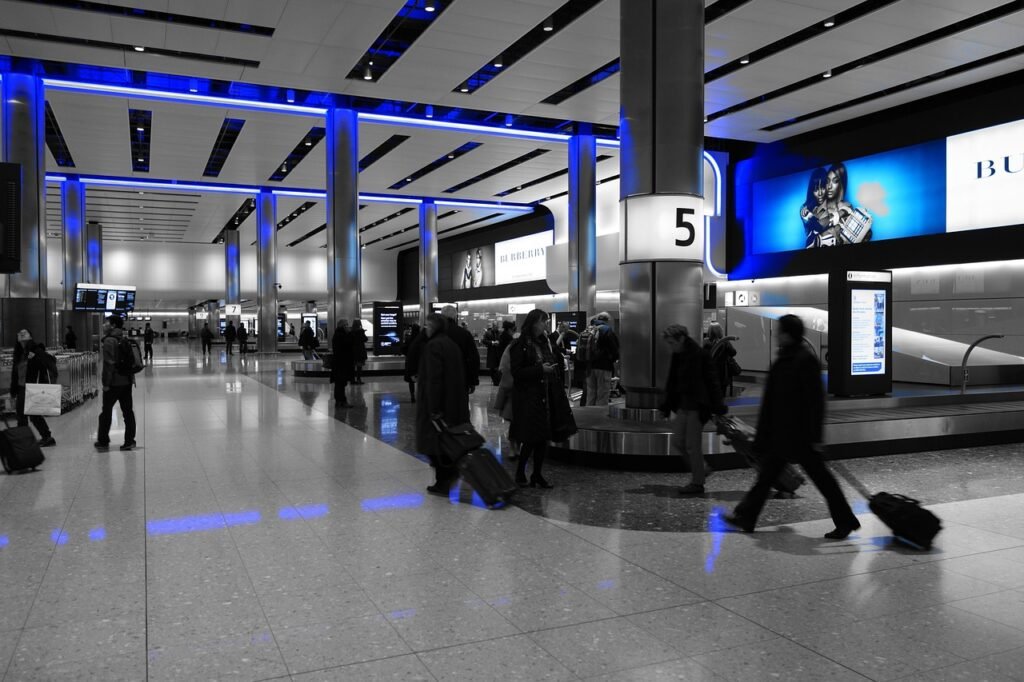
An airport arrival is the point where an older passenger is most tired and least oriented. A kerbside pickup asks them to find their way out of the terminal, across a road, and into a car they have not seen before, usually while managing a case.
Meeting inside the terminal removes all of that. Our meet and assist service covers what a greeter does and where they wait, and the comparison with a standard airport pickup sets out the difference in plain terms. For an older traveller arriving alone, it is usually the single most useful thing you can add to a booking.
Assistance inside the airport itself, the wheelchairs and buggies and priority routes through immigration, is arranged separately through the airline or the airport rather than through us, and it has to be requested in advance rather than on the day. The General Authority of Civil Aviation publishes the passenger rights that apply in Saudi Arabia, and each airport publishes its own special-assistance service; those are the places to confirm what is available and how far ahead to ask.
Travelling with a companion
Where an older passenger is travelling with a family member, the seating decision is worth making deliberately. Sitting beside the person rather than in front of them changes the journey: it makes conversation possible without turning, puts help within reach, and means one door serves both. In a van, the middle row does this well. In a saloon, it means both passengers in the back, which is worth saying at booking so nobody is directed to the front seat out of politeness.
What to tell us, and when
Everything above works best said once, at booking, rather than assembled from requests during the journey. In practice that is four short things: that a passenger is elderly or slow on their feet, whether they need a stop and how often, whether a walking aid is travelling, and whether you want the vehicle chosen for ease of entry rather than for the passenger count alone.
None of it changes the price. All of it changes the journey, and it is far easier for us to plan around before a driver is assigned than to improvise once a car is already outside.