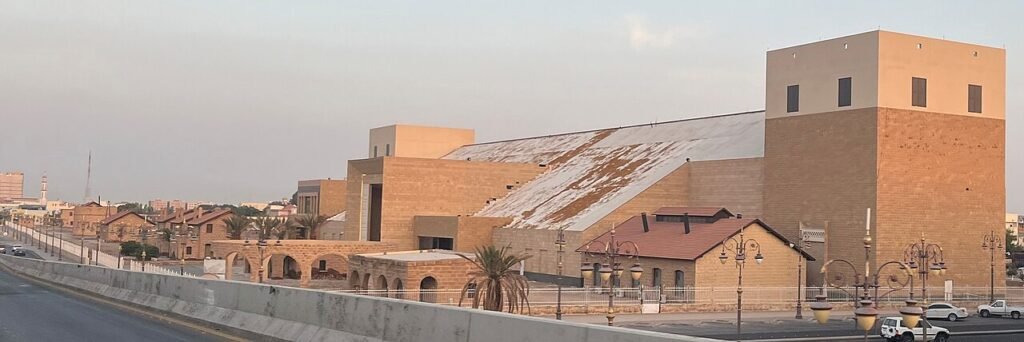
Tabuk, in Saudi Arabia’s far northwest, has spent most of its modern history as a quieter regional city, known mainly for its role along the historic Hejaz Railway and its proximity to the Jordanian border. That has changed considerably with the rise of NEOM, the giga project development along the nearby Red Sea coast and mountains, which has turned Tabuk into a genuine gateway city. This guide covers Tabuk’s own attractions and how it functions as an entry point to the wider region.
For much of the twentieth century, Tabuk was a name recognised mainly by historians of the Hejaz Railway and travellers passing through on the road to Jordan. That is changing quickly, and this guide is written both for visitors interested in the city’s own heritage and for the growing number of business travellers and contractors for whom Tabuk is now a genuine staging point on the way to somewhere else entirely.
Tabuk’s historic character
Tabuk has long sat at a crossroads, historically an important stop for pilgrims travelling the Hejaz route and later a key station on the Hejaz Railway, the early twentieth century railway line linking Damascus and Madinah. The city’s Hejaz Railway heritage is preserved at a dedicated railway museum, giving visitors a tangible connection to this chapter of regional history. Tabuk Castle, a historic fort in the city, is another reminder of its long standing strategic importance along this route.
What to see in Tabuk
The Hejaz Railway heritage sites
Tabuk’s railway museum and associated heritage sites document the city’s role on the historic Hejaz line, worth a visit for anyone interested in the region’s early twentieth century history.
Tabuk Castle
This historic fort in the city centre reflects Tabuk’s long role as a strategic waypoint, and remains one of the more accessible heritage sites for visitors with limited time in the city.
The surrounding desert and coastline
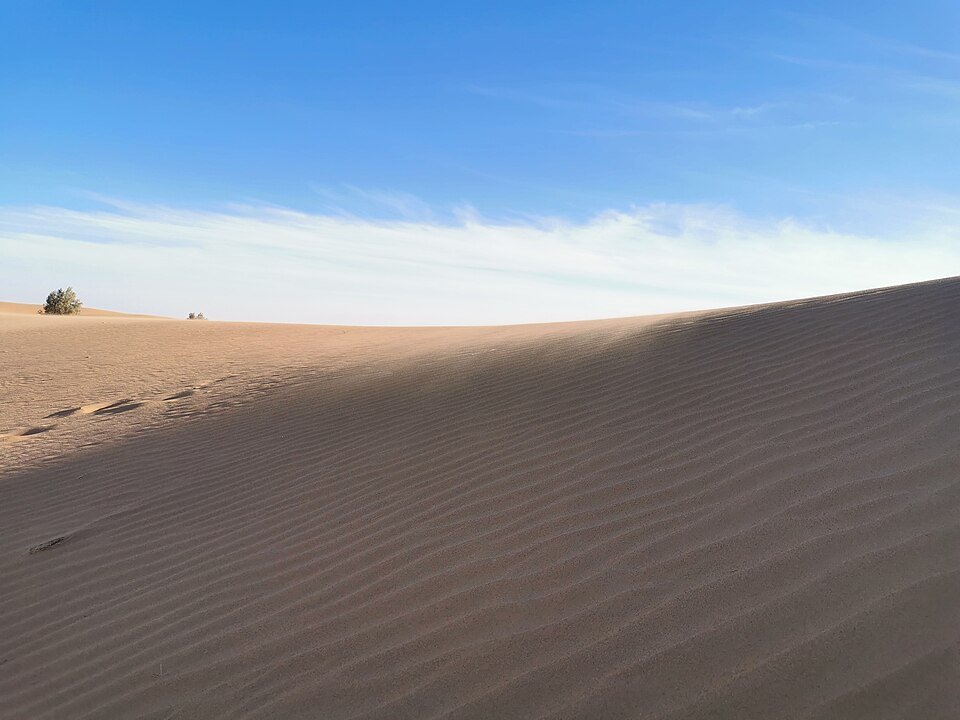
Tabuk province extends from inland desert terrain to the Gulf of Aqaba coastline, giving the wider region considerable landscape variety, from desert routes to coastal scenery, much of which is now more accessible thanks to infrastructure developed alongside NEOM.
Tabuk as a gateway to NEOM
With NEOM’s developments spread across the coast and mountains to the west and north of Tabuk, the city has increasingly become a practical entry point and staging city for business travellers, contractors and visitors heading into the wider NEOM region, particularly for destinations better reached inland than via the coastal NEOM Bay Airport. Tabuk’s own regional airport plays a growing role in this pattern, offering an alternative arrival point depending on where in the NEOM region your final destination sits.

What to expect from the city itself
Tabuk remains, at its core, a working regional capital rather than a destination built primarily around tourism, and visitors should set expectations accordingly. This means a smaller range of dedicated visitor facilities than a place like AlUla or Jeddah, but also a more authentic sense of everyday Saudi city life, local markets, family run restaurants and a pace of life shaped by the city’s role serving the surrounding province, rather than one shaped around visitor numbers. For business travellers in particular, this practical, unpolished character is often exactly what makes Tabuk a straightforward, efficient base, rather than a destination trying to be something it is not.
Getting to Tabuk
Tabuk has its own regional airport with domestic connections, making it a straightforward direct entry point for the city itself and for onward travel into the wider region. Road connections also link Tabuk with neighbouring areas, including routes used by visitors and business travellers continuing on to NEOM.
Getting around Tabuk
Tabuk’s city centre attractions, including the railway museum and the castle, are manageable within a single day, but the wider province, including desert routes and coastal access points, benefits from a private vehicle. Business travellers using Tabuk as a staging point for NEOM related travel in particular benefit from a pre booked driver who can manage both the city leg and any onward journey without needing to arrange separate transport at each stage.
Practical visitor tips
- Start with the railway heritage sites. They offer good context for Tabuk’s historic significance before exploring the rest of the city.
- Plan onward NEOM travel separately. If Tabuk is a staging point for a NEOM trip, treat the onward journey as its own leg with its own transport arrangements, rather than assuming it will be a quick add on.
- Check current road and weather conditions. Northwestern Saudi Arabia’s terrain varies considerably between desert and coastal areas, which can affect journey times.
- Confirm your NEOM entry point. Depending on your final destination, either Tabuk’s own airport or NEOM Bay Airport further west may be the more practical arrival point, so confirm this before booking flights.
How Tabuk has changed with NEOM’s rise
For most of its modern history, Tabuk’s economy and identity were shaped by its role as a regional administrative centre and a stop along historic pilgrimage and trade routes, with a steady but modest flow of visitors interested in its Hejaz Railway heritage. NEOM’s development has changed the calculus considerably, bringing a wave of contractors, business travellers and support industries to the wider province, and with them, growing demand for hotels, transport and services in Tabuk itself, even for visitors whose ultimate destination lies elsewhere in the region.
This shift has been gradual rather than sudden, and Tabuk has not been transformed overnight into a boomtown. But the practical effect for anyone travelling to the province today is real: better flight connectivity, growing hotel capacity, and a transport sector increasingly geared towards both the city’s own heritage visitors and the steady stream of NEOM related traffic passing through.
Frequently asked questions
Is Tabuk worth visiting in its own right, or just as a NEOM gateway?
Tabuk has genuine historic interest of its own, including its Hejaz Railway heritage and Tabuk Castle, independent of its increasingly important role as a gateway to the wider NEOM region.
Should I fly into Tabuk or NEOM Bay Airport?
This depends on your final destination within the wider region. Tabuk’s regional airport is a practical choice for the city itself and for inland NEOM areas, while NEOM Bay Airport serves the coastal developments more directly.
How far is Tabuk from NEOM?
Tabuk sits within reach of NEOM’s developments to the west and north, and functions as a staging city for many visitors and business travellers heading into the region, though exact journey times vary by specific NEOM destination.
Booking your Tabuk transport
Saudi Cab Co offers fixed price, professionally driven transfers to and from Tabuk’s regional airport, along with vehicles for getting around the city and continuing onward into the wider NEOM region. Booking ahead ensures a reliable route whether your trip is centred on Tabuk’s own heritage or on using the city as a staging point for NEOM.
Related guides
- Tabuk to NEOM: A Transport Guide
- NEOM and Tabuk: A Transport Guide for Visitors
- NEOM Bay Airport Transfer: Reaching Saudi Arabia’s Giga-Project on the Red Sea
Checked sources
- Visit Saudi, visitsaudi.com
- Saudi Tourism Authority, sta.gov.sa
- GACA, gaca.gov.sa