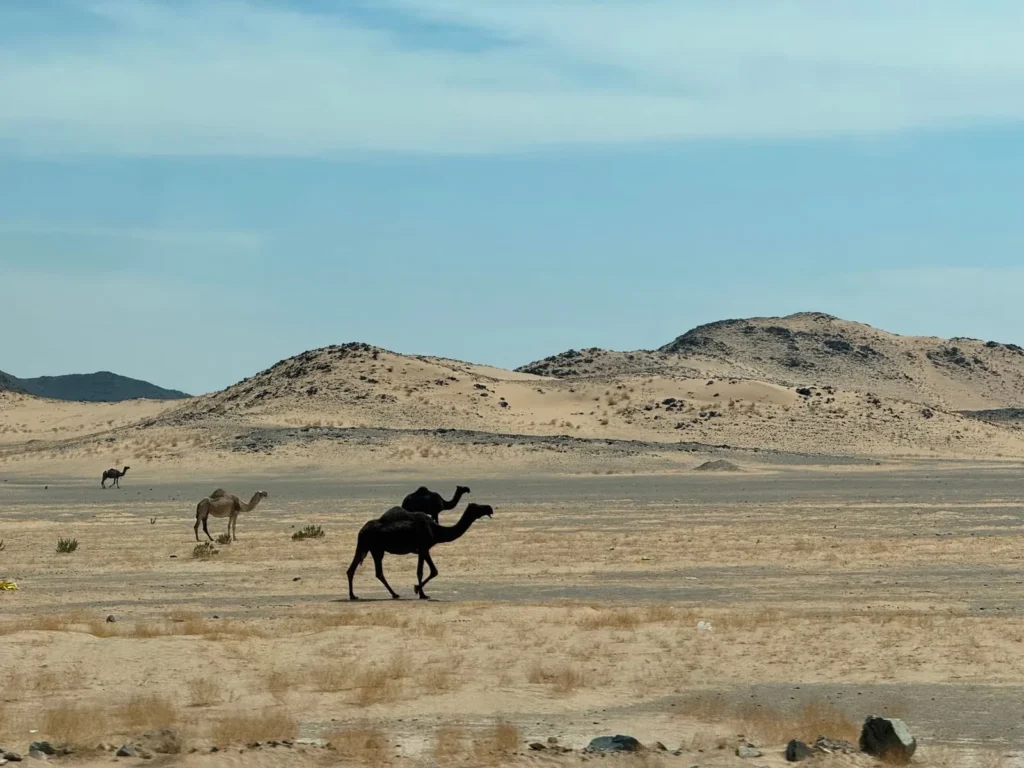
The best time to visit Saudi Arabia for most business and leisure travellers is the cooler stretch from late October to early April, when Riyadh, Jeddah and the Eastern Province are comfortable outdoors and the national events calendar is at its fullest. That is the short answer. The longer answer depends on which region you are heading to, whether you need to work normal office hours, and how your dates sit against Ramadan, the two Eids and Hajj. This guide walks through the year month by month, region by region, using official climate descriptions rather than guesswork.
Before choosing a month, check whether travel is advisable at all. On 13 October 2026 the UK government’s Saudi Arabia travel advice covered several of the regions in this calendar, from Riyadh province and the Aseer highlands to the cities of Jeddah, Taif and Dammam and every airport apart from Madinah’s, with warnings against all but essential travel. Seasons repeat every year; advice like that may not, so treat what follows as planning for when the official position allows.
Why does Saudi Arabia not have one “best season”?
The country is large enough to contain several climates at once. Saudipedia, the national encyclopaedia published by the Ministry of Media, describes the overall pattern as a semi-arid to arid desert climate with hot days, cold nights and low rainfall, but it also notes that at least four provinces record winter lows of minus 4 degrees Celsius and see snowfall, while the Aseer highlands get rain through the year.
Put simply: Riyadh in July and Abha in July are different holidays. Jeddah in January is pleasantly warm; Tabuk in January can be properly cold. A month that is ideal for a Red Sea beach weekend can be the wrong month for a desert day out, and vice versa. The month-by-month sections below separate the regions for that reason.
Saudi Arabia weather by month: the national picture
Saudipedia gives national maximum-temperature bands by season: roughly 20 to 30 degrees in winter (December to February), 30 to 40 in spring (March to May), 35 to 45 in summer (June to August) and 25 to 35 in autumn (September to November). Rain, where it falls at all, comes mainly in winter and spring, and the annual average is low, with the Empty Quarter receiving under 50 mm a year.
For live and historical data, the authority to use is the National Center for Meteorology (NCM), which publishes official forecasts, early warnings, seasonal outlooks and regional climate pages. If you are deciding between two weeks for an outdoor event, the NCM seasonal forecast is a better guide than a generic travel-site average.
October to November
This is when the country opens up for visitors. Daytime heat in Riyadh and the Eastern Province drops into a range where walking between meetings is realistic, evenings become the main social time, and Riyadh Season begins. NCM’s autumn note for 2026 flagged above-average rainfall for October and November alongside rising average temperatures, so a light shell for the occasional heavy shower is not a silly thing to pack.
December to February
Peak season for leisure. Riyadh nights can be genuinely cold, and Saudipedia records January as the month when Riyadh’s lows typically dip below 10 degrees. Jeddah is among the warmest places in the country in winter, which is why Red Sea resorts fill up. Tabuk and the north-west record the lowest temperatures nationally, and the Aseer peaks see intense cold. If your plans include the highlands, read our explainer on whether it snows in Abha before deciding what to wear.
March to May
Spring is short and warms quickly. March is still comfortable almost everywhere; by May, Riyadh and Jeddah are back to summer behaviour, with outdoor activity pushed to early morning and after dark. Spring is also the second rainy window, and the April 2023 rainfall recorded by Saudipedia was the highest average in around forty years, so flash flooding in wadis is a real seasonal hazard for desert excursions.
June to September
Summer. Riyadh’s summer highs can reach about 48 degrees Celsius according to Saudipedia’s city profile, and the FCDO’s health guidance flags heat illness and dehydration as the main summer risks for visitors. This is when the highland cities of Taif and Abha come into their own, and when domestic tourism moves uphill. Our comparison of summer heat and Trojena snow covers how to plan around the extremes.
When to travel to Saudi Arabia for Riyadh
Riyadh has what Saudipedia calls a continental desert climate with large swings through the year, hot dry summers and cold winters, and modest rainfall averaging around 84 mm a year. The usable outdoor window runs from roughly late October to late March. Outside it, the city still works perfectly well for business, but your day is structured around air-conditioned interiors and short hops by car.
If you want to see the capital at its liveliest, aim for the Riyadh Season period. Saudipedia records that every edition since 2019 has opened in October, with some programmes running into the following March. The 2026-27 edition is due to open in the second half of October 2026; dates, zones and ticketing are published on the official site and we track them in our guide to Riyadh Season dates and tickets.
When to travel to Saudi Arabia for Jeddah and the Red Sea
Jeddah’s defining feature is humidity rather than extreme heat. Saudipedia notes that humidity rises towards the Red Sea and Arabian Gulf coasts, and that Jeddah is among the warmest areas in winter. In practice that makes November to March the comfortable months for the Corniche, Al-Balad and the diving coast, and it makes July and August heavy going for anyone who has to be outside.
For the resorts further north, the same logic applies with one twist: winter sea breezes can make evenings cooler than you expect, so a light layer is useful even in a destination marketed on sunshine. The Jeddah corridor also has its own busy calendar weeks, which are a question of dates rather than weather and are covered further down.
When to travel to Saudi Arabia for Abha, Taif and the highlands
This is the inverse of the lowland pattern. Saudipedia records that the Hejaz and Sarawat highlands moderate summer heat and bring rain through the year, and that Abha has the highest summer rainfall of any Saudi city. The result is a summer season that Saudi families have used for generations, with mist, green terraces and afternoon showers from June to September.
Taif, on the escarpment east of Jeddah, has a milder profile than the coast for most of the year, which is why it has long been a summer retreat for families from the lowlands. Winter in the Aseer peaks is cold enough that it changes the packing list entirely, and the FCDO health page notes altitude sickness as a risk in parts of the country, which is relevant to anyone flying straight from sea level to the Soudah ridge.
When to travel to Saudi Arabia for Tabuk, AlUla and the north-west
The north-west is the coldest part of the country in winter. Saudipedia states that Tabuk and the other northern and north-western cities experience the highest levels of cold, with winter rain arriving on North Atlantic air masses. That makes December to February crisp and clear for desert landscapes and star-filled nights, but it also means freezing pre-dawn starts for anyone booked on an early excursion.
AlUla’s festival calendar is built around this cool season, and the shoulder months of October-November and March are the easiest for walking among rock formations without either the summer furnace or the winter chill. Summer in the north-west is as hot as anywhere in the interior and most outdoor programmes pause or move to night-time.
When to travel to Saudi Arabia for Dammam, Al-Khobar and the Gulf coast
The Eastern Province behaves like a cross between Riyadh and Jeddah. Saudipedia notes that humidity rises towards the Arabian Gulf coast as well as the Red Sea, so Dammam and Al-Khobar combine interior-style summer heat with coastal mugginess. The comfortable months are much the same as the capital’s, from late October to March, when the waterfront promenades and the Al-Ahsa oasis inland are pleasant in daylight.
For business travellers the province is driven by the energy sector rather than tourism, so its busy weeks follow conferences and corporate calendars more than the weather. Summer visits are entirely workable for meetings, provided the day is planned as a sequence of air-conditioned stops rather than walks between them.
How does Ramadan 2027 affect the best time to visit Saudi Arabia?
In 2027 the fasting month lands squarely inside the cool season. Astronomical projections place the first day of Ramadan 1448 close to 8 February, and the Eid al-Fitr holiday at 9 or 10 March; neither is fixed until the crescent is officially sighted, usually only days beforehand. That means the most comfortable weeks of late winter will also be the quietest for daytime commerce and the liveliest after sunset.
The trade-off is different for each kind of traveller. Business visitors find working hours shortened and meetings drifting into the evening, so a February trip needs a lighter agenda. Leisure visitors get Ramadan nights, illuminated streets and late dinners, but should expect busier roads after iftar and heavy demand on western routes. Our guide to Ramadan and Eid travel planning goes into the practicalities.
Hajj 2027, Eid al-Adha and the summer shoulder
The pilgrimage season in 2027 is expected to peak in mid-May, with Eid al-Adha around 16 or 17 May, subject to moon sighting. For a business or leisure visitor it registers mostly as two things: restrictions on non-pilgrims flying into the western airports during the season, which the FCDO’s entry-requirements page describes, and a national holiday afterwards that fills domestic flights and resorts.
Climatically, mid-May is already the start of the lowland summer. Riyadh and the Eastern Province remain fine for indoor business with a car at the door, the highlands are beginning their season, and Jeddah is the city to leave for another month.
The business calendar: when are Saudi offices actually working?
The Saudi weekend is Friday and Saturday, and the working week runs Sunday to Thursday. The two fixed public holidays are Founding Day on 22 February and National Day on 23 September; the religious holidays move each year. For a complete planning view, see our 2026-27 public holiday calendar, which also flags the periods when transport demand spikes.
The strongest business months are late September to early December and mid-January to the start of Ramadan. Many trade shows, including the big technology and investment events in Riyadh, are scheduled in these windows precisely because the weather allows large outdoor builds and delegates can move around comfortably. Expect hotels in the capital to fill fast during major conference weeks.
A month-by-month summary
- January: Cool and dry in Riyadh, warm in Jeddah, cold in Tabuk and the highlands. Peak leisure month; strong for business.
- February: Similar to January. Founding Day holiday on the 22nd. Ramadan 2027 is expected to begin around the 8th, so the second half of the month shifts to Ramadan hours.
- March: Warming quickly. Eid al-Fitr 2027 expected 9 or 10 March, bringing a multi-day holiday and heavy domestic travel. Late March is the last reliably comfortable period for desert excursions.
- April: Spring rain risk; flash floods possible in wadis. Still workable outdoors early and late in the day.
- May: Summer begins in the lowlands. Hajj and Eid al-Adha expected mid-month in 2027; leave Jeddah for another month unless you have to be there.
- June to August: Hot interior and humid coast. Highland season for Abha, Al Baha and Taif. Indoor-only business trips are fine with a car at the door.
- September: Still hot. National Day on the 23rd is a holiday with road closures for celebrations in the main cities.
- October: The turn. Riyadh Season opens; evenings become pleasant. Possible autumn showers.
- November: Arguably the single best month nationally: mild everywhere except the coldest northern nights, and the events calendar is full.
- December: Cool, busy and expensive in Riyadh and AlUla; warm and popular on the Red Sea. Book accommodation and transport early.
A fictional example: a consultant choosing between November and February
Consider a fictional management consultant based in Manchester who needs one working week in Riyadh and a long weekend of sightseeing attached to it. She is choosing between the second week of November 2026 and the second week of February 2027. This is an invented planning exercise, not a real customer.
November gives her Riyadh Season in full swing, comfortable daytime walking between the financial district and client offices, and a straightforward Saturday in Diriyah. February is also cool, but the week she is considering falls after the expected start of Ramadan, so her client’s office hours shorten, lunch meetings disappear and the useful day shifts into the evening. Neither is wrong; the November option simply matches a conventional working pattern better, while February suits someone who wants to experience Ramadan evenings and can structure meetings accordingly. In both cases she would check the live FCDO page first, because the current advice for Riyadh province is the deciding factor before any seasonal preference.
A second fictional example: a family wanting beach and mountains
Now imagine a fictional family of four from Birmingham with a fixed window of the first two weeks of August. Again, this is a hypothetical to illustrate the regional split, not a real booking. August is the worst month for Jeddah’s humidity and the best month for the Aseer highlands, so the natural shape of their trip is a short coastal stay built around early-morning swims and air-conditioned afternoons, then a move uphill to Abha or Taif for walks, viewpoints and cool evenings.
What they should not plan is a desert day out near Riyadh in August; the heat is a health hazard rather than an inconvenience, and reputable operators pause or shorten such trips. A private vehicle lets them keep the children out of the sun between stops and change the order of the day around prayer times and heat, which matters more in August than in any other month.
Checklist: choosing your dates
- Read the live FCDO and State Department advice before anything else; as of 13 October 2026 the FCDO advises against all but essential travel to most major cities.
- Match the month to the region: lowlands in winter, highlands in summer.
- Check the NCM seasonal forecast for rain if your plans include wadis or desert driving.
- Note the expected dates of Ramadan (from around 8 February 2027), Eid al-Fitr (9 or 10 March 2027) and Hajj (mid-May 2027), remembering all depend on moon sighting.
- Avoid 22 February and 23 September if you need offices open; expect holiday road closures.
- For Riyadh Season, confirm this year’s opening date and zones on the official site before booking a hotel near the venues.
- Pack for the cold if you are heading north-west or to the Aseer peaks between December and February.
- Book ground transport early for December, Riyadh Season weekends and the Eid holidays.
Planning transport around the season you choose
Whatever month you settle on, the way you move around changes with it. In winter you can afford a day with gaps between pickups and a walk in between; in summer you want a car waiting at the door and a driver who understands prayer-time pauses and heat. Saudi Cab Co provides pre-booked private transfers and hourly hire across Riyadh, Jeddah, the Eastern Province and the regions, with the quote shown in the booking tool before you commit. If the season you picked stops suiting you, cancelling 48 hours or more ahead of pickup gets every penny back; later than that, the deposit is kept. If you are working out which weeks suit your trip and want to know what ground transport looks like for those dates, contact Saudi Cab Co and we will talk it through with you.
Sources reviewed 15 October 2026: Saudipedia (Ministry of Media) climate of Saudi Arabia, Riyadh City and Riyadh Season entries; National Center for Meteorology; UK FCDO Saudi Arabia travel advice and health guidance; US State Department Saudi Arabia travel advisory. Islamic calendar dates for 2027 are astronomical expectations subject to official moon sighting, and travel advice may have changed since the review date. Photo: Ajmal Ali Paleri / Pexels.