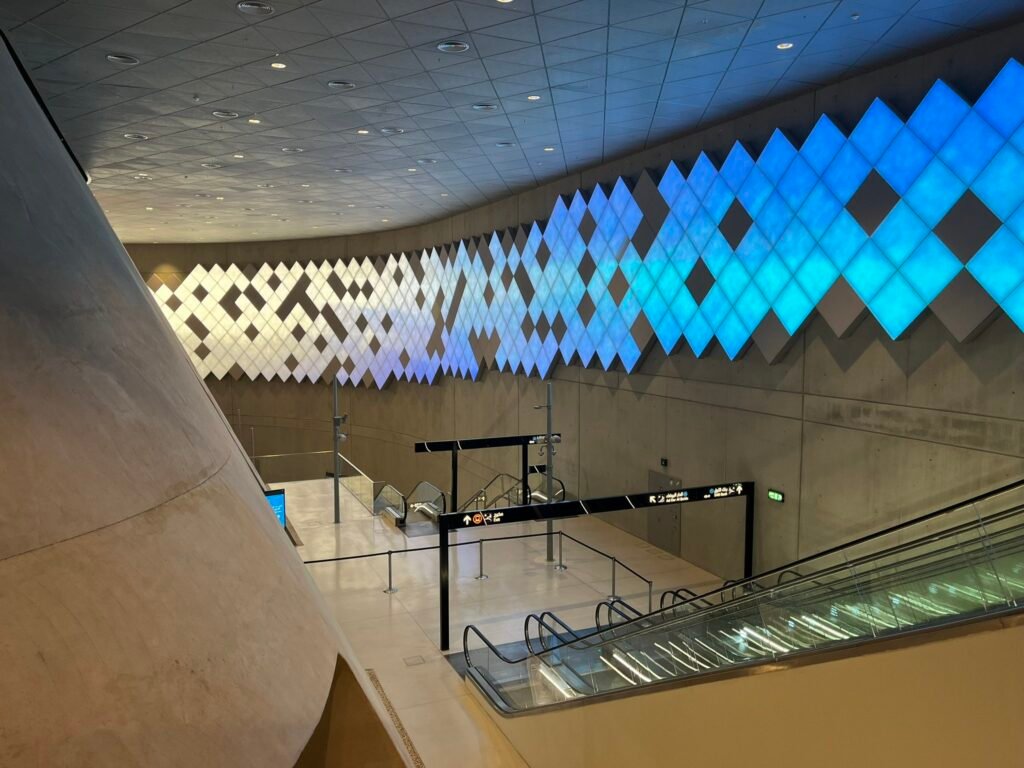
Two genuinely different ways to move around Riyadh
Riyadh now has a working metro system alongside its established private transport options, which gives residents and visitors a real choice for the first time rather than a single obvious default. Riyadh Metro opened to passengers in December 2024, and its lines have progressively extended service across the city since then, connecting key districts including King Khalid International Airport. This guide compares the metro against a private, pre-booked transfer on the factors that actually matter for a trip: cost, time, comfort, and practicality.

Cost
The metro is, unsurprisingly, the cheaper option per journey by a wide margin, with fares paid through the darb app or at station ticket machines. For a single traveller making a short, simple journey along an existing metro line, this cost difference is significant. For a group, or for anyone carrying substantial luggage, the calculation shifts, since a private vehicle’s fixed price is shared across the group while metro fares are charged per person.
Time and convenience
When the metro works well
For a journey that runs directly along a completed metro line, between well connected stations, the metro can be genuinely quick and avoids road traffic entirely. This suits residents and longer-stay visitors who have learned the network and are travelling light, point to point, between two stations near their actual start and end locations.
When a private transfer works better
A private transfer is door to door, with no need to walk to a station, transfer between lines, or walk again at the other end. For airport arrivals with luggage, for evening trips when carrying bags or dressed for an event, or for any journey where the true start and end points are not conveniently close to a metro station, a pre-booked transfer removes several extra steps that the metro cannot avoid.
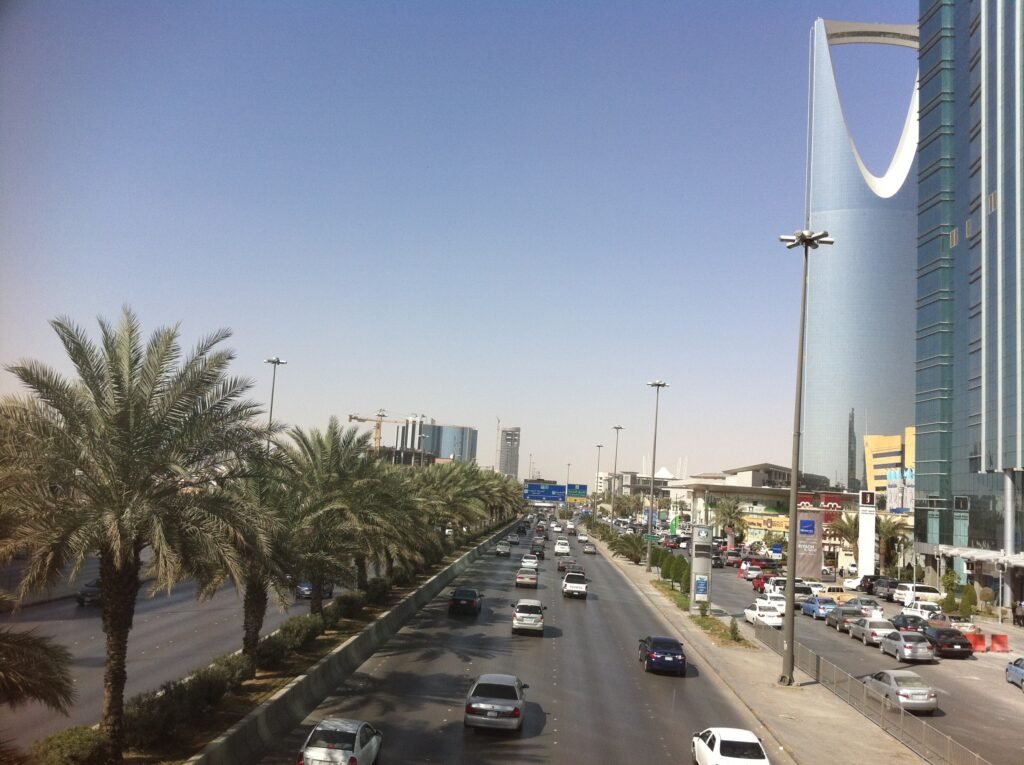
Comfort and practicality
A private vehicle offers a level of comfort, privacy, and flexibility that a shared metro system does not attempt to match, including the ability to work, take calls, or simply relax during the journey. For business travellers moving between meetings, or for anyone travelling with sensitive documents or equipment, this is often worth more than the cost saving of the metro. The metro, meanwhile, is well suited to visitors and residents making simple, unencumbered trips who prioritise speed and cost over door-to-door comfort.
A straightforward way to choose
- Airport arrival with luggage, or an evening trip: a pre-booked private transfer is usually the more practical choice
- A short, simple journey directly along an existing metro line, travelling light: the metro is fast and inexpensive
- Business travel between meetings, where time efficiency and comfort matter most: a private transfer generally wins
- Exploring the city casually over several days, on a budget: the metro is a genuinely useful addition to Riyadh’s transport options for this kind of trip
The two are not mutually exclusive
Many visitors to Riyadh end up using both across a single trip: a pre-booked private transfer for the airport arrival and any evening or luggage-heavy journeys, and the metro for simple daytime trips once settled in and travelling light. Treating them as complementary options, rather than picking one for the whole trip, generally gives the most practical result.
Cost predictability over a multi-day stay
For budgeting purposes, a private transfer’s fixed, quoted price is easier to plan around than a per-journey metro fare multiplied across an unknown number of daily trips, particularly for a first-time visitor unsure how many separate journeys a day’s sightseeing will actually involve. Travellers who prefer to know the full transport cost of a trip before they arrive, rather than estimating it as they go, will generally find pre-booked private transport easier to budget for precisely, even where the metro would technically work out cheaper per individual journey.
Accessibility and luggage on the metro
Anyone considering the metro for a journey involving substantial luggage, a stroller, or reduced mobility should factor in the walk from street level to platform, any transfers between lines, and the walk from the destination station to the final address, since none of this is handled for you the way it is with a door to door private transfer. This is not a criticism of the system, which is a genuinely useful addition to Riyadh’s transport options, simply a practical point that door to door private transport removes an entire category of physical effort that the metro, by its nature as a station-based system, cannot avoid.
The airport connection specifically
Riyadh Metro’s route toward King Khalid International Airport gives travellers a genuine low-cost option for reaching the airport from the city, provided the starting point is reasonably close to a connecting station and the traveller is comfortable managing their own luggage through the station and onto the platform. For an early morning departure, a tight connection, or simply after a long international flight, a pre-booked private transfer that collects you directly from arrivals and drops you directly at your hotel removes several extra steps that the metro journey still involves, even once the route is well connected.
A network still growing
Riyadh Metro’s lines have been extending service progressively since the system opened to the public in December 2024, and coverage across the city continues to develop. Travellers planning a trip that relies heavily on the metro should check the current line map and station list close to their travel dates, since coverage in some districts is more complete than others, and a route that is not yet convenient by metro today may become a straightforward option as the network matures.
Visitors versus residents
It is worth noting that the calculation is not identical for every traveller. A resident who has learned the metro network over time, knows the walk from station to home, and travels light as a matter of daily routine gets far more day to day value from the metro than a first-time visitor juggling luggage, an unfamiliar city layout, and a tight schedule of sightseeing or meetings. Visitors on a short trip generally get more overall value from leaning on private transfers for most of the stay, and treating a metro ride, if they try one at all, as an occasional novelty rather than a primary means of getting around.
Making the choice on the day
In practical terms, most travellers do not need to overthink this decision for every single journey. A sensible default is to pre-book private transport for anything involving luggage, an evening return, or a fixed appointment you cannot afford to be late for, and to consider the metro opportunistically for simple daytime trips once you have a feel for the network and the specific stations near where you are staying and where you need to go. Treating the decision this way, rather than committing to one method for an entire trip, generally gives the best combination of cost control and reliability across a stay in Riyadh.
Related guides
- Riyadh Airport to City: Private Transfer Planning Guide
- Diriyah and Riyadh’s Heritage Sites: Planning Your Visit by Private Transport
- Riyadh Airport Transfers for Business Travellers: A Practical Guide