Reviewed planning guidance. Details can change; use the linked official sources and get a live quote for current pricing and availability.
The Jeddah to Makkah road is one of the most travelled corridors in Saudi Arabia, and almost everything written about it assumes you are making the journey as a pilgrim. Plenty of people making this trip are not. Muslim professionals living in Jeddah commute into Makkah for work. Contractors and tradespeople travel in for projects. Families with property or relatives in Makkah make the trip for entirely ordinary reasons. This guide covers the route from that angle: practical transport for people whose reason for travelling is business, work or family, not a religious itinerary.
Who actually makes this journey for reasons other than pilgrimage
Makkah is a functioning city with its own economy, and a significant number of journeys along this route have nothing to do with Umrah or Hajj. Muslim residents of Jeddah with jobs, contracts or business interests in Makkah travel the route regularly, sometimes daily. Construction, retail, hospitality and logistics all draw workers and contractors into the city on ordinary working schedules. Property owners, extended family and community ties add another steady stream of journeys that have more in common with a normal intercity commute than with a pilgrimage trip. If that describes your journey, the planning questions are straightforward: get from A to B reliably, at a time that suits your schedule, without needing any of the pilgrimage-specific logistics that most Jeddah-Makkah content assumes you need.
This kind of everyday travel is easy to overlook because it does not fit neatly into either the pilgrimage narrative or the general tourism content most guides are built around. A supplier meeting, a family lunch, a contractor’s site visit, none of these need a Ziyarah itinerary, an Ihram change stop, or any of the other pilgrimage-specific planning points that dominate most Jeddah-Makkah guides. What they need is a straightforward, reliable transfer, booked the same way you would book any other intercity journey for work or family.
The one entry rule every traveller on this route needs to know
Before anything else on this route, one rule matters more than any other. According to the official travel advisory published by the US State Department at travel.state.gov, non-Muslims are not permitted to enter the city of Makkah at any time. This is enforced at checkpoints on the approach roads into the city, and it applies regardless of the purpose of the visit, business included. If you are coordinating travel for a team that includes non-Muslim colleagues, plan around this from the outset rather than discovering it at a checkpoint: meetings involving non-Muslim staff are generally better held in Jeddah or in business locations outside the restricted boundary, and through traffic that does not need to enter Makkah itself can typically continue past the city on signed bypass routes. Always confirm current entry rules before travel using the sources above, since checkpoint procedures and boundaries are a matter of official policy rather than something a transport provider can guarantee.
The road journey itself
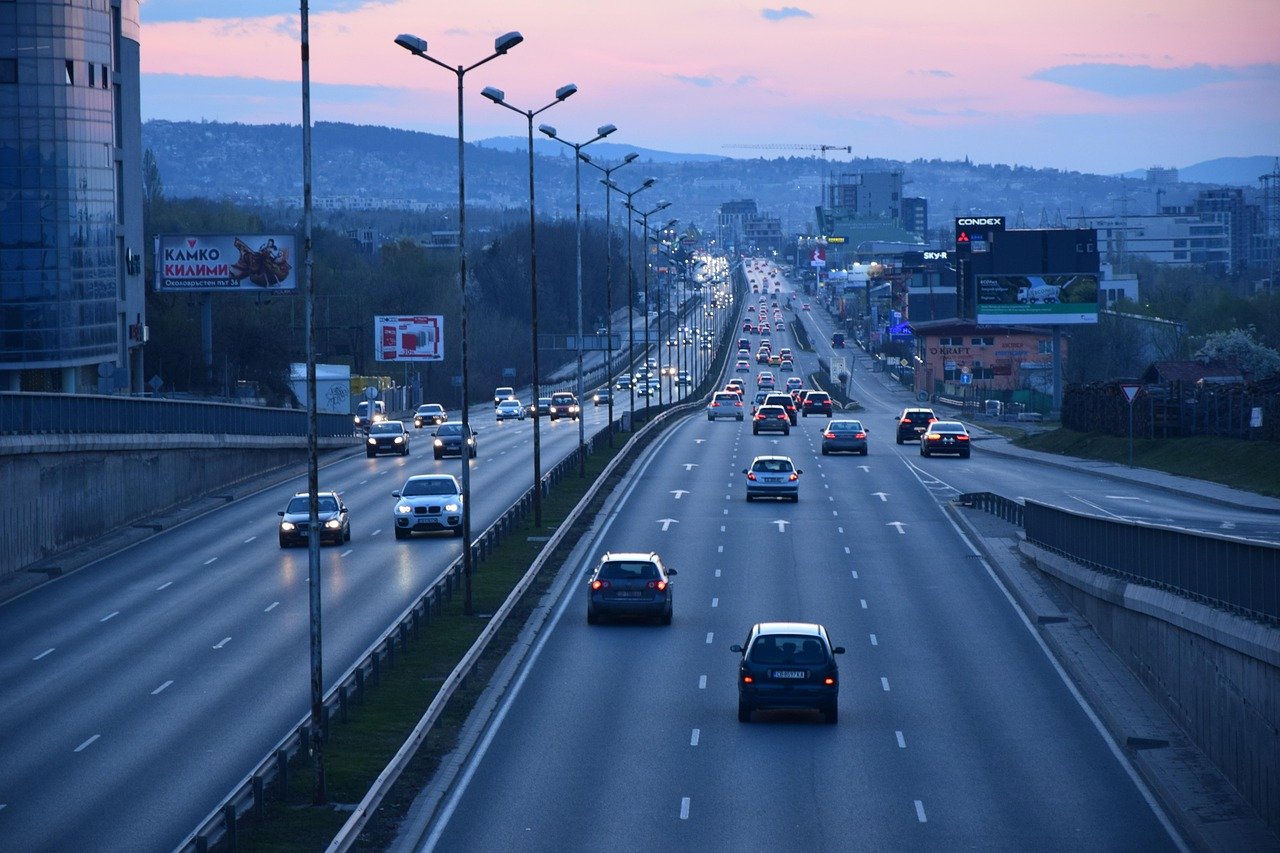
For those who are able to travel into Makkah, the road between the two cities is a well-maintained modern highway, and for a private transfer the journey is generally quick by regional standards, though actual timing depends on traffic, time of day and the exact pickup and drop-off points at either end. Fridays, public holidays and the periods around Umrah and Hajj see markedly heavier traffic on this corridor, including for journeys that have nothing to do with pilgrimage, so if your work or family trip can be scheduled outside those peak windows, it is worth doing so simply to keep the journey predictable.
Because this route carries such a high volume of pilgrimage traffic for most of the year, drivers who work it regularly tend to be highly familiar with its patterns, checkpoint locations and typical congestion points. That familiarity is worth as much on a routine business trip as it is on a pilgrimage journey, since a driver who already knows where delays typically build up can plan around them rather than being caught out.
Booking transport for a fixed business or family visit
For a one-off business meeting, a site visit, or a family occasion, a pre-booked transfer with a fixed price agreed in advance removes the two biggest sources of friction on this route: uncertainty over fare, and uncertainty over whether a driver will be available at short notice during a busy period. Our comparison of fixed price versus app-hailing fares covers how the two pricing approaches differ, which is worth understanding if you are used to app-based transport in other cities and are deciding which model suits a Jeddah-Makkah trip. For contractors or professionals making the trip regularly, a corporate account that covers repeat journeys under one billing arrangement is usually more efficient than booking and expensing each trip individually.
Families making the trip for a personal occasion, a wedding, a visit to relatives, a property matter, benefit from the same approach as a business traveller: agree the pickup time, the number of passengers and any luggage requirements in advance, rather than trying to arrange transport at short notice on a day when the route is likely to be busy. A fixed price agreed ahead of time also means there is no awkwardness or uncertainty around cost once you are travelling with family members who may not be familiar with local pricing norms.

Practical considerations for mixed-nationality teams
If your work involves a team with both Muslim and non-Muslim colleagues, plan the itinerary around who can actually travel where before you book anything. A common approach is to hold the core meetings in Jeddah, where everyone can attend, and send only the Muslim team members on to Makkah for any element of the work that genuinely requires it. This avoids the awkward situation of arriving at a checkpoint and having to turn part of the team back, which wastes time and creates an unnecessarily stressful start to a business trip. Booking separate, clearly labelled vehicles for the Jeddah-only and Jeddah-Makkah portions of a mixed team’s schedule keeps this simple rather than trying to manage it with a single vehicle and a change of plan mid-route.
Coordinating this leg with the rest of a Jeddah trip
Most non-pilgrimage trips along this route are one leg of a larger visit rather than the whole purpose of the trip. If you are flying into Jeddah before continuing on to Makkah for work or family reasons, our Jeddah airport transfer guide covers the arrival side of the journey, and booking both legs, airport to Jeddah accommodation, then on to Makkah, as part of one plan avoids the gaps that come from arranging each stage separately once you are already on the ground.
It is also worth thinking about the return leg, particularly if your trip into Makkah is a short one, a single meeting or a same-day family visit, followed by a flight out of Jeddah later the same day. Building a realistic buffer between your planned departure from Makkah and your flight time accounts for the return journey, any traffic on the day, and the transfer from the airport road back to the terminal, so a delay on the Makkah side does not put your flight at risk.
A route with two very different purposes
What makes the Jeddah to Makkah corridor unusual is that it genuinely carries two distinct kinds of traveller side by side: the pilgrimage traffic that most content about this route is written for, and the everyday commercial, professional and family traffic that keeps Makkah functioning as a city in its own right. Both are entirely legitimate reasons to travel the route, and both deserve transport planning suited to their actual purpose rather than a one-size-fits-all approach borrowed from pilgrimage logistics. If your trip falls into the second category, treating it as the straightforward intercity transfer it actually is, rather than overcomplicating it with planning steps that do not apply to you, is the most efficient way to approach it.
Frequently asked questions
Can non-Muslims travel this route for business?
Non-Muslims can travel on the Jeddah to Makkah road, but according to travel.state.gov, non-Muslims are not permitted to enter the city of Makkah itself at any time. Business involving non-Muslim colleagues should be planned around this, typically by holding meetings in Jeddah instead.
Do I need a visa to travel between Jeddah and Makkah for business or family reasons?
Entry to Saudi Arabia itself requires an appropriate visa or visa waiver depending on your nationality and purpose of visit. Check current requirements at visa.visitsaudi.com or, for UK nationals, at gov.uk’s Saudi Arabia travel advice before you travel. Movement between cities within the country is a separate matter from the checkpoint restriction on entering Makkah itself.
Is this route busy outside of Umrah and Hajj periods?
Yes, it carries substantial everyday traffic for work, family and commercial reasons in addition to pilgrimage travel, though the heaviest congestion is generally around Fridays, public holidays and peak pilgrimage periods.
Can I book a driver for a single day trip rather than a longer stay?
Yes, a same-day return transfer is a common booking pattern for business meetings or short family visits, and booking it in advance with a fixed price avoids uncertainty at either end of the trip.
Is it better to fly or drive between Jeddah and Makkah?
Makkah does not have its own commercial airport, so a private road transfer or the regional train network are the practical options for this specific route, with a private transfer offering more flexibility on timing and drop-off point.
Can a transport provider guarantee entry to Makkah for every passenger?
No. Entry to Makkah is controlled by official checkpoints and depends on the traveller, not the transport provider, so it is the passenger’s responsibility to confirm their own eligibility before travelling.
Whether your reason for travelling between Jeddah and Makkah is work, a family visit or a business commitment, book a fixed price transfer with Saudi Cab Co and travel the route on your own schedule, with the details agreed before you set off.