Reviewed travel guidance. This article is general planning guidance for visitors arranging ground transport in Saudi Arabia. Always check current entry requirements and airline policies before you travel.
Jeddah is a long, ribbon-shaped city that stretches roughly 30 kilometres along the Red Sea coast, and its districts serve very different purposes. A business traveller heading to a meeting near the Corniche has a different route and timing to plan than a visitor spending an afternoon in the old town or a family staying near a northern resort. Understanding how Jeddah’s neighbourhoods relate to one another, and how long it genuinely takes to move between them, makes the difference between a smooth itinerary and a day lost to traffic. This guide sets out the city’s main districts, what each one is generally used for, and the practical transport logic that connects them, whether you are in Jeddah for a single business day or a longer stay.
Understanding Jeddah’s shape and layout
Unlike Riyadh, which spreads outward in a roughly circular grid, Jeddah is elongated along the coastline, with the sea to the west and the city growing inland in bands to the east. This matters for planning because a north to south journey along the coast, for example from the historic centre up towards the northern districts, can take considerably longer than a short east to west trip across a single neighbourhood, even if the map distance looks similar. Most visitor activity clusters into a handful of zones: the historic core close to the port, the central Corniche and business districts, the mid-city residential and commercial belt, and the newer northern coastal developments. King Abdulaziz International Airport sits north of the older city centre, which shapes almost every transfer plan in Jeddah.
Because the city is so spread out, it is worth thinking about your trip as a series of distinct zones rather than one continuous area you can wander between on foot. A common mistake among first-time visitors is assuming that because two districts appear close together on a map, they are also close in driving time. In practice, the road network follows the coastline and a handful of major arterial routes, so a journey that looks like a straight line on a map often means following a longer road pattern in reality. Planning your day around these zones, rather than jumping back and forth between them, tends to produce a far smoother schedule.
For general orientation and up to date information on what is open to visitors in each area, the Saudi Tourism Authority’s visitsaudi.com is a useful starting point before you travel.
Al Balad and the historic centre
Al Balad is Jeddah’s original old town, a compact grid of narrow lanes and coral-stone buildings close to the port and the older commercial district. It rewards slow, on-foot exploration, which means the practical transport question is less about moving within the district and more about getting to and from its edges, since some interior streets are pedestrian and not accessible by car. Visitors typically arrange a drop-off point on the perimeter and walk in from there.
Because Al Balad is a working commercial area as well as a heritage site, it can be busy at different times depending on the day and the season, and some streets that are quiet in the morning fill up considerably later on. If your plan includes both a walking visit to Al Balad and other appointments elsewhere in the city on the same day, it is worth building a buffer either side of your visit rather than treating it as a fixed-length stop, since finding your way back out to a waiting vehicle can take a little longer than the walk in.
- Al Balad sits towards the southern, older part of central Jeddah, closer to the port than to the airport.
- Parking and vehicle access inside the historic core is limited, so a pre-arranged pickup point outside the pedestrian area is more reliable than expecting a car to reach you at your exact location.
- Visits here are often combined with the nearby central Corniche stretch in a single half-day plan, since the two areas are a short drive apart.
The Corniche and the central business belt
North of Al Balad, the Corniche runs along the waterfront and is where much of Jeddah’s public art, waterfront parks and evening leisure activity is concentrated. Running roughly parallel and slightly inland is the central business belt, home to many of the hotels, offices and conference venues that business travellers use. These two zones are close enough that a short taxi ride connects them, but Corniche-adjacent roads can slow considerably in the early evening as residents and visitors head to the waterfront, so building in extra time for a sunset transfer is sensible.
For conference and exhibition delegates in particular, this central belt is usually the most convenient base, since it sits within a reasonably short drive of both the Corniche and the mid-city districts covered below. If your schedule includes a formal dinner or evening event along the waterfront after a full day of meetings inland, treat the transfer as a longer leg than the map distance suggests, and confirm your pickup time with enough margin that a slow stretch of road does not put you behind.

Al Hamra, Al Rawdah, Al Andalus and the mid-city districts
Moving further inland and north, a cluster of established residential and commercial districts, including Al Hamra, Al Rawdah, Al Andalus and Al Salamah, forms the bulk of mid-city Jeddah. These areas hold much of the city’s retail, dining and residential accommodation, and they are where many business travellers and longer-stay visitors actually base themselves, rather than in the older centre. Distances between these districts are generally short by car, often 10 to 20 minutes depending on the specific streets involved, but the road network is wide and multi-lane, so a driver who knows the local one-way systems and interchange points saves real time compared with relying on turn-by-turn navigation alone in unfamiliar traffic.
This belt is also where most of Jeddah’s shopping centres and everyday services are concentrated, which makes it a practical base for anyone staying more than a couple of days. A visitor splitting their time between meetings, shopping and dining is likely to spend most of a trip moving within this mid-city area rather than travelling far out towards Al Balad or the northern coast, so it is worth factoring that into how you plan ground transport across the length of your stay rather than treating every day as a fresh, unrelated journey.
- Al Hamra and Al Salamah sit closer to the coast and include a mix of hotels, dining and waterfront-facing residential towers.
- Al Rawdah and Al Andalus are set slightly further inland and are more purely residential and commercial.
- Tahlia Street, a well known retail and dining corridor, cuts through this belt and is a common meeting point for both business and leisure visitors.
The northern coast and Obhur
North of the mid-city districts, the coastline opens out towards Obhur and the newer northern developments, an area associated with beach clubs, resort-style accommodation and weekend leisure use. This is the part of Jeddah furthest from the historic centre, and while it is closer to the airport than Al Balad is, it is still a meaningful drive from downtown. Anyone planning a day that combines a northern beach visit with an evening in the central business district or Al Balad should treat it as two separate legs of a journey rather than a single loop, and allow realistic transfer time between them rather than assuming Jeddah’s coastal roads move at a constant pace throughout the day.
Weekends and public holidays tend to bring noticeably more traffic on the coastal road towards Obhur, as residents head north for leisure, so a transfer that takes a predictable amount of time on a weekday morning can run longer on a Thursday or Friday afternoon. If a northern coastal visit is a fixed part of your itinerary rather than an optional extra, it is worth confirming your return transfer in advance rather than assuming a vehicle will be readily available on the spot once you are ready to head back into the city.
King Abdulaziz International Airport and getting between districts
King Abdulaziz International Airport is positioned north of the older city centre, roughly between the mid-city districts and the northern coastal developments, which is a useful reference point when planning any transfer. A transfer into central Jeddah or Al Balad from the airport is a longer drive than one into the nearer mid-city or northern districts, so it is worth accounting for that difference when booking hotels or timing arrivals around meetings. General guidance on Saudi airports and current procedures is published by the General Authority of Civil Aviation, and is worth checking ahead of travel alongside your airline’s own advice.
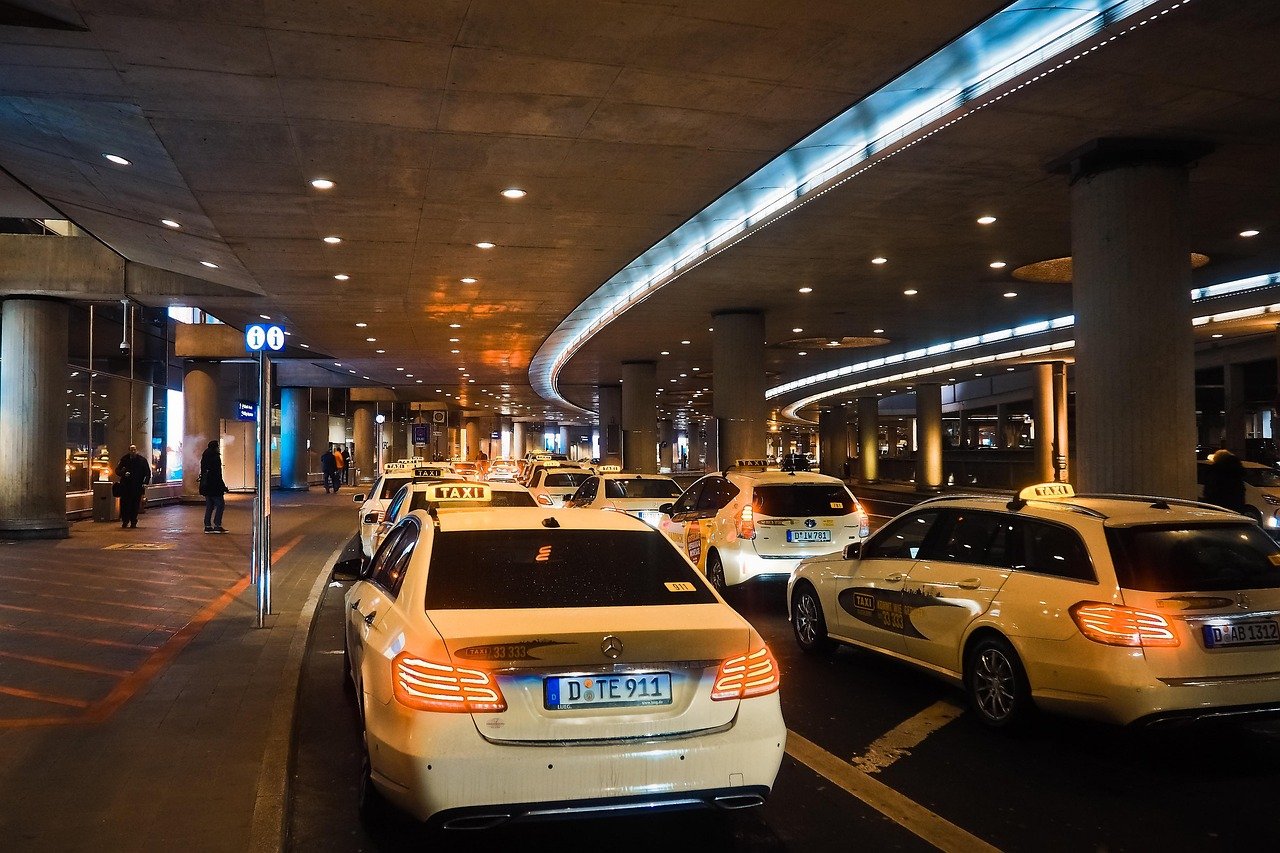
A few practical points apply across Jeddah regardless of which districts you are moving between:
- Traffic in Jeddah is heaviest in the late afternoon and early evening, particularly on roads feeding the Corniche and central business belt.
- A single pre-booked vehicle for a multi-stop day, rather than separate ad hoc rides between each district, tends to be more reliable when your schedule includes fixed appointment times.
- If your itinerary spans both the historic centre and the northern coast in one day, treat them as bookend activities either side of the mid-city districts rather than trying to fit both into a short window.
- Distances that look short on a map can take longer in practice because of the city’s elongated shape and the way its main arterial roads run parallel to the coast rather than in a simple grid.
Frequently asked questions
Q: How far is the airport from central Jeddah? A: It is a meaningful drive, generally longer than a transfer to the nearer mid-city or northern districts, since the airport sits north of the older city centre. Actual travel time depends heavily on the time of day and the exact destination within the central belt.
Q: Can I walk between Al Balad and the Corniche? A: They are close by car but not realistically walkable together as a single trip, particularly in warmer months, so a short pre-arranged transfer between the two is the more practical option.
Q: Which district is best for a business stay? A: Most business travellers base themselves in the central business belt or the nearer mid-city districts such as Al Hamra, since these are closest to hotels, conference venues and office locations, and involve shorter transfer times to most meeting locations.
Q: Is it better to book separate rides for each stop or one vehicle for the day? A: For itineraries with fixed appointment times or multiple stops across different districts, a single pre-booked vehicle for the day is usually more reliable than arranging each leg separately, since it removes the uncertainty of finding a ride at each stop.
Q: How much traffic should I expect in Jeddah? A: Traffic builds through the afternoon and is typically heaviest in the early evening, especially on roads leading towards the Corniche and central business districts, so allow extra time for journeys during those hours.
Q: Are Al Balad’s streets accessible by car? A: Some of the historic core is pedestrian only, so vehicles generally drop passengers at the edge of the district rather than driving into the narrow interior lanes.
If you would like a fixed-price quote tailored to your itinerary, Saudi Cab Co can arrange the right vehicle for your trip in advance. Get in touch before you travel and we will match your booking to exactly what you need.