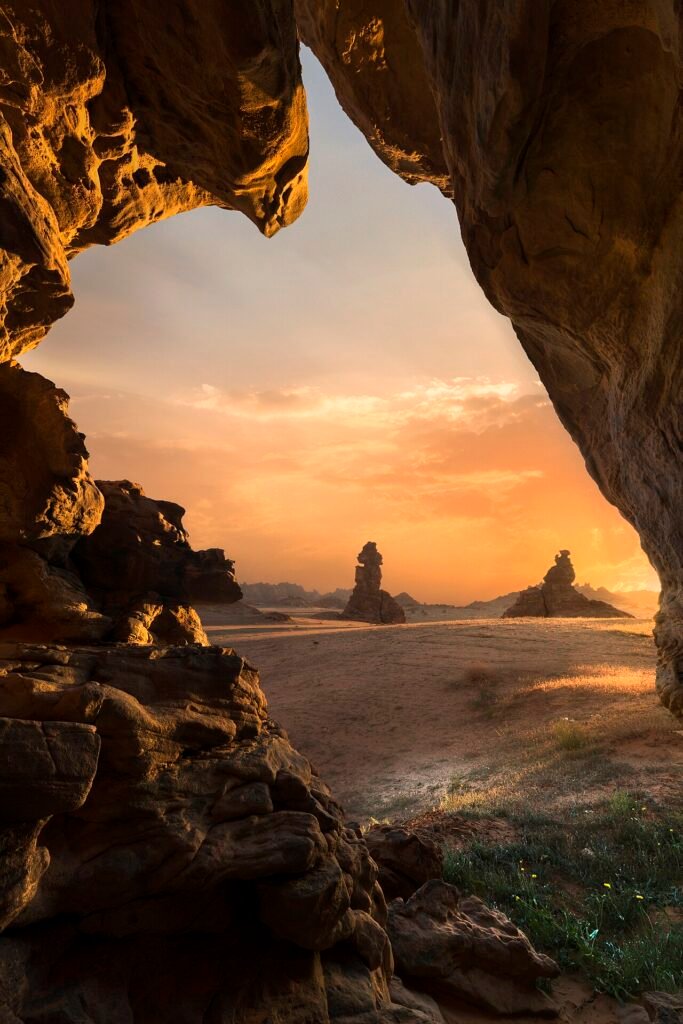
Hail, in northern Saudi Arabia, sits at the edge of the Nafud desert beneath the granite peaks of Jabal Aja and Jabal Salma. It has long been a crossroads city, historically tied to Bedouin heritage, Arabian horse breeding, and some of the region’s most significant rock art sites. For visitors exploring beyond Saudi Arabia’s better known coastal and central cities, Hail offers a genuinely different landscape and a slower, more heritage focused pace. This guide covers what to see and how to get around.
Hail rarely features prominently in a first time visitor’s Saudi Arabia itinerary, which is part of its appeal for travellers who have already covered the country’s more established destinations and are looking for somewhere genuinely different. Its combination of ancient rock art, mountain scenery and Bedouin heritage gives it a character distinct from both the coastal Red Sea destinations and the heritage cities further south, and this guide is written to help visitors plan a trip that does justice to a region that is easy to underestimate on paper.
Understanding Hail’s setting
Hail sits in a natural basin between the Aja and Salma mountain ranges, with the Nafud desert’s dramatic red sand dunes extending to the north. This combination of mountains and desert gives the wider Hail region a distinctive character within Saudi Arabia, and much of what draws visitors here, rock art, desert landscapes and traditional Najdi and Bedouin heritage, sits outside the city itself, in the surrounding countryside.
What to see in and around Hail
Jubbah and Shuwaymis rock art
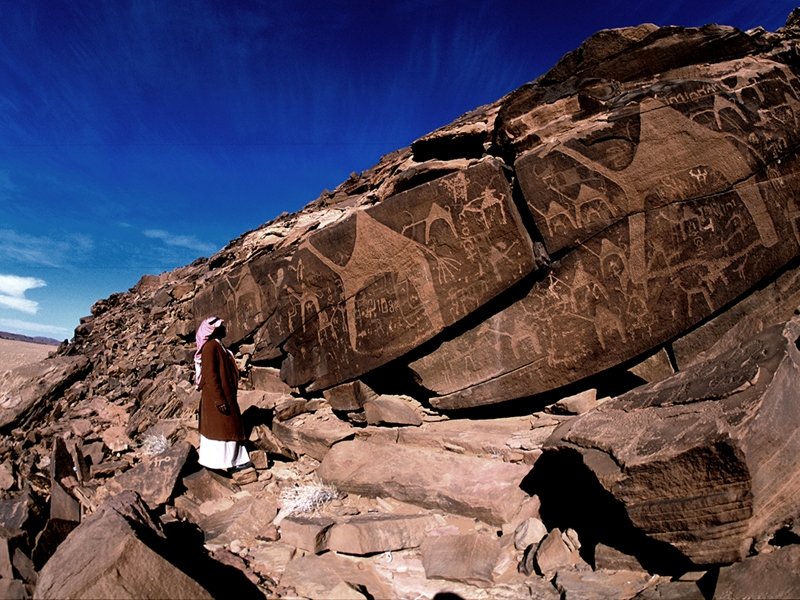
The rock art sites at Jubbah and the Shuwaymis area, inscribed as a UNESCO World Heritage Site, contain thousands of petroglyphs and inscriptions documenting human presence in the region across thousands of years. These sites are a genuine draw for visitors interested in ancient history, and they sit some distance from the city centre, in open desert terrain.
Jabal Aja and the King Salman Royal Reserve
The granite peaks of Jabal Aja, along with protected areas such as the Al-Musamma Mountains within the King Salman Royal Reserve, offer dramatic desert mountain scenery and, in cooler months, opportunities for hiking and exploring the terrain.
Hail’s heritage and culture
The city itself retains elements of its role as a historic trading and cultural centre, including sites connected to its Bedouin and Arabian horse breeding heritage, an important part of the region’s identity.
How much time to allow
A single day is enough to get a taste of central Hail and perhaps one outlying site, but visitors keen to properly see both the Jubbah and Shuwaymis rock art areas and the Jabal Aja mountain scenery should plan for at least two to three days in the region. Rushing between sites in a single day risks turning what should be a considered, atmospheric visit, particularly to the rock art sites, into a series of brief, unsatisfying stops. Given how few visitors reach this part of Saudi Arabia relative to the coast or the heritage cities, those who do take the time tend to find the region considerably more rewarding than a quick detour would suggest.
Getting to Hail
Hail has its own regional airport with domestic connections, making it a realistic direct entry point rather than requiring a long overland drive from Riyadh or other major cities. For visitors combining Hail with a wider northern Saudi Arabia itinerary, road travel between Hail and neighbouring regions is also common, though distances across this part of the country are substantial.
Getting around the Hail region
Because many of Hail’s key attractions, the rock art sites, the mountain reserves and the wider desert landscape, sit outside the city itself, a private vehicle with a driver familiar with the region is the most practical way to explore. Desert routes in particular are not well suited to unfamiliar self drive visitors, and a local driver can also help navigate to sites that are not always clearly signposted for international visitors.
Practical visitor tips
- Allow a full day for the rock art sites. Jubbah and Shuwaymis are a meaningful distance from central Hail, so build travel time into your plans rather than treating them as a quick stop.
- Pack for desert conditions. Temperature swings between day and night can be significant, particularly outside the summer months.
- Book a knowledgeable driver. Given how spread out Hail’s main attractions are, a driver familiar with the region adds real value beyond simply getting from A to B.
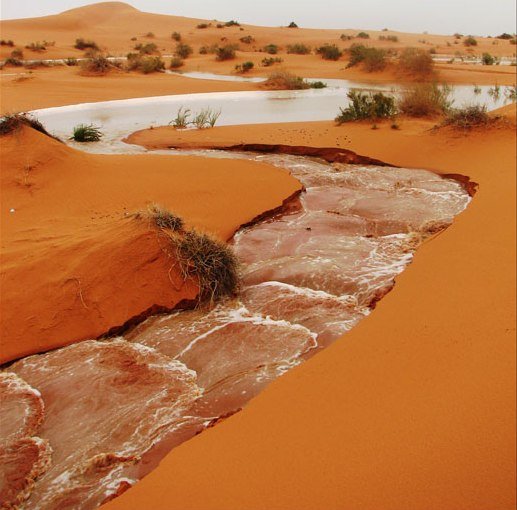
- Check seasonal conditions. Hail’s climate is more temperate than much of Saudi Arabia, including occasional winter rainfall, which is worth factoring into travel plans.
Hail’s heritage in context
Hail’s history as a Bedouin cultural centre and a stop on historic trade and pilgrimage routes has shaped much of what visitors come to see today. The region’s Arabian horse breeding tradition in particular has deep roots here, and Hail remains closely associated with this heritage within Saudi Arabia, alongside its long standing role as a centre of poetry and oral tradition within Bedouin culture. The Jubbah and Shuwaymis rock art sites extend this story back thousands of years further still, documenting a period when the surrounding desert supported a very different climate and way of life, with depictions of animals, human figures and daily scenes carved into the rock faces by people living in the region long before recorded history.
Taken together, this gives Hail a genuinely layered heritage offering, ancient rock art, Bedouin cultural tradition, and a dramatic natural landscape, that rewards visitors willing to spend more than a fleeting stop in the region, even though it remains one of the less visited parts of Saudi Arabia by international travellers.
Frequently asked questions
Can I fly directly into Hail?
Yes. Hail has its own regional airport with domestic connections, offering a direct route rather than requiring a long overland journey from other Saudi cities.
How far are the Jubbah and Shuwaymis rock art sites from the city?
They sit outside central Hail in the surrounding desert, so allow a meaningful amount of travel time and plan the visit as a dedicated excursion rather than a brief stop.
Do I need a driver to explore Hail’s surrounding attractions?
A private vehicle with a driver familiar with the region is strongly recommended, since many of Hail’s key sites are spread across desert terrain outside the city and are not well served by casual local transport.
Booking your Hail transport
Saudi Cab Co arranges fixed price, professionally driven transfers to and from Hail’s regional airport, along with vehicles for exploring the wider region’s rock art sites, mountain reserves and heritage locations. Booking ahead ensures a reliable, well planned route around a region where much of the appeal lies outside the city itself.
Related guides
- Hail Regional Airport Transfer: A Practical Guide
- NEOM and Tabuk: A Transport Guide for Visitors
- Asir National Park: A Visitor’s Guide from Abha
Checked sources
- Visit Saudi, visitsaudi.com
- Saudi Tourism Authority, sta.gov.sa
- GACA, gaca.gov.sa