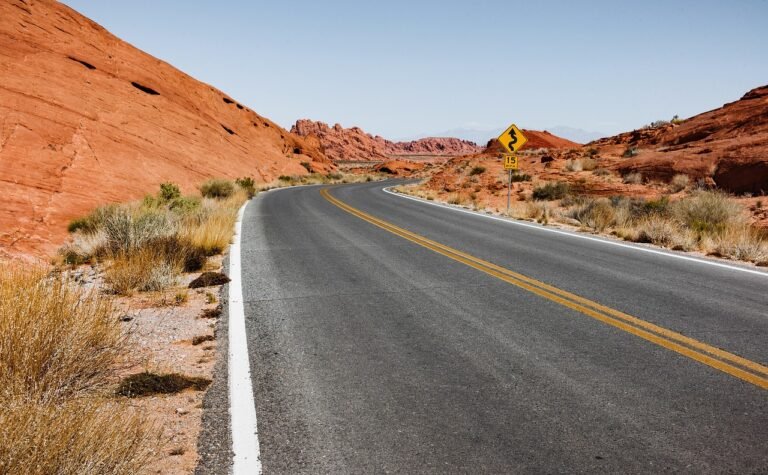
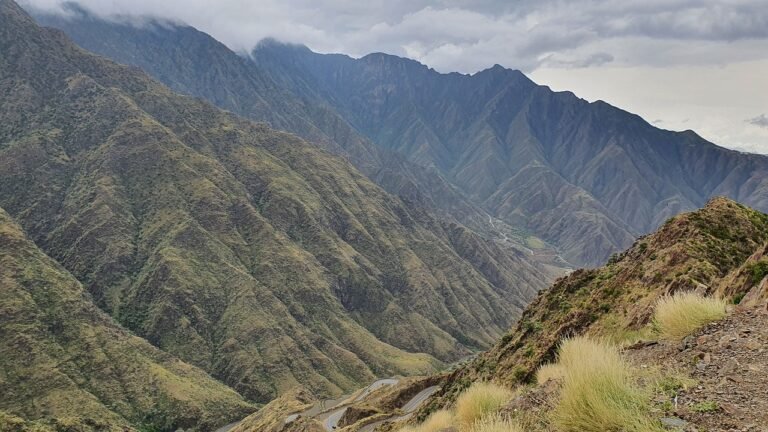
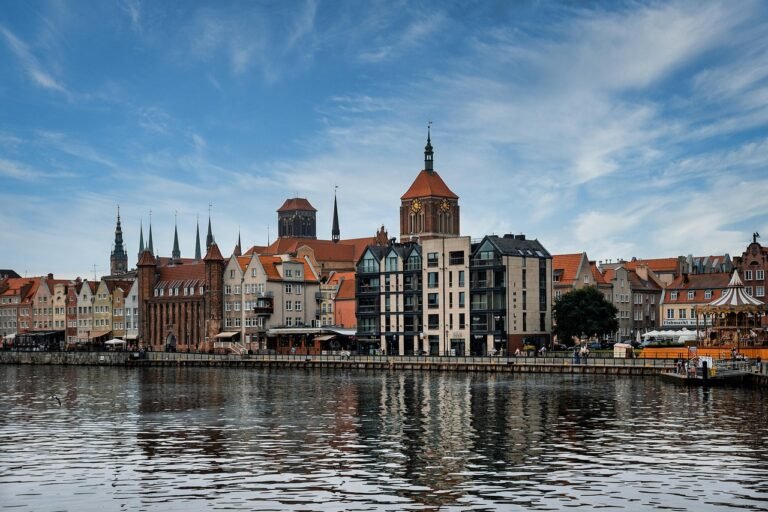
Hail, in northern Saudi Arabia, sits at the edge of the Nafud desert beneath the granite peaks of Jabal Aja and Jabal Salma. It has long been a crossroads city, historically tied to Bedouin heritage, Arabian horse breeding, and some of the region’s most significant rock art sites. For visitors exploring beyond Saudi Arabia’s better known coastal and central cities, Hail offers a genuinely different landscape and a slower, more heritage focused pace. This guide covers what to see and how to get around.
Hail rarely features prominently in a first time visitor’s Saudi Arabia itinerary, which is part of its appeal for travellers who have already covered the country’s more established destinations and are looking for somewhere genuinely different. Its combination of ancient rock art, mountain scenery and Bedouin heritage gives it a character distinct from both the coastal Red Sea destinations and the heritage cities further south, and this guide is written to help visitors plan a trip that does justice to a region that is easy to underestimate on paper.
Understanding Hail’s setting
Hail sits in a natural basin between the Aja and Salma mountain ranges, with the Nafud desert’s dramatic red sand dunes extending to the north. This combination of mountains and desert gives the wider Hail region a distinctive character within Saudi Arabia, and much of what draws visitors here, rock art, desert landscapes and traditional Najdi and Bedouin heritage, sits outside the city itself, in the surrounding countryside.
What to see in and around Hail
Jubbah and Shuwaymis rock art
The rock art sites at Jubbah and the Shuwaymis area, inscribed as a UNESCO World Heritage Site, contain thousands of petroglyphs and inscriptions documenting human presence in the region across thousands of years. These sites are a genuine draw for visitors interested in ancient history, and they sit some distance from the city centre, in open desert terrain.
Jabal Aja and the King Salman Royal Reserve
The granite peaks of Jabal Aja, along with protected areas such as the Al-Musamma Mountains within the King Salman Royal Reserve, offer dramatic desert mountain scenery and, in cooler months, opportunities for hiking and exploring the terrain.
Hail’s heritage and culture
The city itself retains elements of its role as a historic trading and cultural centre, including sites connected to its Bedouin and Arabian horse breeding heritage, an important part of the region’s identity.
How much time to allow
A single day is enough to get a taste of central Hail and perhaps one outlying site, but visitors keen to properly see both the Jubbah and Shuwaymis rock art areas and the Jabal Aja mountain scenery should plan for at least two to three days in the region. Rushing between sites in a single day risks turning what should be a considered, atmospheric visit, particularly to the rock art sites, into a series of brief, unsatisfying stops. Given how few visitors reach this part of Saudi Arabia relative to the coast or the heritage cities, those who do take the time tend to find the region considerably more rewarding than a quick detour would suggest.
Getting to Hail
Hail has its own regional airport with domestic connections, making it a realistic direct entry point rather than requiring a long overland drive from Riyadh or other major cities. For visitors combining Hail with a wider northern Saudi Arabia itinerary, road travel between Hail and neighbouring regions is also common, though distances across this part of the country are substantial.
Getting around the Hail region
Because many of Hail’s key attractions, the rock art sites, the mountain reserves and the wider desert landscape, sit outside the city itself, a private vehicle with a driver familiar with the region is the most practical way to explore. Desert routes in particular are not well suited to unfamiliar self drive visitors, and a local driver can also help navigate to sites that are not always clearly signposted for international visitors.
Practical visitor tips
Allow a full day for the rock art sites. Jubbah and Shuwaymis are a meaningful distance from central Hail, so build travel time into your plans rather than treating them as a quick stop.
Pack for desert conditions. Temperature swings between day and night can be significant, particularly outside the summer months.
Book a knowledgeable driver. Given how spread out Hail’s main attractions are, a driver familiar with the region adds real value beyond simply getting from A to B.
Check seasonal conditions. Hail’s climate is more temperate than much of Saudi Arabia, including occasional winter rainfall, which is worth factoring into travel plans.
Hail’s heritage in context
Hail’s history as a Bedouin cultural centre and a stop on historic trade and pilgrimage routes has shaped much of what visitors come to see today. The region’s Arabian horse breeding tradition in particular has deep roots here, and Hail remains closely associated with this heritage within Saudi Arabia, alongside its long standing role as a centre of poetry and oral tradition within Bedouin culture. The Jubbah and Shuwaymis rock art sites extend this story back thousands of years further still, documenting a period when the surrounding desert supported a very different climate and way of life, with depictions of animals, human figures and daily scenes carved into the rock faces by people living in the region long before recorded history.
Taken together, this gives Hail a genuinely layered heritage offering, ancient rock art, Bedouin cultural tradition, and a dramatic natural landscape, that rewards visitors willing to spend more than a fleeting stop in the region, even though it remains one of the less visited parts of Saudi Arabia by international travellers.
Frequently asked questions
Can I fly directly into Hail?
Yes. Hail has its own regional airport with domestic connections, offering a direct route rather than requiring a long overland journey from other Saudi cities.
How far are the Jubbah and Shuwaymis rock art sites from the city?
They sit outside central Hail in the surrounding desert, so allow a meaningful amount of travel time and plan the visit as a dedicated excursion rather than a brief stop.
Do I need a driver to explore Hail’s surrounding attractions?
A private vehicle with a driver familiar with the region is strongly recommended, since many of Hail’s key sites are spread across desert terrain outside the city and are not well served by casual local transport.
Booking your Hail transport
Saudi Cab Co arranges fixed price, professionally driven transfers to and from Hail’s regional airport, along with vehicles for exploring the wider region’s rock art sites, mountain reserves and heritage locations. Booking ahead ensures a reliable, well planned route around a region where much of the appeal lies outside the city itself.
Jubail, on Saudi Arabia’s Eastern Province coastline along the Arabian Gulf, is best known as one of the largest planned industrial cities in the world, home to major petrochemical and steel complexes alongside King Fahd Industrial Port. It is not typically thought of as a leisure destination, but the city has a growing corniche and beach scene, and its industrial identity is exactly why so many business travellers need a clear, practical guide to getting around it. This guide covers both sides of Jubail.
Most guides to Jubail are written either for business travellers heading to the industrial zone or for residents describing the coastal amenities, rarely both together. This guide is written for anyone approaching Jubail fresh, whether that is a first business trip to the Eastern Province or simply an interest in a part of Saudi Arabia that rarely appears on a typical tourist itinerary, and needs a clear picture of how the city actually fits together before arriving.
Understanding Jubail’s layout
Jubail is effectively split between its industrial zones, which host some of Saudi Arabia’s largest manufacturing and petrochemical facilities, and its residential and coastal areas, where the corniche, beaches and everyday city life are centred. The two are physically distinct, and business visitors heading to a specific plant or facility within the industrial city should confirm its exact location relative to the residential area, since distances and access routes between them can be significant.
What to see and do in Jubail
The Gulf coastline and corniche
Jubail’s Gulf coast offers a corniche and beach areas, including its New Beach development, giving residents and visitors a place to unwind away from the industrial zones. These areas have developed considerably in recent years, adding cafes, walking paths and family friendly spaces along the waterfront.
Jubail’s industrial city
For business travellers, Jubail Industrial City itself is the primary reason for a visit, home to some of the region’s largest petrochemical, steel and manufacturing operations. Navigating this zone efficiently, between meetings, site visits and accommodation, is a genuinely different task from a leisure day at the beach.
Local heritage
The wider Jubail area also has archaeological interest, including the remains of an ancient Nestorian church dating to around the fourth century, a reminder that the coastline has a much longer history than its modern industrial identity suggests.
Choosing where to stay in Jubail
As with several Eastern Province cities built around a major industrial zone, accommodation options in Jubail tend to cluster either near the residential and coastal district or closer to the industrial city’s perimeter, depending on the hotel’s primary customer base. Business travellers with meetings across multiple facilities may find it more efficient to base themselves centrally and accept a longer transfer to individual sites, rather than choosing a hotel near one specific facility and adding cross city journeys for every other meeting. A local, pre booked driver can help advise on the most efficient base for a specific multi site itinerary.
Getting to Jubail
Jubail does not have its own major international airport, so most visitors arrive via Dammam’s King Fahd International Airport or, for some business travel patterns, via Dammam or Khobar directly, before continuing to Jubail by road. This makes the onward road transfer an essential part of planning a Jubail trip, rather than an afterthought.
Getting around Jubail
Given the distances between the airport, the residential and coastal areas, and the industrial zones, a private vehicle is the practical way to get around Jubail for almost any type of visit. Business travellers in particular benefit from a pre booked driver who understands the layout of the industrial city and can plan routes around shift patterns and site access times, which can affect road conditions at certain times of day.
Practical visitor tips
Confirm your facility’s exact location. Jubail Industrial City covers a large area, so confirm which part of the zone your meeting or site visit is in before arranging transport.
Plan your airport transfer in advance. Since Jubail is most commonly reached via Dammam, factor the onward road journey into your overall travel time.
Balance business with the coastline. If your schedule allows, Jubail’s corniche and beach areas are a worthwhile way to spend downtime between meetings.
Check site specific access requirements. Many industrial facilities in Jubail have their own security and access procedures, so confirm these with your host before arrival.
Ask about return journeys to Dammam or Khobar. If your trip involves onward travel to the Eastern Province’s other cities, arranging this alongside your Jubail transport in one booking is usually more efficient than sorting each leg separately.
Jubail’s place in Saudi Arabia’s industrial story
Jubail Industrial City was established as a planned development from the ground up, part of a national strategy to build large scale downstream industry away from the country’s existing population centres. Decades on, it stands as one of the largest planned industrial cities anywhere in the world, home to a dense concentration of petrochemical, steel, fertiliser and plastics manufacturers that supply both domestic and export markets. For business travellers, this scale means Jubail is rarely a single stop destination, visits often involve multiple facilities spread across the zone, sometimes with different operators, security protocols and access points, which is exactly why reliable, pre planned transport between sites matters so much here.
The residential and coastal side of the city has developed alongside this industrial growth, built to support the large workforce the industrial zone employs, and this has gradually produced a more rounded city than its industrial reputation alone suggests, with schools, retail and the corniche development all part of everyday life for Jubail’s residents, not just an afterthought for visiting workers.
Frequently asked questions
Does Jubail have its own airport?
Jubail does not have a major international airport of its own. Most visitors arrive via Dammam’s King Fahd International Airport and continue to Jubail by road.
Is there anything to do in Jubail beyond the industrial sites?
Yes. Jubail’s Gulf coastline, corniche and beach areas, along with nearby archaeological sites, offer a leisure side to the city beyond its industrial reputation.
How do I get between Jubail’s industrial zones and the coastal areas?
These are physically separate parts of the city, and a private vehicle is the most practical way to move between them, particularly for business travellers with a tight schedule.
Booking your Jubail transport
Saudi Cab Co offers fixed price, professionally driven transfers between Dammam and Jubail, along with transport across the city’s industrial and coastal areas. For business travellers navigating site visits or leisure visitors exploring the corniche, a pre booked driver who knows Jubail’s layout makes for a considerably smoother trip than arranging transport on arrival.
Yanbu sits on Saudi Arabia’s Red Sea coast in Madinah province, a city that has long balanced two identities, a historic trading port with centuries of maritime history, and one of the country’s major industrial centres. For visitors, that combination makes for an unusual but rewarding mix, a walkable old town with traditional coral stone architecture sitting alongside significant Red Sea diving and coastal tourism. This guide covers the essentials for getting oriented, and getting around, in Yanbu.
Visitors researching Yanbu for the first time are often surprised at how little overlap there is between what search results describe, an industrial powerhouse, and what a leisure visit to the old town and coastline actually feels like. Both descriptions are accurate, they simply apply to different parts of the same city, and understanding that distinction early makes planning a Yanbu trip considerably more straightforward.
Understanding Yanbu’s layout
Yanbu is really best understood as two connected areas. Yanbu Al-Bahr, the older coastal town, holds the historic core, including restored traditional houses in the old town and access to the Red Sea coastline and its diving and snorkelling sites. Yanbu Al-Sinaiyah, the industrial city a short distance away, is home to major petrochemical and industrial facilities, including the King Fahd Industrial Port, one of Saudi Arabia’s most significant port complexes. Most leisure visitors will spend their time in and around Yanbu Al-Bahr, while business travellers are more likely to be heading for the industrial zone.
What to see in Yanbu
The historic old town
Yanbu’s old town preserves traditional Hejazi coral stone buildings, with wooden balconies and narrow lanes that reflect the city’s long history as a Red Sea trading port and, historically, a gateway for pilgrims travelling on to Madinah. Walking through this district gives a strong sense of the city’s maritime heritage.
The Red Sea coastline
Yanbu’s coral reefs are among the more accessible diving and snorkelling sites on Saudi Arabia’s Red Sea coast, with several operators offering trips to nearby reef sites. The coastline also includes beaches and corniche areas suited to a more relaxed visit.
King Fahd Industrial Port
For business visitors, Yanbu’s industrial port and surrounding petrochemical complexes are a major reason for travel to the city, and getting around this zone efficiently is a different logistical exercise from a leisure visit to the old town.
Choosing where to stay in Yanbu
Accommodation choice makes a real difference to how convenient a Yanbu trip feels. Hotels closer to Yanbu Al-Bahr suit leisure visitors focused on the old town and diving, with easier access to the coastline and historic sites, while business travellers heading to the industrial zone will generally find accommodation closer to Yanbu Al-Sinaiyah more practical, cutting down daily commute time to meetings and site visits. Visitors with a mixed itinerary, some business, some leisure, should weigh which side of the city their majority of time will be spent in, and choose accordingly, rather than assuming a single central location will suit both equally well.
Getting to Yanbu
By air
Yanbu has its own airport with domestic connections, making it a realistic direct entry point rather than requiring a long overland transfer from Jeddah or Madinah for every visit.
By road
Yanbu is also reachable by road from Madinah and Jeddah, a route used by both business travellers heading to the industrial zone and leisure visitors combining Yanbu with other Red Sea coast stops.
Getting around Yanbu
Given the physical separation between Yanbu Al-Bahr and Yanbu Al-Sinaiyah, and the distances involved in reaching diving operators, hotels and industrial sites, a private vehicle is the most practical way to move around the city. This is particularly true for business travellers whose itinerary may include multiple site visits across the industrial zone in a single day, where a pre booked driver familiar with the area saves considerable time compared with arranging transport for each leg separately.
Practical visitor tips
Separate your old town and industrial zone plans. These are distinct parts of the city, and treating them as a single compact destination will lead to an inefficient day.
Book diving trips in advance. Reputable dive operators in Yanbu can fill up, particularly during cooler months when Red Sea diving conditions are most popular.
Confirm industrial site access requirements. Business visitors heading to facilities within the industrial zone should check any site specific access or security requirements before travelling.
Plan for heat on the coast. Coastal humidity can make Yanbu’s summer feel more intense than the temperature alone suggests, so plan outdoor activities for cooler parts of the day.
Consider a combined itinerary. Some visitors combine Yanbu with a wider Red Sea coast trip, so check whether onward transport to other coastal destinations is worth arranging as part of the same booking.
Yanbu’s role in Saudi Arabia’s wider economy
Yanbu’s industrial significance is genuinely national in scale. As one of Saudi Arabia’s principal petrochemical and refining hubs, the city plays a central role in the country’s downstream energy industry, and King Fahd Industrial Port ranks among the busiest in the kingdom for both crude exports and industrial cargo. This is why Yanbu features so prominently on business travel itineraries, often for visitors who might otherwise never consider the city, and it explains the steady stream of corporate and contractor traffic that keeps the industrial zone’s hotels and transport demand consistently high, independent of any tourism season.
At the same time, the city’s tourism ambitions have grown in step with the wider Red Sea coast’s development. Yanbu’s reefs, while less internationally known than those further south near the Red Sea Global destinations, offer a genuinely good and considerably less crowded diving experience, and the old town’s restoration has given the city a heritage draw that stands on its own, separate from its industrial reputation.
Frequently asked questions
Is Yanbu worth visiting for leisure, not just business?
Yes. Yanbu Al-Bahr’s historic old town and Red Sea diving and snorkelling sites give it a genuine leisure appeal distinct from its industrial reputation.
How far apart are Yanbu’s old town and industrial areas?
They are separate districts within the wider city, connected by road but not realistically covered on foot, which is why a vehicle is the practical way to move between them.
Can I fly directly into Yanbu?
Yes. Yanbu has its own airport with domestic connections, offering a more direct route than travelling overland from Jeddah or Madinah.
Booking your Yanbu transport
Saudi Cab Co provides fixed price, professionally driven transfers across Yanbu, from airport pickups to journeys between the old town, the coastline and the industrial zone. Whether your visit is centred on diving and heritage or business meetings at the port, booking ahead ensures reliable transport across a city that genuinely benefits from a vehicle rather than relying on casual local options.
Jeddah Corniche: A Visitor’s Guide to the Waterfront
Reviewed planning guidance. Details can change; use the linked official sources and get a live quote for current pricing and availability.
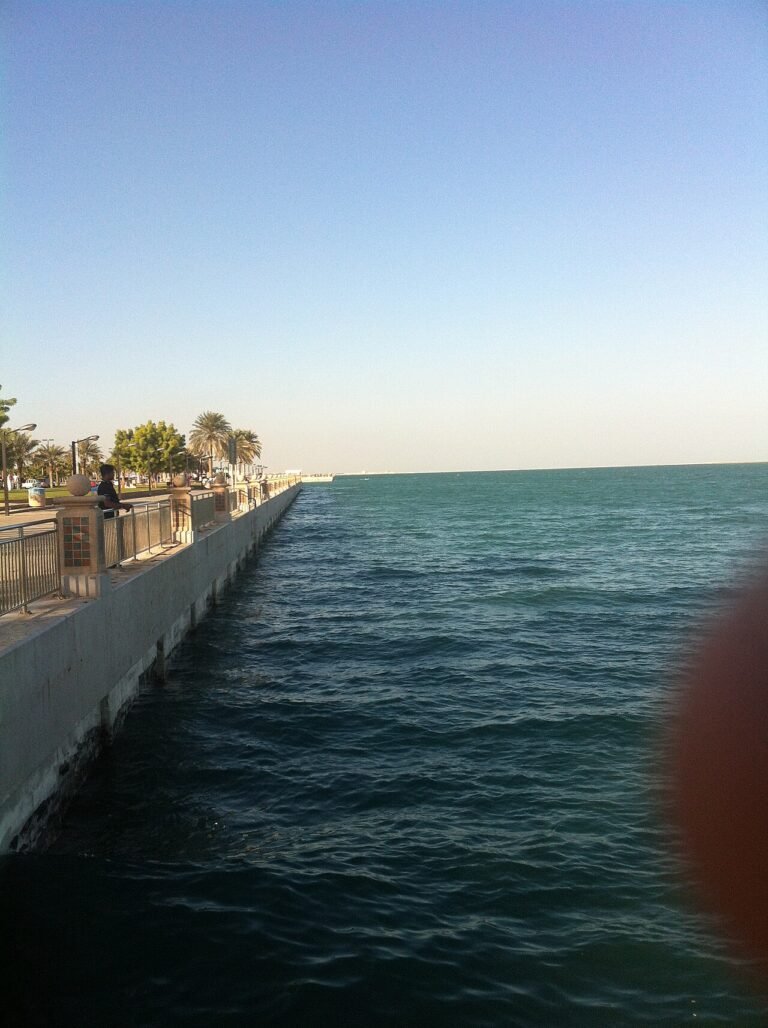
Jeddah’s Corniche is the city’s defining public space, a long stretch of Red Sea waterfront lined with parks, sculptures, restaurants and the famous King Fahd’s Fountain, one of the tallest of its kind in the world. For a visitor with even half a day free in Jeddah, the Corniche is generally the single best use of that time, but it is also long enough, stretching many kilometres along the coast, that getting around it efficiently is worth a little planning.
Understanding the Corniche’s scale
The Corniche is not a single short waterfront walk; it runs for a considerable distance along Jeddah’s coastline, taking in distinct sections with their own character, from open-air sculpture displays to family park areas to quieter stretches further from the city centre. A visitor trying to see the highlights on foot alone will find the distances add up quickly, particularly in Jeddah’s heat outside the cooler evening hours, which is why most visitors see the Corniche as a series of stops by vehicle rather than a single continuous walk.
King Fahd’s Fountain and the northern Corniche
King Fahd’s Fountain, sending seawater far into the sky, is Jeddah’s most recognisable landmark and is best seen, according to most visitors, in the evening when it is lit. The fountain and the surrounding northern Corniche area are a natural starting point for a visit, with several other attractions and dining spots within a reasonable drive of each other along this stretch.
A driver who can drop you near the fountain viewing area and collect you again after, rather than trying to find parking yourself during a busy evening, removes one of the more frustrating parts of a Corniche visit, particularly since the fountain’s most popular viewing times cluster in the same evening hours as everyone else’s.
The sculpture-lined stretches and open-air art
Sections of the Corniche double as an open-air sculpture park, with public art installations by artists from around the world set along the waterfront, a detail that surprises many first-time visitors who expect a conventional beachfront promenade rather than an outdoor gallery. Seeing a meaningful stretch of this art means covering real distance along the coast, which again favours a vehicle-based visit with stops, rather than trying to walk the full length in one go.
Boats, water activities and the southern Corniche
Further along the Corniche, boat trips and water-based activities are a popular way to see Jeddah from the water rather than the shore, and several operators run short trips out into the bay from points along the waterfront. If a boat trip or water activity is part of your plan, coordinating a pickup time with your transport in advance saves the awkwardness of arranging onward transport from a marina or jetty area with limited passing traffic.
If your Jeddah visit is combined with business elsewhere in the city, our guide to Jeddah for business travellers covers the wider city beyond the waterfront.
Planning a Corniche visit around the rest of your trip
Most visitors see the Corniche as one part of a wider Jeddah visit rather than the whole trip, often combining it with the historic Al-Balad old town or business meetings elsewhere in the city. Booking a vehicle for a half-day or evening that covers the Corniche’s key stops, rather than treating it as a separate standalone booking, is generally the more efficient way to fit it around everything else on your itinerary.
Plan the Corniche as a series of stops by vehicle rather than a single long walk, given its real length along the coast.
Consider an evening visit for King Fahd’s Fountain specifically, when it is lit and at its most impressive.
If a boat trip is part of your plan, coordinate your pickup time in advance rather than arranging onward transport from the marina on arrival.
Combine a Corniche visit with Al-Balad old town or other city stops in one booked itinerary where your schedule allows.
Al-Balad old town, close by but genuinely distinct
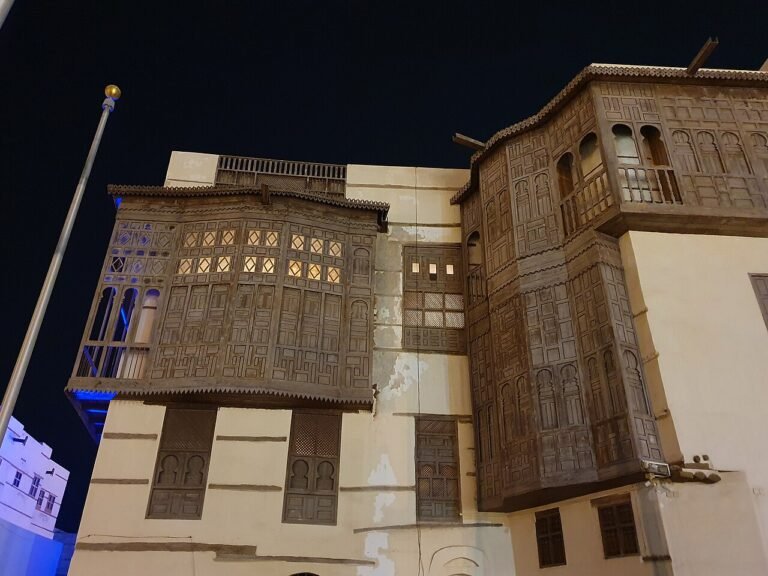
Jeddah’s historic Al-Balad district, a UNESCO World Heritage old town of coral-stone buildings and traditional wooden latticework balconies, sits a short drive inland from the Corniche and makes a natural pairing for visitors who want both the waterfront and the city’s older architectural heritage in one visit. The contrast between the two, modern waterfront sculpture and fountain on one side, centuries-old trading city architecture on the other, is part of what makes combining them worthwhile, and a single half-day itinerary covering both is a common and efficient way to see two of Jeddah’s most distinctive sides in one outing.
Best time of day and time of year to visit
Jeddah’s daytime heat, particularly from late spring through summer, makes an outdoor Corniche visit considerably more comfortable in the late afternoon and evening than at midday, which is also when the waterfront is at its liveliest with local families and visitors alike. Cooler months from autumn through early spring offer more flexibility for a daytime visit if evenings do not suit your schedule, but even then, the golden hour before sunset and the lit fountain afterward remain the most rewarding time to see the Corniche at its best.
Frequently asked questions
Can I walk the whole Corniche in one visit?
It is possible but generally impractical given its real length along the coast, particularly in Jeddah’s daytime heat. Most visitors see it as a series of stops by vehicle.
When is the best time to see King Fahd’s Fountain?
In the evening, when it is lit, according to most visitors. This is also the Corniche’s busiest period, so pre-arranged transport avoids the evening parking search.
Is the Corniche really an open-air art gallery?
Yes, sections feature public sculpture installations along the waterfront, a detail that surprises many first-time visitors.
Can I combine a Corniche visit with Al-Balad old town?
Yes, and booking one vehicle to cover both in a single half-day or evening itinerary is generally more efficient than two separate trips.
Are boat trips available from the Corniche?
Yes, several operators run short trips from points along the waterfront. Coordinate your transport pickup time in advance if this is part of your plan.
Visitor attractions and operating hours can change. These official sources are provided so you can check the current position for your visit. Checked 2026-07-25.
Book your Jeddah Corniche evening with Saudi Cab Co and let your driver handle the parking while you enjoy the waterfront.
Dammam and the Eastern Province: A Transport Guide
Reviewed planning guidance. Details can change; use the linked official sources and get a live quote for current pricing and availability.
Dammam and the wider Eastern Province, including Khobar and Dhahran, form Saudi Arabia’s oil and industrial heartland, and also one of its most underrated stretches of Gulf coastline. Visitors here are more often business travellers connected to the region’s energy sector than international tourists, but the Corniche, the King Fahd Causeway to Bahrain and a genuinely pleasant waterfront make it worth a visitor’s attention beyond the industrial connection. This guide covers getting around the Eastern Province once you have arrived, alongside our separate guide to Dammam and Khobar airport transfers.
Dammam, Khobar and Dhahran: one region, three cities
The Eastern Province’s urban area is really a cluster of closely connected cities rather than a single centre: Dammam is the provincial capital and administrative hub, Khobar is known for its Corniche and a livelier commercial and dining scene, and Dhahran is closely tied to the region’s energy industry and its university and research institutions. The three run into each other closely enough that many visitors move between them regularly over the course of a single trip, which makes understanding the geography worth doing before you arrive rather than after.
For business visitors specifically, knowing which of the three cities your meetings are actually in, since addresses can look deceptively close together on a map while representing a real drive in practice, is worth confirming in advance with whoever has arranged your itinerary.
The Corniche and the Gulf waterfront
The Corniche, running along the Gulf coastline through Dammam and Khobar, is the region’s best-known leisure destination, with waterfront walkways, family attractions and a noticeably relaxed pace compared with the province’s industrial character elsewhere. Khobar’s Corniche in particular has developed into a genuine evening destination, with dining and family attractions drawing both residents and visitors passing through the region on business.
A pre-booked driver who can take you along the Corniche at a comfortable pace, waiting between stops if you want to see more than one section, is a more relaxed way to see the waterfront than trying to combine it with a fixed public transport schedule, particularly for a visitor with limited time between business commitments.
The King Fahd Causeway and onward travel to Bahrain
The King Fahd Causeway connects the Eastern Province directly to Bahrain, and it is a genuinely popular route for both business travellers extending a Gulf trip and leisure visitors combining the two destinations. Crossing the causeway involves its own border and documentation requirements, which are worth confirming with travel.state.gov or the gov.uk travel advice pages for your specific nationality well before you plan to cross, since requirements can differ depending on your passport and visa status.
If a causeway crossing is part of your itinerary, arranging transport to the crossing point in advance, with a driver aware of typical border wait times, removes one source of uncertainty from what can otherwise be an unpredictable part of a multi-country trip.
Business travel across the three cities
Because Dammam, Khobar and Dhahran host different concentrations of business activity, energy sector offices and research institutions in Dhahran, commercial and administrative functions in Dammam, and a broader commercial mix in Khobar, a single business trip to the region often involves moving between all three over the course of a few days. A pre-booked vehicle for the full visit, rather than arranging separate transport for each meeting, is generally the more efficient way to manage a schedule that crosses the three cities repeatedly.
Confirm which of the three cities, Dammam, Khobar or Dhahran, your specific destination is in, since they are closely connected but genuinely separate journeys.
If a King Fahd Causeway crossing is part of your trip, check current documentation requirements well in advance.
Book a driver for the Corniche if you want to see the waterfront at a relaxed pace rather than a single fixed stop.
For a multi-day business visit across the three cities, one pre-booked vehicle for the full trip is generally more efficient than booking each leg separately.
Half Moon Bay and coastal day trips
South of Dammam, Half Moon Bay is a popular day-trip destination known for its calm, shallow waters and a noticeably more relaxed pace than the cities immediately to its north. It is a genuine favourite with residents and visitors alike for a beach day away from the more industrial parts of the province, though it sits a real drive from central Dammam rather than being a short local trip. A pre-booked return journey, with a pickup time agreed in advance for the trip back, avoids the awkwardness of arranging onward transport from a beach location with limited passing traffic once your day trip is over.
Best time of year to visit the Eastern Province
Like much of Saudi Arabia’s Gulf coast, the Eastern Province’s summer months bring high heat and humidity that make outdoor activity, including a Corniche walk or a Half Moon Bay visit, considerably less comfortable than during the cooler months from late autumn through early spring. Business travel happens year-round regardless of climate, but if your trip has any flexibility and includes leisure time on the waterfront, the cooler season is worth favouring, and evening rather than daytime visits to outdoor sites are generally more comfortable even during the warmer months.
Frequently asked questions
Are Dammam, Khobar and Dhahran effectively one city?
They are closely connected but administratively separate cities. Confirm which one your specific destination is in before booking transport.
What is the Corniche best known for?
A Gulf-facing waterfront with walkways and family attractions, running through Dammam and Khobar, and generally considered the region’s main leisure destination.
Can I cross to Bahrain from the Eastern Province?
Yes, via the King Fahd Causeway. Check current documentation requirements for your nationality with travel.state.gov or gov.uk travel advice before you plan to cross.
Is this mainly a business travel destination?
Business travel connected to the energy sector is a significant share of visitors, but the Corniche and waterfront make the region worth a visit for leisure travellers too.
Should I book separate transport for each city if my trip covers all three?
Generally no. A single pre-booked vehicle for the full visit is usually more efficient than arranging separate transport for each city.
Border, visa and visitor arrangements can change. These official sources are provided so you can check the current position for your journey. Checked 2026-07-25.
Book your Eastern Province transport with Saudi Cab Co and get a driver who knows Dammam, Khobar and Dhahran as one connected region.
Taif: A City Guide Beyond the Airport Transfer
Reviewed planning guidance. Details can change; use the linked official sources and get a live quote for current pricing and availability.
Taif has been the Hejaz region’s mountain retreat for generations, a cooler escape from the Makkah and Jeddah heat, famous above all for the roses grown on its terraced hillsides. Beyond the transport-focused guides we have already published on getting to Taif, this one is about Taif itself: what the city offers a visitor, and how to get around once you have arrived. If you are still planning the journey there, our separate guides to Taif Regional Airport transfers and the Jeddah to Taif mountain road cover getting there.
Why Taif is different from the cities below it
Sitting at altitude in the Hejaz mountains, Taif has a noticeably cooler climate than Jeddah or Makkah, which has made it a traditional summer retreat for centuries and, more recently, a government summer capital during the hottest months. That elevation is also why the region became known for rose cultivation: Taif’s Damask roses, grown on terraced hillside farms, are harvested each spring for rose water and oil production that has genuine international reputation. The result is a city with a distinctly different character and pace from the coastal and holy cities below it, worth visiting for its own sake rather than purely as a transport waypoint.
The rose season and Taif’s farms
If your visit falls during the spring rose harvest, a trip out to the terraced rose farms in the hills around the city is one of Taif’s genuine highlights, with the scent alone making the drive worthwhile during peak harvest weeks. Outside the harvest season, the terraces are still worth a visit for the scenery and the region’s rose-processing heritage, though the specific harvest timing varies by year and is worth checking with visitsaudi.com before you plan a trip specifically around it.
The farms are spread across the hills rather than concentrated in one accessible spot, so a driver who knows the local roads and can plan a route between several farms, rather than a single stop, gets considerably more out of a rose season visit.
Al-Hada and the mountain escarpment road
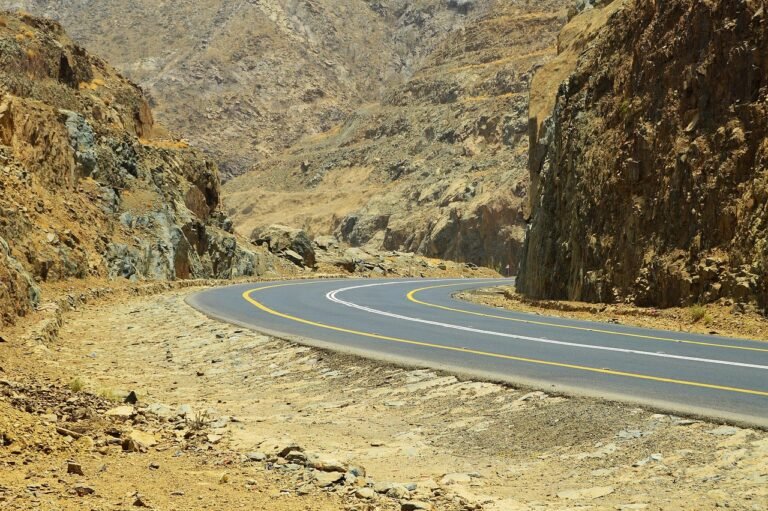
The Al-Hada road, winding down the escarpment between Taif and the lowlands, is a striking piece of mountain engineering in its own right, with switchback turns and genuine elevation change that make for a memorable drive, along with the famous cable car that has historically carried passengers along part of the route. This is also, worth noting plainly, a road that demands a driver experienced with mountain conditions, given the sharp turns and occasional mist at altitude, rather than a first-time visitor attempting it independently in an unfamiliar hire car.
Shubra Palace and Taif’s old town
Shubra Palace, a well-preserved historic building in Taif’s old town, offers a glimpse of the city’s earlier architectural style and is generally regarded as one of its more worthwhile heritage stops. Souq Okaz, the site of a historic pre-Islamic trading fair, and the wider old town area round out a visit for anyone interested in the region’s history beyond its mountain scenery. These sites are spread across the city rather than clustered together, so building a loose half-day itinerary with a waiting driver, rather than trying to see everything on foot, is the more practical approach for a first visit.
Planning a Taif visit around a Makkah or Jeddah trip
Many visitors combine Taif with a wider Makkah or Jeddah itinerary, using the mountain city as a day trip or an overnight escape from the heat of the coastal cities. Because the drive up the escarpment takes real time and the roads themselves are part of the experience rather than something to rush, it is worth allowing a full day for a Taif visit rather than treating it as a quick side trip, and booking transport for the whole day rather than a single one-way transfer.
Check current rose harvest timing with visitsaudi.com if your visit is planned specifically around it.
Book a driver experienced with the Al-Hada escarpment road rather than attempting it independently in an unfamiliar vehicle.
Allow a full day for a Taif visit from Makkah or Jeddah, given the drive time up the mountain.
Group Shubra Palace, the old town and any rose farm visits into one loosely planned itinerary with a waiting vehicle.
Best time of year to visit Taif
Taif’s cooler climate is at its most appealing during the summer months, when it offers genuine relief from the heat of Makkah and Jeddah below, which is exactly why it has traditionally served as a summer retreat. Outside summer, the city is noticeably cooler still, particularly in the evenings, and winter visits can be genuinely chilly by Saudi Arabian standards, so packing accordingly rather than assuming the desert heat of the lowlands applies here too is worth remembering.
Where to eat and where to base yourself
Taif’s dining scene reflects its role as a retreat destination, with a good spread of restaurants catering to both day-trippers and visitors staying longer, generally concentrated around the city centre and the areas nearest the main viewpoints. For a longer stay rather than a day trip, the city has an established hotel base that fills up during peak summer weekends, so booking accommodation in advance during the busiest months is worth doing rather than assuming availability on arrival. A local driver can also be a useful source of informal recommendations for both, having typically seen how visitor preferences shift across the seasons.
Frequently asked questions
When is Taif’s rose harvest season?
It falls in spring, though exact timing varies by year. Check visitsaudi.com for current dates if your visit is planned specifically around the harvest.
Is the Al-Hada road difficult to drive?
It involves sharp switchback turns and real elevation change, and is best driven with an experienced local driver rather than attempted independently in an unfamiliar hire car.
Can I visit Taif as a day trip from Jeddah or Makkah?
Yes, though the drive up the escarpment takes real time, so allowing a full day rather than a quick side trip is worth planning for.
What is Shubra Palace?
A well-preserved historic building in Taif’s old town, generally considered one of the city’s more worthwhile heritage stops.
Is Taif only worth visiting during rose season?
No. The cooler climate, mountain scenery, old town and heritage sites are worth a visit throughout the year, though rose season adds a specific extra highlight in spring.
Seasonal timing and visitor arrangements can change. These official sources are provided so you can check the current position for your trip. Checked 2026-07-25.
Book your Taif day out with Saudi Cab Co and let a local driver navigate the mountain roads while you take in the scenery.
Asir National Park: A Visitor’s Guide from Abha
Reviewed planning guidance. Details can change; use the linked official sources and get a live quote for current pricing and availability.
Asir National Park is one of Saudi Arabia’s genuine scenery surprises: misty, forested highlands over 2,000 metres above sea level, a world away from the desert landscape most visitors expect. The park sits above and around Abha, and its best-known feature for visitors, the Al Soudah cable car, carries passengers down the escarpment toward the park’s lower reaches. This guide focuses specifically on visiting the park and its cable car, alongside our separate, broader guide to transport around the wider Abha and Aseer region.
What makes Asir National Park distinct
Asir National Park covers a large stretch of Saudi Arabia’s southwestern highlands, with terrain that shifts from juniper forest to dramatic cliff edges to seasonal cloud cover that gives the region its cooler, greener character. Al Soudah, near the park’s edge, is the highest point in the kingdom and the site of the cable car that carries visitors down the escarpment, offering views that are genuinely unlike anywhere else in the country. The park’s elevation also means a noticeably different climate to the rest of Saudi Arabia, cooler for much of the year and occasionally cold enough for a light frost in winter, which is itself part of the appeal for domestic visitors escaping the heat of the lowlands.
Because the park is a protected natural area rather than a conventional city attraction, current opening arrangements, trail access and any seasonal restrictions are worth checking directly with visitsaudi.com before you travel, since access to specific areas can vary with weather and season.
Getting to the park from Abha
Abha, the regional capital, is the practical base for most visitors to Asir National Park, and the park’s main access points are a manageable drive from the city rather than a full day’s journey. That said, the mountain roads themselves, with their switchbacks and elevation changes, are a different driving experience to the flat highway network most visitors are used to elsewhere in the country, and a driver familiar with the local roads is a genuine advantage, particularly if cloud or mist reduces visibility on the escarpment sections.
If your trip starts by flying into Abha, our broader regional guide covers airport transfers and getting around the wider Aseer region; this guide picks up from there with the specific detail of reaching the park and the cable car itself.
The Al Soudah cable car
The cable car at Al Soudah is the park’s signature visitor experience, carrying passengers down the mountainside toward the lower slopes with views across the escarpment that are difficult to replicate anywhere else in Saudi Arabia. As with any mountain attraction, operating hours and conditions can be affected by weather, particularly mist and high winds, so building some flexibility into your schedule rather than a single fixed time slot is worth doing, along with checking current operating status before you set out from Abha.
A pre-booked driver who can wait at the cable car station while you complete the ride, rather than arranging a separate pickup, removes one layer of coordination from what is already a weather-dependent activity, and is generally the more relaxed way to visit if your schedule allows for it.
Combining the park with the wider Aseer region
Many visitors combine a trip to Asir National Park with a visit to Rijal Almaa, the region’s well-known heritage village of stacked stone-and-wood buildings, or with time in Abha itself. Since these sites are spread across the wider mountain region rather than clustered in one place, a vehicle booked for the full day, able to move between the park, the cable car, and any heritage or city stops, is generally more practical than booking each leg as a separate short trip.
Check current cable car operating status before setting out, since mist and wind can affect availability.
Dress for a noticeably cooler climate than the rest of Saudi Arabia, particularly if visiting outside the summer months.
Book a driver who knows the mountain roads specifically, rather than relying purely on satellite navigation through unfamiliar switchback sections.
If combining the park with Rijal Almaa or other regional sites, plan the whole day as one itinerary rather than separate bookings.
Rijal Almaa heritage village
Rijal Almaa, a well-preserved village of distinctive stacked stone-and-timber tower houses, is one of the Aseer region’s most photographed heritage sites and a natural pairing with a national park visit. The village’s architecture, with its decorated facades and dramatic hillside setting, reflects a building style specific to this part of Saudi Arabia and is increasingly promoted as a heritage tourism destination in its own right through Visit Saudi’s official channels. The village sits a further drive from both Abha and the national park itself, so visitors combining all three in one day should build in realistic travel time between each stop rather than treating them as adjacent.
Hiking, camping and longer stays in the park
Beyond the cable car, Asir National Park has genuine hiking terrain for visitors who want to spend longer than a single afternoon exploring, along with designated camping areas that are popular with domestic visitors during the cooler months. Trail conditions and camping arrangements can change with season, and some areas may have access restrictions during particular times of year, so checking current guidance before planning anything beyond a standard day visit is worth doing. For a visitor without their own camping equipment or hiking experience in mountain terrain, a shorter guided day visit focused on the cable car and main viewpoints is generally the more practical starting point.
Frequently asked questions
Is Asir National Park the same as visiting Abha city?
No. Abha is the regional capital and the practical base for a visit, while the national park and the Al Soudah cable car are a separate destination a drive away from the city itself.
Can weather affect a visit to the park or cable car?
Yes. Mist and high winds are common at this elevation and can affect cable car operating status. Check current conditions before setting out and allow some flexibility in your schedule.
Is the climate really different from the rest of Saudi Arabia?
Yes, noticeably. The park’s elevation gives it a cooler, sometimes cloud-covered climate that is one of the main reasons domestic visitors travel there.
Do I need a driver experienced with mountain roads specifically?
It is a genuine advantage. The escarpment roads around the park involve switchbacks and elevation changes that differ from the flat highway driving found elsewhere in the country.
Can I combine a park visit with Rijal Almaa heritage village in one day?
Yes, many visitors do. Booking a vehicle for the full day that can move between sites is generally more practical than arranging each stop separately.
Visitor arrangements at natural and heritage sites can change with season and weather. These official sources are provided so you can check the current position for your visit. Checked 2026-07-25.
Book your Asir National Park and Al Soudah cable car transfer with Saudi Cab Co and travel the mountain roads with a driver who knows the region.
NEOM and Tabuk: A Transport Guide for Visitors
Reviewed planning guidance. Details can change; use the linked official sources and get a live quote for current pricing and availability.
NEOM is the most talked-about development in Saudi Arabia’s Vision 2030 programme, and Tabuk is the region that hosts it. For visitors, the two are closely linked but not the same thing: Tabuk is an established city with its own airport, history and Red Sea coastline, while NEOM is a giant, still-developing project spread across a wide stretch of the province’s northwest, including THE LINE, Oxagon and the Red Sea coast resorts. Whether your trip is business, an early look at NEOM’s opening developments, or the Red Sea’s northern beaches, this guide covers how to plan the transport side of a visit to this part of the country.
Tabuk and NEOM: two different scales of place
Tabuk city is a long-established regional capital in Saudi Arabia’s northwest, with its own airport, a settled population, and a role as the administrative and logistical base for the wider province. NEOM, by contrast, is a giant special economic zone rather than a single city: its various components, including THE LINE, the industrial hub Oxagon, and the mountain destination Trojena, are spread across a large area of desert, coastline and mountain terrain, connected by roads that are still being built out as the project develops. A visitor telling a taxi driver “take me to NEOM” is a bit like saying “take me to a province” rather than a specific address, so knowing which component of the project you are actually visiting matters for planning the journey.
For most visitors today, Tabuk city and its airport remain the practical gateway to the wider region, whether the onward destination is a NEOM-related business visit, the Red Sea coast, or Tabuk’s own historical sites. Check current routes and any NEOM-specific arrival options on gaca.gov.sa and visitsaudi.com before you travel, since this is one of the fastest-changing regions of the country in terms of infrastructure.
Who is travelling to Tabuk and NEOM right now
Business travellers connected to NEOM’s ongoing construction and development make up a significant share of current visitors, arriving for contractor meetings, site visits and supplier relationships tied to the project’s various phases. Tabuk’s own economy, including its agricultural sector and role as a logistics base for the northwest, brings a steady flow of domestic business travel independent of NEOM specifically. A smaller but growing number of leisure visitors are drawn by the region’s Red Sea coastline and mountain scenery, particularly as resort developments along the coast begin to open to the public.
Whatever brings you to the region, the practical starting point is the same: know which specific location you are heading to, since distances within Tabuk province are considerably larger than within a single city, and treat the transport leg as something to plan in advance rather than arrange on arrival.
Getting from Tabuk airport to your destination
Tabuk’s airport serves as the main air gateway to the province, with domestic connections to Saudi Arabia’s other major cities. From the airport, onward journeys vary enormously depending on your destination: a hotel within Tabuk city itself is a short transfer, while a NEOM-related destination on the coast or in the mountains can be a considerably longer drive across open desert and developing road infrastructure.
A pre-booked transfer is worth arranging in advance for any NEOM-related leg specifically, since this is not yet an area with the taxi rank and ride-hailing density of Riyadh or Jeddah, and a driver who already has your destination and can plan the route saves real uncertainty on arrival. If your itinerary combines Tabuk with other northern or coastal destinations, our guide to Red Sea resort transfers covers the broader coastal picture, much of which applies to this region too.
Tabuk’s own history and scenery, beyond NEOM
Tabuk is worth a visit in its own right, independent of any NEOM connection. The region sits on the historic route of the Hijaz Railway, and Tabuk Castle and the old town area reflect a much longer history than the current development boom suggests. The province’s landscape, from mountainous terrain to the Red Sea coastline, is genuinely striking and increasingly promoted as a leisure destination through Visit Saudi’s official channels, which are worth checking for current sites open to visitors and any seasonal access restrictions.
For a visitor combining business with some sightseeing, or a leisure traveller exploring the northwest independently of the NEOM developments, building a realistic itinerary means treating road journeys between sites generously: this is a large, sparsely populated province, and distances that look short on a map can be a genuine multi-hour drive.
Planning a multi-stop northwest Saudi itinerary
Because Tabuk province covers such a wide area, from the city itself to the coast to the mountain and desert interior, a single pre-booked vehicle that can wait between stops is generally more practical than arranging separate journeys for each leg of a multi-site visit. This matters even more here than in a compact city, since alternative transport options thin out quickly once you are away from Tabuk city itself.
Confirm exactly which NEOM component or coastal site you are visiting, since “NEOM” alone does not specify a single address or distance.
Book transport for the full itinerary in advance where possible, rather than assuming options will be available at each stop.
Build in realistic travel times between sites; distances across the province are considerably longer than within a single city.
Check visitsaudi.com for current site access and any seasonal closures before finalising your itinerary.
The Red Sea coast and resort developments
Tabuk province’s Red Sea coastline is home to some of Saudi Arabia’s newest tourism development, part of the wider Red Sea Project bringing resort islands and coastal destinations to a stretch of coast that was largely undeveloped until recently. These resorts are generally reached via their own dedicated arrival arrangements rather than a conventional taxi journey from Tabuk city, and specific transfer options can vary by resort and by how developed that particular site currently is. Confirm your resort’s own recommended arrival route directly with them, or check visitsaudi.com, before assuming a standard airport transfer covers the full journey.
For a visitor combining a coastal resort stay with a Tabuk city or NEOM-related business leg, treating these as genuinely separate journeys with their own arrival planning, rather than one continuous trip, generally produces a more realistic itinerary given how spread out the region’s developments currently are.
What to expect from the region’s ongoing development
It is worth being upfront about what a visitor should expect from a region that is, in large part, still under construction. Roads, signage and passenger transport infrastructure around the newer NEOM and Red Sea Project sites are being built out progressively rather than complete, and this is a genuinely different visitor experience from an established destination like Jeddah or Riyadh. This is not a reason to avoid the region, since the pace of development here is rapid and the destinations themselves are increasingly remarkable, but it is a reason to plan conservatively: confirm arrangements close to your travel date rather than relying on information that may be a year or more old, and build extra flexibility into any itinerary that depends on newly opened infrastructure.
Frequently asked questions
Is NEOM a city I can simply ask a taxi to take me to?
No. NEOM is a large special economic zone with several distinct components spread across a wide area. Confirm the specific site or address you are visiting before booking transport.
Does Tabuk have its own airport?
Yes, Tabuk has a regional airport with domestic connections. Check current routes on gaca.gov.sa before booking connecting flights.
Is pre-booking transport more important here than in a major city?
Yes. Away from Tabuk city itself, taxi rank and ride-hailing availability is considerably thinner than in Riyadh or Jeddah, so arranging transport in advance is the more reliable approach.
Can I visit Tabuk’s historical sites and the Red Sea coast on the same trip?
Yes, but plan for genuinely long driving distances between them and build the whole itinerary as one plan rather than booking each leg separately.
Is the region open to independent leisure visitors, or only business travellers connected to NEOM?
Both. Tabuk’s history and landscape are actively promoted to leisure visitors through Visit Saudi’s official channels, alongside the region’s business and construction-related travel.
Transport and visitor arrangements can change, particularly in a fast-developing region. These official sources are provided so you can check the current position for your journey. Checked 2026-07-25.
Whether your trip is business, NEOM-related, or exploring Tabuk’s coast and history, book with Saudi Cab Co and get a driver who understands the region’s distances and roads.
Abha and Aseer: A Transport Guide to Saudi Arabia’s Mountain Region
Reviewed planning guidance. Details can change; use the linked official sources and get a live quote for current pricing and availability.
Tucked into Saudi Arabia’s southwestern corner, close to the border with Yemen, the Aseer region and its main city, Abha, offer something genuinely different from the desert scenery most visitors associate with the country: mountains, terraced farmland and a noticeably cooler climate. It is primarily a domestic and regional destination rather than an internationally established one, and the transport picture reflects that. This guide covers how to get there and how to get around once you have arrived, written cautiously given how much less has been documented about the region compared with Riyadh, Jeddah or AlUla.
A different side of Saudi Arabia
Visitors arriving from Riyadh or Jeddah are often struck by how different Aseer looks and feels from the rest of the country. Terraced hillsides, cloud cover at higher elevations and stone-built villages are not what most people picture when they think of Saudi Arabia, which is exactly the point of the region’s growing appeal.
Aseer sits at high elevation in Saudi Arabia’s southwest, and Visit Saudi promotes the region specifically around its cooler climate and mountain scenery, including hiking routes, viewpoints and a seasonal tourism programme built around the more temperate weather (visitsaudi.com). For Saudi and GCC residents in particular, it has become a popular escape from the summer heat found elsewhere in the country, and Visit Saudi runs a dedicated seasonal campaign around Aseer that reflects this appeal (visitsaudi.com).
For Saudi and other GCC families in particular, a trip to Aseer offers something genuinely different from a typical weekend break: cooler air, greenery and a slower pace than a city break, without needing to leave the country. This domestic appeal has driven much of the region’s tourism growth so far, and it is increasingly drawing interest from visitors further afield who want to see a side of Saudi Arabia beyond its deserts and cities.
Because Aseer’s tourism profile has developed more recently and more domestically than destinations like Riyadh or AlUla, there is less English-language documentation available, and visitor infrastructure, while present, is not as internationally geared as in the country’s headline destinations. That is not a reason to avoid the region, simply a reason to plan transport a little more deliberately than you might elsewhere.
Getting to Abha
Abha is served by its own international airport, which has been recognised by Saudi Arabia’s General Authority of Civil Aviation for strong operational performance among the country’s airports in its size category (gaca.gov.sa). This makes flying the most practical way to reach the region for most visitors, connecting through Saudi Arabia’s main hub airports before the final leg into the mountains. Always check current route availability directly with your airline, since regional route networks in Saudi Arabia continue to expand and schedules can change.
Most visitors reach Abha via a connecting domestic flight from one of Saudi Arabia’s main hub airports, typically Riyadh or Jeddah, rather than a direct international service. If your trip to Aseer is part of a wider Saudi itinerary, it is generally more straightforward to route through one of these hubs than to search for a rare direct international connection.
Abha’s airport is smaller than Saudi Arabia’s major international hubs, which in practice tends to mean a faster, more straightforward arrivals process. Arranging your onward transport in advance is still worthwhile, since taxi availability at a smaller regional airport can be less predictable than at a major hub, particularly outside peak arrival times. If your trip to Aseer is one leg of a longer Saudi itinerary, our airport and luggage guide covers what to expect at arrivals generally, including vehicle sizing if you are travelling with hiking or outdoor gear.
Getting around the region
Once you land, getting around Aseer is a different proposition from getting around a flat city grid like Riyadh. The region’s appeal is largely in its mountain roads, viewpoints and small towns spread across genuinely hilly landscape, which means routes twist, gradients matter and the fastest way between two points is not always the obvious one on a map.
Why local knowledge matters more here
A driver who already knows the mountain roads around Abha, including where viewpoints are worth a stop and which routes are more comfortable for passengers unused to winding roads, makes a real difference to how enjoyable the trip feels. This is a region where a pre-booked, briefed driver adds more value than in a straightforward city transfer, simply because the terrain itself is part of the experience rather than something to get through as quickly as possible.
Self-drive versus a private driver
Hiring a car and driving yourself through the Aseer mountains is possible, but it asks more of a visitor than a similar drive would on Saudi Arabia’s flatter, more familiar motorway network. Mountain roads involve sharper bends, steeper gradients and, in places, less consistent lighting after dark than a typical city road. For a first visit to the region in particular, a private driver who already knows the roads removes a layer of risk and stress that self-driving does not, and lets passengers actually look at the scenery instead of concentrating on the road.
This also applies to timing a day trip well. A driver familiar with the region can plan a route that reaches key viewpoints when the light and visibility are best, rather than leaving that to chance, and can adjust the plan on the day if weather or cloud cover at higher elevations changes what is worth seeing first.
What makes Aseer worth the trip
Visit Saudi’s own coverage of the region highlights cable car rides over the escarpment, hiking trails through the mountains, traditional stone and mud-brick villages, and an architectural style noticeably different from the rest of the country, reflecting the region’s distinct cultural history (visitsaudi.com). For visitors who have already spent time in Riyadh or Jeddah, Aseer offers a genuinely different pace and landscape within the same country, which is part of why it has become a strong domestic tourism draw, particularly during the warmer months when the region’s elevation keeps temperatures noticeably lower than the coastal or central cities.
Local markets and small mountain towns across the region also give a different flavour of Saudi daily life than you would see in Riyadh or Jeddah, with produce, crafts and architecture shaped by the region’s cooler climate and agricultural traditions. A driver who knows the area can generally suggest which villages or viewpoints are worth building into a day trip based on your interests and how much time you have.
Planning tips given the region’s developing tourism profile
Book airport transfers and any longer regional journeys in advance rather than assuming you can arrange transport easily on arrival, particularly outside the main tourism season.
Confirm your route and estimated journey time with your driver before setting off, since mountain roads can take longer than straight-line distance suggests.
Pack for a wider temperature range than you would for Riyadh or Jeddah; Aseer’s elevation means evenings can be considerably cooler than you might expect from a Saudi trip.
If you are combining Aseer with other parts of the country, treat it as a distinct leg of your trip with its own transport booked separately, rather than assuming transfers will simply carry over from a different city.
If you are visiting during a peak period such as the region’s main summer tourism season, book accommodation and transport further in advance than you might elsewhere in the country, since demand from domestic visitors can be high.
For general guidance on vetting a transport provider anywhere in Saudi Arabia, including in less internationally documented regions like Aseer, our guide to what to check before booking a private driver covers the questions worth asking before you travel.
Frequently asked questions
What is the best time of year to visit Aseer?
The warmer months are when Aseer’s cooler, higher-altitude climate is most appealing, which is reflected in Visit Saudi’s own seasonal programming for the region. Check visitsaudi.com for current seasonal details.
How do I get to Abha?
Flying is the most practical option for most visitors, connecting through Abha International Airport. Check current routes with your airline before booking.
Is Aseer suitable for international tourists, or is it mainly a domestic destination?
It is currently more established as a domestic and regional destination than an internationally geared one, though it is open to all visitors and features on Visit Saudi’s official tourism pages.
Do I need a four-wheel-drive vehicle to explore the mountains?
Not necessarily. A standard vehicle with an experienced local driver is generally sufficient for most routes, but confirm this with your transport provider for specific, more remote destinations.
How much cooler is Aseer than the rest of Saudi Arabia?
The region’s elevation makes it noticeably cooler than coastal and central cities, which is a large part of its appeal during the warmer months. Check current conditions before you travel, as this varies by season.
Can I book a private driver for a full day of sightseeing in Aseer?
Yes, a full-day booking with a driver who knows the local roads is generally the most practical way to see the region’s viewpoints, villages and hiking trailheads without piecing together your own route.
Exploring Abha and the Aseer mountains is easier with a driver who already knows the roads. Saudi Cab Co can arrange airport transfers and full-day sightseeing bookings across the region with a fixed price agreed before you travel. Get a quote and book your Aseer transport in advance.
Getting around Jeddah: a visitor’s transport guide
Reviewed planning guidance. Details can change; use the linked official sources and get a live quote for current pricing and availability.
Jeddah is not a city that gives up its layout easily on a first visit. The Corniche runs for miles along the Red Sea, the old merchant quarter of Al-Balad sits inland behind a maze of narrow lanes, and the business district around King Abdullah Road is its own separate world of towers and wide, fast roads. If you are in Jeddah for leisure or for work, rather than passing through on the way to Makkah, working out how to move between these areas is one of the first practical questions you will need to answer. This guide sets out what actually works: getting from the airport to your hotel, getting between the main visitor areas, and why most people who don’t know the city well end up booking transport in advance rather than trying to work it out as they go.
Arriving at King Abdulaziz International Airport
Jeddah is served by King Abdulaziz International Airport (IATA code JED), which sits north of the city and is the main gateway for both international and domestic visitors. The airport has separate terminal facilities, and which one you land in depends on your airline and route, so it’s worth checking your booking confirmation or boarding pass rather than assuming. The General Authority of Civil Aviation (GACA), which regulates Saudi airports, publishes current terminal and facility information on its website, and that’s the best place to check before you fly if you want the latest layout details, since terminal assignments and facilities do shift over time.
Once you land, you’ll clear immigration and collect luggage before reaching the arrivals hall, where ground transport options are typically grouped together: taxi ranks, ride-hailing pickup points, hotel shuttles for guests who have arranged one, and pre-booked private transport. The airport sits a reasonable distance from the main visitor areas of the city, so budget for a proper transfer time rather than assuming a short hop, particularly if you’re arriving during peak periods when road traffic around the terminal building tends to build up.
What to expect on arrival
A few things catch first-time visitors out at Jeddah airport. Signage is in Arabic and English, but a large, unfamiliar terminal building after a long flight can still be disorientating, especially if you’re trying to locate a specific pickup point rather than just following the crowd to a taxi rank. Distances within the terminal can be longer than they look on a map. And if you’re arriving late at night, having your transport already arranged means you’re not standing in an unfamiliar car park trying to negotiate a fare in a language you may not speak, at an hour when you’re least equipped to do it.
This is where a pre-booked airport transfer earns its keep. With Saudi Cab Co, you get a driver who knows the airport layout, tracks your flight so a delay doesn’t strand you, and meets you at an agreed point with your name on a sign rather than leaving you to find your own way to a taxi queue. You can arrange this in advance and get a fixed quote through the Saudi Cab Co booking form before you even board your outbound flight.
Getting between Jeddah’s main visitor areas
Once you’re settled into Jeddah, the city breaks down into a handful of areas that most visitors spend their time moving between. Knowing roughly where they sit relative to each other helps you plan a realistic day rather than trying to cram in more than the traffic and distances allow.
The Corniche
The Jeddah Corniche is the long waterfront stretch running along the Red Sea coast, and it’s genuinely one of the most pleasant parts of the city to spend time in, particularly in the early morning or evening once the heat has eased. It’s not a single point but a long corridor, so “going to the Corniche” can mean very different journeys depending on which section you mean. Some stretches are walkable once you’re there, but the Corniche as a whole is too long to treat as a single pedestrian destination, and different attractions along it, from public art installations to waterfront promenades, sit kilometres apart. If your hotel isn’t directly on the Corniche, you’ll need transport to reach it, and you’ll likely want transport again to move between different sections of it rather than walking the whole length.
Al-Balad
Al-Balad is Jeddah’s historic district and a UNESCO World Heritage Site, recognised for its traditional coral-stone buildings with their distinctive wooden latticework windows. It’s one of the few parts of the city built for walking rather than driving, with narrow streets, covered souks, and buildings packed close together in a way that modern Jeddah generally isn’t. The practical challenge is getting there and back. Al-Balad’s street layout doesn’t lend itself to casual self-drive parking, and once you’re inside the old quarter, navigating by car isn’t really the point anyway. The sensible approach is to be dropped at the edge of the district, explore on foot, and arrange a pickup rather than trying to drive yourself in and out. Current opening arrangements for specific sites and any organised access within Al-Balad are best checked on visitsaudi.com before you go, since these details can change.
Business districts and the wider city
If you’re in Jeddah for work, your time is more likely to be spent around the business corridors of King Abdullah Road and the wider commercial districts than around the tourist sites. These areas are built on a different scale entirely: wide multi-lane roads, business towers set back from the street, and distances between meetings that look short on a map but are not realistically walkable, especially given the climate for much of the year. Moving between a hotel, a conference venue, and a client office in one day is a different logistical problem to a leisure day out on the Corniche, and it usually means several separate car journeys rather than one.
Jeddah also has residential and shopping areas well away from the coast and the old town, and visitors staying for longer trips or combining business with leisure often want to see more of the city than just the two or three obvious spots. Large shopping malls, restaurant districts, and newer waterfront developments are scattered across the city rather than clustered in one walkable centre, and a day that takes in a business meeting, a shopping trip, and dinner somewhere on the coast can easily involve three or four separate car journeys. All of this adds up to a city that, for a first-time or infrequent visitor, is genuinely spread out and not easy to judge distances in, particularly when a route that looks straightforward on a map turns out to involve a long loop around a major interchange.
Why pre-booked transport suits visitors better than self-navigating
Jeddah is a big, modern Saudi city with a road network built for cars, not really for casual exploring on foot beyond specific pedestrian pockets like Al-Balad. For a visitor who doesn’t know the city, a few practical realities make self-navigating harder than it looks from the outside.
Street naming and addressing in parts of Jeddah can be inconsistent by the standards visitors from Europe or North America are used to, and satellite navigation apps, while generally reliable on major roads, can struggle with smaller streets or newer developments. Ride-hailing apps work in Jeddah, but pricing can vary with demand, and during peak times or bad weather, availability can thin out just when you need a car most. Language is rarely a major barrier in the main tourist and business areas, but a driver who doesn’t share a first language with you can still make a straightforward journey feel more effortful than it needs to be, particularly when you’re trying to explain a specific drop-off point that isn’t a well-known landmark.
Heat is also a real factor for much of the year. Jeddah’s climate makes walking between areas, or waiting outside for a ride-hailing car to arrive, genuinely uncomfortable for large parts of the day, which changes the calculation compared with a European city where you might happily walk twenty minutes between sights.
None of this means Jeddah is difficult to visit. It means that for someone unfamiliar with the city, having a driver who already knows the roads, the current traffic patterns, and where things actually are removes a layer of friction that otherwise eats into your time and your patience. A pre-booked car also gives you a fixed, agreed price before you travel, rather than a fare that changes with demand, and a driver who is waiting for you rather than one you have to locate and flag down.
Practical tips for getting around Jeddah as a visitor
A short, honest guide to what actually helps once you’re on the ground.
Plan your day around areas rather than individual addresses. Grouping a morning around the Corniche and an afternoon around Al-Balad, for example, cuts down on unnecessary criss-crossing of the city and makes each transfer more predictable.
Build in more time than you think you need for transfers, particularly during the working week when business district traffic peaks in the late afternoon. A journey that looks like fifteen minutes on a map can take considerably longer at the wrong time of day.
Keep your accommodation address and any meeting or venue addresses saved and easy to share, ideally in both English and Arabic if you can get an Arabic version from your hotel or host, since this makes communicating a destination to a driver far quicker.
Check practical, current travel information before you go rather than relying on older guides. Visitsaudi.com is the official tourism resource for attraction and area information, sta.gov.sa covers the Saudi Tourism Authority’s broader guidance, and if you’re travelling from the UK or the US, gov.uk travel advice and travel.state.gov both publish country-specific guidance worth reading ahead of a trip. GACA’s own site is the right place for anything airport-specific.
If you’re combining a leisure stretch with business meetings, or moving between several appointments in one day, arranging your transport in advance rather than hailing as you go tends to make the day run to schedule rather than around whatever car happens to be available when you step outside.
Dress and cultural expectations are worth a moment’s thought too, though they have more to do with comfort than with transport itself. Modest, loose-fitting clothing is generally sensible for both men and women when out and about in Jeddah, and it also happens to be more practical for getting in and out of cars repeatedly through a hot day. None of this needs to be complicated, but a little preparation before you arrive means you spend your time in the city seeing it, rather than working out logistics on the move.
Frequently asked questions
How far is King Abdulaziz International Airport from central Jeddah and the Corniche?
The airport sits to the north of the city, and journey times into central Jeddah or the Corniche will depend on your exact hotel location and traffic conditions at the time. Because travel times can vary noticeably between off-peak and busy periods, it’s worth getting a transfer quote in advance through the Saudi Cab Co booking form so you know what to expect before you land.
Do I need a car to see Al-Balad, or is it better to walk?
Al-Balad is best explored on foot once you arrive, since its narrow historic streets aren’t really set up for driving through. Most visitors are better off being dropped at the edge of the district and picked up again afterwards, rather than trying to park and navigate a car within the old quarter itself.
Is the Jeddah Corniche one place or several different areas?
It’s a long waterfront corridor rather than a single site, stretching for a considerable distance along the coast. Different sections have different character and attractions, so if you want to see more than one stretch in a day, you’ll usually need transport between them rather than walking the whole length.
Can I just use ride-hailing apps to get around Jeddah instead of pre-booking?
Ride-hailing apps do operate in Jeddah and can work well for straightforward, short trips. The trade-off is that pricing can change with demand, availability can be inconsistent at peak times, and you don’t get a driver who has already been briefed on your itinerary or flight details. For airport transfers, multi-stop days, or business travel with a fixed schedule, a pre-booked service tends to be more predictable.
Is Jeddah’s public transport network useful for a visitor staying a few days?
Jeddah’s public transport infrastructure has been developing, but for a visitor with a short stay who wants to cover the Corniche, Al-Balad, and business or shopping districts efficiently, private transport remains the most practical option for most itineraries, particularly given the city’s spread-out layout and climate.
Where can I find reliable, up-to-date information before my trip?
For attractions, areas, and general visitor information, visitsaudi.com is the official resource. Sta.gov.sa covers Saudi Tourism Authority guidance, GACA’s website covers airport-specific information, and travellers from the UK or US should check gov.uk travel advice or travel.state.gov respectively for current entry and safety guidance before departure.
Transport, airport, visa and visitor arrangements can change. These official sources are provided so you can check the current position for your journey. Checked 2026-07-25.
Jeddah rewards visitors who see it properly, from the waterfront calm of the Corniche to the history packed into Al-Balad’s old streets and the pace of its business districts. Getting the transport right is what makes that possible without losing half your trip to traffic, wrong turns, or waiting on an app. If you’d rather arrive knowing your airport pickup, your day’s itinerary, and your journeys between areas are already sorted, Saudi Cab Co can arrange it through a quick quote before you travel.
Saudi Cab Co is an independent transport booking agency. We are not part of, endorsed by or affiliated with the Government of Saudi Arabia, any ministry or any transport authority. We arrange journeys with vetted Saudi-based transport partners and do not issue visas, permits or official approvals.