Jubail and Yanbu are two of the names any engineer, contractor or corporate visitor working in Saudi Arabia’s petrochemical and heavy industry sector will hear regularly. Both are large scale industrial cities developed and managed by the Royal Commission for Jubail and Yanbu, and both host major plants, refineries and manufacturing facilities that draw a constant flow of business visitors. What often surprises newcomers is that the two are not next door to each other. Jubail sits on the Arabian Gulf coast in the Eastern Province, while Yanbu sits on the Red Sea coast in Madinah Province, roughly 1,200 kilometres away by road. This guide treats them as two separate case studies, since almost nobody travels directly between them on a single business trip, and the transport planning for each is quite different.

Two Industrial Hubs, Two Very Different Journeys
Because Jubail and Yanbu sit on opposite sides of the country, business travel planning for each city needs to be treated independently. A visitor going to Jubail will typically fly into the Eastern Province, while a visitor going to Yanbu will typically fly into the Red Sea side of the country or transfer overland from a nearby city. If your work involves visits to both, expect two separate trips with two separate flight itineraries, not a single loop that takes in both sites.
Jubail Industrial City: Transport for Business Visitors
Jubail Industrial City is one of the world’s largest industrial cities, home to petrochemical plants, steel production and a wide range of related heavy industry. It sits close to Dammam and Khobar in the Eastern Province, which makes the logistics relatively straightforward for anyone used to travelling in that part of Saudi Arabia.
Getting to Jubail
Business visitors heading to Jubail generally fly into King Fahd International Airport, which serves Dammam, Khobar and the wider Eastern Province. From there, Jubail is a road journey rather than a short hop, so booking a private transfer directly from the airport to your accommodation or the plant gate is usually the most efficient option, particularly if you are carrying equipment, documents or safety gear that you would rather not manage through public transport.
Getting Around Jubail for Business
Once on site, Jubail Industrial City covers a large area, with industrial zones, residential areas and commercial districts spread across considerable distances. Engineers and contractors moving between meetings, site inductions and plant visits within a single day will usually need transport arranged for each leg, rather than relying on being able to walk or find transport on demand near industrial facilities, which tend to have strict access controls and limited passing traffic. Pre-booking transport for a full day, including waiting time between appointments, tends to work better than trying to arrange each leg as it comes up.
Yanbu Al Sinaiyah: Transport for Business Visitors
Yanbu Al Sinaiyah is the industrial side of Yanbu, developed by the same Royal Commission that oversees Jubail, and it plays a similar role on the Red Sea coast that Jubail plays on the Gulf coast. It is a major centre for petrochemicals and refining, and it draws a steady stream of engineers, contractors and corporate visitors linked to the plants based there.
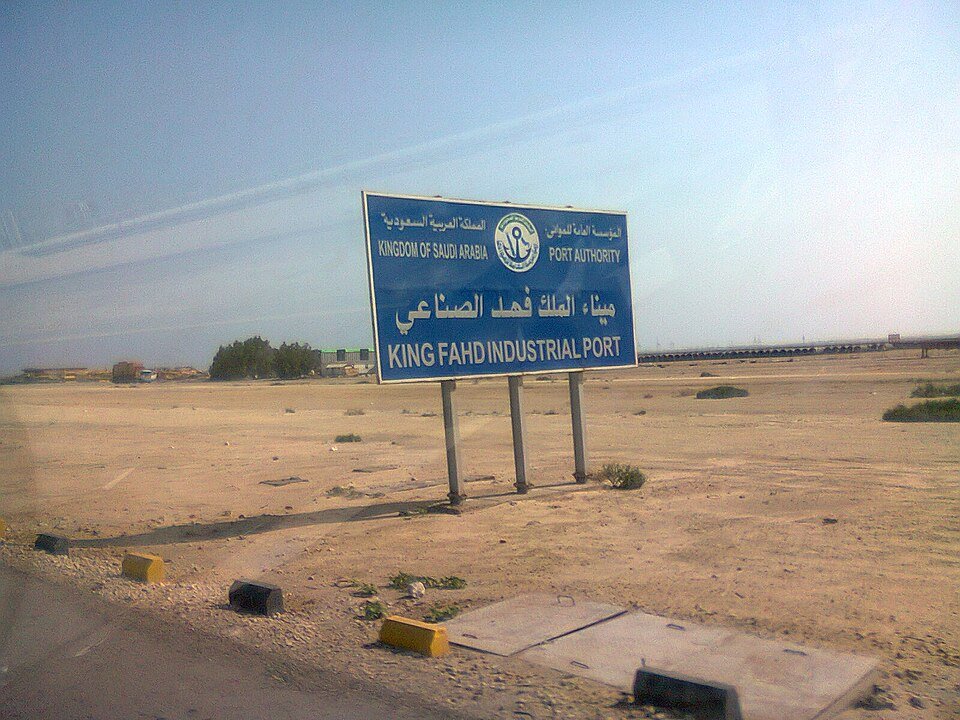
Getting to Yanbu
Yanbu has its own airport, which is the most direct option for business travellers heading straight to the industrial city. Depending on flight availability and the airline network at the time of travel, some visitors instead fly into Madinah or Jeddah and complete the journey to Yanbu by road. Given the distances involved, it is worth confirming current flight routes before booking, since availability into Yanbu’s own airport can vary, and a road transfer from Madinah or Jeddah will add meaningfully to total journey time.
Getting Around Yanbu for Business
As with Jubail, Yanbu Al Sinaiyah is spread across a wide industrial footprint, with plants, contractor offices and accommodation often some distance apart. Visitors attending meetings at more than one facility in a day should expect to need transport booked between each stop, along with realistic allowance for security checks and access procedures at individual plant gates, which can add time that is easy to underestimate when planning a schedule from outside the country.
Planning Visits Across Both Sites
For companies with operations or contracts touching both Jubail and Yanbu, the practical approach is to plan each visit as its own trip, with its own flights and its own local transport arranged in advance. Trying to combine both cities into one continuous itinerary is generally not efficient given the distance between them, and most business travellers will find it far simpler to complete work in one city, return to a base such as Riyadh, Dammam or Jeddah, and then travel out again for the second visit if both are required within a short period.
It is also worth building buffer time into any itinerary touching either city. Industrial site access, security clearance and internal transport within a plant boundary can all add unplanned time to a working day, and arriving with a transfer already booked for the return leg removes one variable from what is often already a tightly scheduled visit.
Booking Reliable Transport for Engineers and Contractors
Whether the destination is Jubail or Yanbu, the practical requirements are similar: a dependable transfer from the airport, transport that can be pre-booked for a full working day rather than arranged on the fly, and a driver who understands the layout of an industrial city where addresses are not always straightforward. For teams making repeat visits, setting these journeys up under a standing arrangement rather than booking fresh each time removes a layer of coordination that otherwise falls on whoever is managing the trip from the office.
Confirm current airport routes and any access requirements for the specific facility you are visiting before travelling, since procedures at individual industrial sites can change and are best verified directly with the host company rather than assumed from a previous visit.
Accommodation and Longer Stays
Business visits to either Jubail or Yanbu often run longer than a single day, particularly for contractors working through a project phase or engineers overseeing a specific stage of construction or maintenance. For multi day or multi week stays, it is worth arranging transport as a standing daily arrangement rather than booking fresh each morning, covering the regular trip between accommodation and the work site plus any additional local journeys that come up during the visit. A driver who becomes familiar with your specific routine, including which entrances you use and what times you typically need to be on site, can save real time over a longer assignment compared with a different driver each day who needs the same instructions repeated.
Companies managing rotational staff between projects in Jubail and Yanbu, or bringing in visiting specialists for short assignments, benefit from setting up transport arrangements in advance of each rotation rather than organising it reactively once someone has already landed. This is particularly useful when flights are booked centrally by an office elsewhere, since local transport can otherwise become an afterthought handled at the last minute.
Safety and Reliability on Industrial Routes
Journeys to and around both Jubail and Yanbu often involve routes used heavily by industrial and heavy goods traffic, which is worth factoring into transport planning. A driver experienced with these specific routes, rather than one only familiar with city centre driving, tends to navigate this kind of traffic more confidently and predictably. For visitors unfamiliar with Saudi Arabia’s industrial regions, this local experience is one of the clearer practical benefits of booking a dedicated transfer rather than a generic taxi.
Related guides
- Dammam and the Eastern Province: A Transport Guide
- Site-Visit Transport for Engineering and Construction Teams in Saudi Arabia