Najran, close to Saudi Arabia’s southern border with Yemen, has a distinct cultural identity shaped by centuries as a South Arabian trading crossroads. Its traditional mud-brick architecture, historic souqs and nearby pre-Islamic archaeological sites set it apart from other Saudi cities, and give visitors a genuinely different heritage experience. This guide covers Najran’s key sights and how to get around a city where much of the appeal lies in its distinctive local character.
Najran sits at something of a distance, both geographically and culturally, from the parts of Saudi Arabia most familiar to international visitors, and that is exactly what makes it worth the effort for travellers interested in the country’s full diversity rather than a single, homogenous version of it. This guide is written to help visitors understand what makes Najran distinctive and how to plan a trip that gets beyond a quick photo stop at its most recognisable landmark.
Najran’s cultural identity
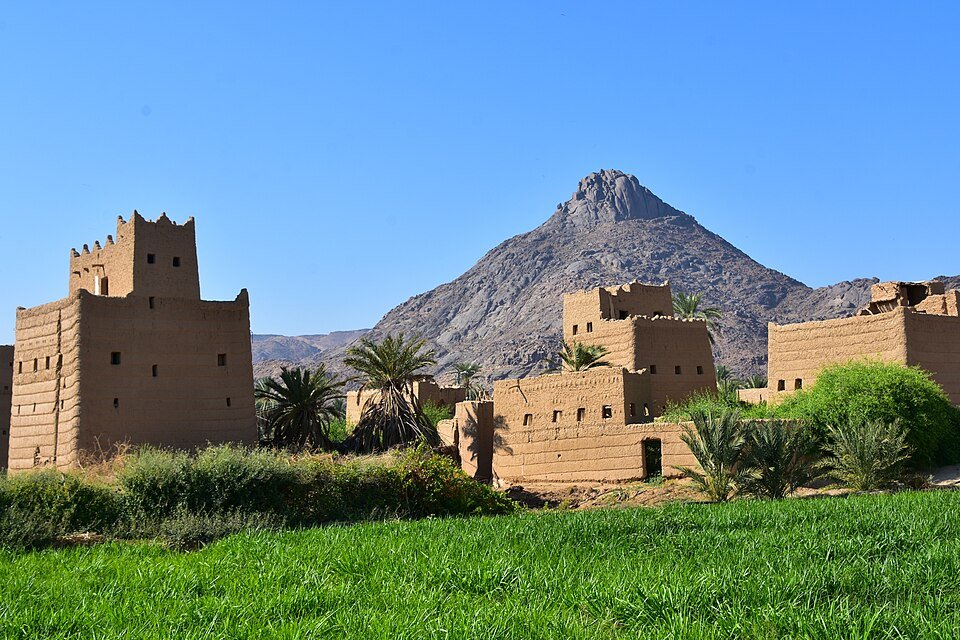
Najran’s architecture, tall mud-brick buildings with distinctive geometric detailing, reflects a building tradition shared with parts of neighbouring Yemen, a reminder of the region’s historic ties across the current border. This style is visible both in restored heritage buildings and in some working residential areas, giving Najran a visual character that is immediately different from the limestone and modern construction typical of much of the rest of the country.
What to see in Najran
Al-Aan Palace
Also known as the Emirate Palace, this mud-brick fort and palace complex is one of Najran’s most recognisable landmarks, a striking example of the region’s traditional architecture and a useful anchor point for orienting a visit to the old city.
The traditional souq
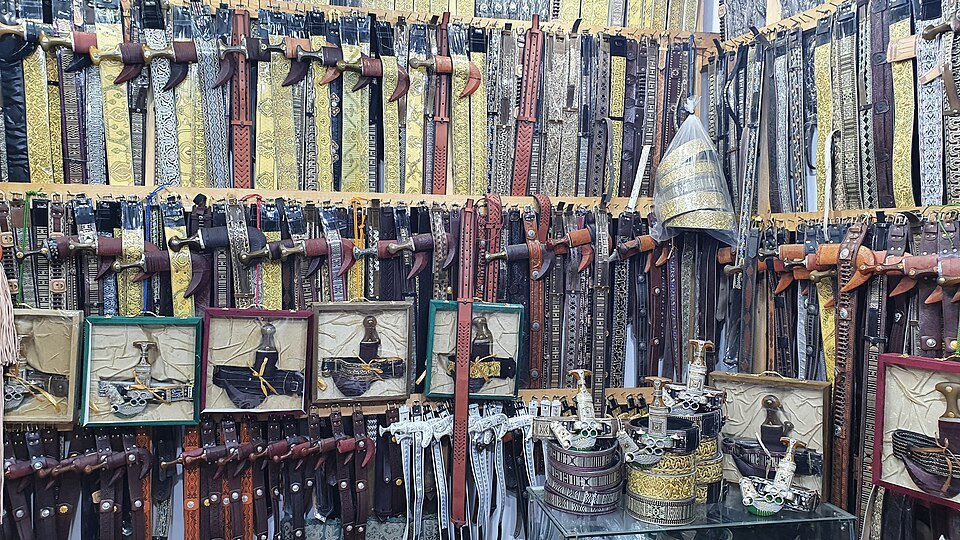
Najran’s markets, including its traditional dagger, or jambiya, souq, offer an insight into local craft traditions that remain part of everyday life in the city, rather than being staged solely for visitors.
Pre-Islamic archaeological sites
The wider Najran area includes the remains of ancient pre-Islamic buildings, including sites such as Qarn al-Zafaran, which point to the region’s long history as a settled trading centre well before the Islamic era. These sites sit outside the city centre and are best visited with some local knowledge of access and current condition.
The edge of the Empty Quarter
Najran also sits close to the western edge of the Rub’ al Khali, the Empty Quarter, one of the largest sand deserts in the world, giving visitors interested in extending their trip into true desert landscape a realistic starting point.
How much time a Najran visit needs
A focused day is enough to see Al-Aan Palace and the main souq, but visitors wanting to also reach the outlying pre-Islamic archaeological sites, and perhaps get a glimpse of the Empty Quarter’s edge, should allow at least two days in the region. Najran rewards a slower pace generally, its heritage sites are not designed for a rushed circuit, and the city’s relative distance from Saudi Arabia’s other major destinations means most visitors are making a deliberate choice to come here, rather than passing through on the way to somewhere else, which is worth reflecting in how much time is allocated to the visit itself.
Getting to Najran
Najran has its own airport with domestic connections, making it a practical direct entry point given the city’s distance from Saudi Arabia’s central and northern regions. Road travel from Abha and the wider Aseer region is also a common route for visitors combining Najran with the country’s southern mountain areas.
Getting around Najran
Najran’s heritage sites, including Al-Aan Palace, the souqs and the outlying archaeological remains, are spread across a wider area than a typical compact old town, and some of the most significant pre-Islamic sites sit outside the urban centre entirely. A private vehicle, ideally with a driver who knows the current condition and access arrangements for these outlying sites, is the most practical way to see Najran properly in a limited time.
Practical visitor tips
- Start at Al-Aan Palace. It is a useful, recognisable anchor point for orienting the rest of a Najran heritage visit.
- Ask locally about archaeological site access. Conditions and access at outlying pre-Islamic sites can vary, so check current status before planning a visit.
- Visit the souq for genuine local craft. Najran’s traditional markets remain part of everyday commerce, not just a tourist attraction.
- Plan for a warm, dry climate. Najran’s proximity to the Empty Quarter means hot, arid conditions for much of the year, so plan outdoor time accordingly.
- Consider pairing with Abha. The wider Aseer region’s mountain scenery is a natural complement to Najran’s heritage and desert edge landscape if your itinerary allows for both.
Najran’s place in the region’s history
Najran’s location, close to the current Yemeni border but historically part of a much broader South Arabian cultural sphere, has given it a layered history stretching back well before the Islamic era. The pre-Islamic ruins found around the city, including sites linked to the ancient South Arabian kingdoms that once controlled trade routes through the region, point to a settled, prosperous history connected to the wider incense and spice trade that passed through southern Arabia. This deep history is part of what makes Najran’s architecture and craft traditions feel distinct even today, a living continuation of building and design traditions shared across a region that trade, rather than modern political borders, once defined.
For visitors, this context adds real depth to what might otherwise look like simply an unusual architectural style. Najran is not a curiosity within Saudi Arabia so much as a genuine cultural bridge, reflecting centuries of connection with the wider Arabian Peninsula’s southern reaches.
Frequently asked questions
What is Najran best known for?
Najran is known for its traditional mud-brick architecture, its South Arabian cultural heritage, and nearby pre-Islamic archaeological sites, giving it a distinct identity within Saudi Arabia.
Can I fly directly into Najran?
Yes. Najran has its own airport with domestic connections, offering a direct route rather than a long overland journey.
Is Najran easy to combine with a trip to Abha or the Aseer region?
Yes, the two regions are connected by road, and a number of visitors combine Najran’s heritage sites with Aseer’s mountain scenery in a single southern Saudi Arabia itinerary.
What visitors often overlook
Because Najran sits so far from Saudi Arabia’s more heavily promoted destinations, it is easy for visitors to treat it purely as a checklist stop, a photograph at Al-Aan Palace and little else. That undersells a city with a genuinely distinctive character, from its architecture to its craft traditions to its position at the edge of one of the world’s great deserts. Travellers who allow enough time to walk through the souq at a relaxed pace, ask questions of local traders, and see the outlying archaeological sites properly, rather than rushing between a handful of landmarks, tend to come away with a far richer sense of what makes Najran worth the journey.
Booking your Najran transport
Saudi Cab Co offers fixed price, professionally driven transfers to and from Najran’s airport, along with vehicles for exploring the city’s heritage sites and outlying archaeological locations. Booking ahead ensures a reliable, well informed route around a city where local knowledge genuinely improves the visitor experience.
Related guides
- Najran Airport Transfer: A Practical Guide to Saudi Arabia’s Southern Gateway
- Abha to Najran: A Road Trip Transport Guide
- Abha and Aseer: A Transport Guide to Saudi Arabia’s Mountain Region
Checked sources
- Visit Saudi, visitsaudi.com
- Saudi Tourism Authority, sta.gov.sa
- GACA, gaca.gov.sa