

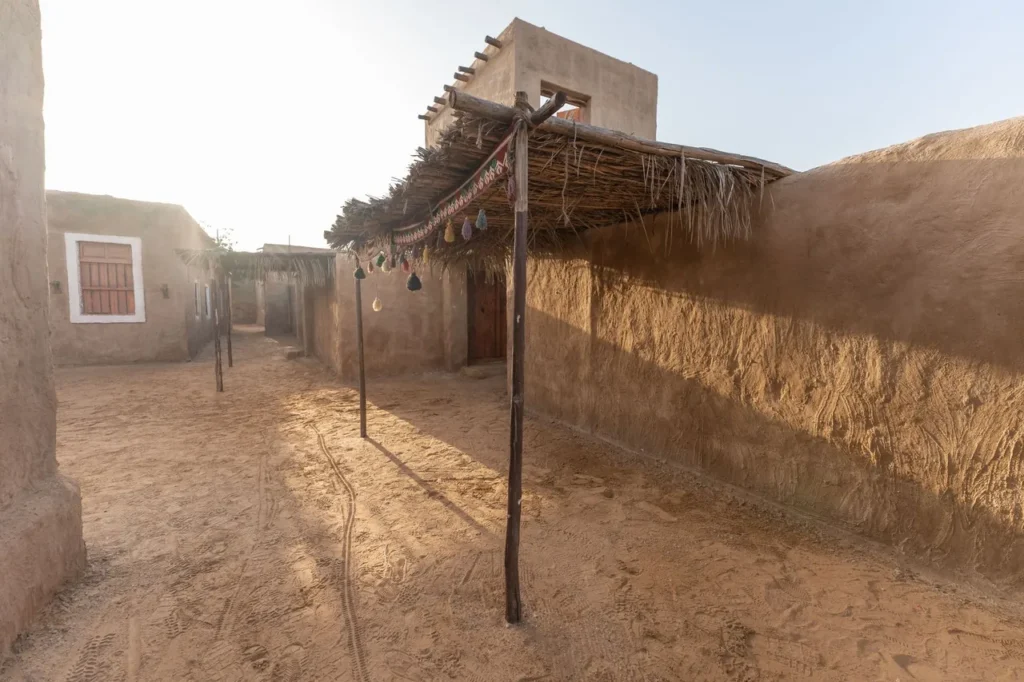
The Saudi 96-hour stopover visa turns a change of planes into a short city break: passengers routed through the Kingdom on Saudia or flynas can enter the country and spend up to four days in Riyadh or Jeddah before flying on. The Saudi Tourism Authority’s Visit Saudi page, updated on 16 September 2026, says the visa itself is free and is requested inside the airline booking. So what can you actually see? In practice, one city done well: the mud-brick ruins of At-Turaif and the restaurants of Bujairi Terrace in Riyadh, or the coral-stone lanes of Al-Balad and the Red Sea waterfront in Jeddah. This guide is about those days on the ground, with the visa terms kept to the essentials.
The Saudi 96-hour stopover visa in brief
According to the Visit Saudi stopover page, the visa allows a single entry, is valid for three months from issue and permits a stay of up to 96 hours. It is free, but there is a small application fee and compulsory medical insurance, both shown on that page with current figures that we do not repeat here. The application is made at the point of booking, up to 90 days before travel, and the visa is emailed once approved. Visit Saudi states that it can be used for a holiday or for business meetings, provided the stop stays within the limit. The same page notes that stopover visitors may drive with an approved international driving licence and that the 930 tourist helpline is available during the stay, although most people on a short break find a booked driver simpler than navigating unfamiliar city roads themselves.
flynas announced its version in a January 2023 media release, describing an online application passed automatically to the Ministry of Foreign Affairs’ unified visa platform. Who qualifies is ultimately decided by the airline’s booking engine: in April 2025 regional press reported nationality restrictions that we could not confirm against an official list, and travellers who already qualified for an e-visa were excluded at launch, according to immigration advisers. If the option does not appear when you book, our e-visa basics for business and leisure visitors describe the usual alternative. We cannot assess individual eligibility.
Stopover visa Riyadh or Jeddah: choosing a city by what you want to see
Often the flight schedule chooses for you. If it does not, think about the kind of break you want. Riyadh is the capital of the central plateau, and its stopover highlights are inland and historical: the first Saudi capital at Diriyah, the museums and palace grounds of the city centre and, for the adventurous, the limestone escarpment beyond the suburbs. Jeddah is a Red Sea port with a merchant past, and its highlights are the old walled quarter and the sea itself.
A rough rule: travellers drawn to architecture and history in a dry, open landscape tend to prefer Riyadh; those who want to wander narrow streets and end the day by the water tend to prefer Jeddah. Both reward a stopover of two nights far more than one, and neither is improved by trying to reach the other on the same visit.
Planning in full days, not in hours
The visa period runs from the moment you are admitted on arrival to the moment you pass departure immigration. Landing late and leaving at dawn several days later gives you full days in between; landing at midday and leaving at night gives you afternoons and evenings instead. Write your stopover out as a list of mornings, afternoons and evenings, cross out the ones lost to arriving, sleeping and departing, and plan only what is left. Then rank the remaining slots: the single thing you would be most disappointed to miss goes into the first full daylight slot, not the last one, because the last one is the most likely to be cut short by an early pick-up or a schedule change.
Season matters as much as the clock. From roughly late October to March, walking Diriyah or Al-Balad in daylight is pleasant. In the summer months both cities are best seen early in the morning and after dark, with air-conditioned museums or a hotel pool filling the middle of the day.
Riyadh, day one: At-Turaif and Bujairi Terrace
Give the first full day to Diriyah. UNESCO describes the At-Turaif District as “the first capital of the Saudi Dynasty”, founded in the 15th century on the edge of the ad-Dir’iyah oasis and inscribed as a World Heritage site in 2010. Its palaces are built in the Najdi style specific to central Arabia, with adobe used in the major complexes, and the UNESCO listing for At-Turaif notes that restoration has followed the original plans and techniques. Many buildings remain ruins, which is part of the atmosphere. UNESCO adds that the citadel became the seat of the House of Saud’s temporal power in the 18th and early 19th centuries, and that the long period of abandonment that followed is what kept the old street plan intact.
The Diriyah official site offers self-led and guided tours, a visitor centre and themed galleries, and asks visitors to buy access passes for At-Turaif and Bujairi Terrace only through its own channels. Opening hours were not displayed when we checked, so confirm them before you set out. Late afternoon into evening is a natural rhythm: tour the ruins as the light softens, then cross to Bujairi Terrace, the restaurant quarter facing At-Turaif, for dinner. Our guide to Diriyah and Riyadh’s heritage sites by private transport covers drop-off points and the approach roads.
Riyadh, day two: the National Museum and the old centre
A second day suits the city centre. The National Museum, which opened in 1999, is part of the King Abdulaziz Historical Centre in the Al-Murabba district, beside al-Murabba Palace. According to Saudipedia, its halls follow human history in the Arabian Peninsula in order, from the Man and Universe hall through the ancient Arab kingdoms to the First and Second Saudi States and the unification of the Kingdom, which fills in the story that Diriyah only hints at. A morning there followed by a long lunch is a sensible pace for a stopover traveller who may still be adjusting to the time zone.
The museum’s opening days and times change with the season and holidays, so check them on the day rather than relying on a guidebook. In the evening, the city’s modern districts come into their own; a dinner reservation in a neighbourhood near your hotel is often a better use of a tired second evening than another long trip across the city.
Riyadh, day three: the escarpment or a slower morning
With a third day, the obvious excursion is the escarpment north-west of the city that visitors call the Edge of the World. It is a genuine desert outing: the final stretch is off-road, it needs a suitable four-wheel-drive vehicle and a licensed operator or experienced driver, and it takes up most of a day. On a stopover, weigh that against the onward flight. If you leave the following night, it can work; if you leave the same evening, it is a risk.
The alternative is to spend the morning revisiting the part of Diriyah you liked best, or to shop for dates and coffee before packing. A stopover that ends unhurried is usually remembered more fondly than one that ends with a race back from the desert.
Jeddah in a day: walking Al-Balad
In Jeddah, start in Al-Balad, the historic district listed by UNESCO in 2014 as Historic Jeddah, the Gate to Makkah. The UNESCO description highlights the tower houses built by merchant families in the late 19th century and decorated with large wooden roshan balconies, surrounded by lower coral-stone houses. The houses had no central courtyard; ground floors were used for trade, and clever ventilation coped with the humid coastal climate.
The souks run from east to west between the sea side of the old town and the Makkah Gate, linked by small squares, and the district once held wakalas and ribats that lodged travellers arriving by sea. UNESCO credits the third caliph, Othman ibn Affan, with making Jeddah the official port of Makkah, and records that the city’s trade flourished again after the Suez Canal opened in 1869 and steamships began linking Europe with India and East Asia. The grand roshan houses you see today date largely from that later boom. Today it is a lived-in neighbourhood, partly restored and partly fragile. Late afternoon into evening, when the shops and cafés open, is the best time to walk it; comfortable shoes matter more than a map.
Jeddah, day two: the Corniche and the Red Sea
A second Jeddah day belongs to the waterfront. The Corniche runs along the coast with promenades, public sculptures and the King Fahd Fountain, and our Jeddah Corniche visitors’ guide explains which stretches suit a walk and which suit a drive. A morning by the sea and a late lunch of grilled fish make a gentle counterpoint to the evening in Al-Balad.
Divers and snorkellers sometimes use a Jeddah stopover for the Red Sea reefs north of the city. If that appeals, choose a licensed operator, check the equipment rules for your onward flight, and remember the general advice to avoid flying soon after a dive; your dive operator will tell you what interval it recommends. For most visitors, though, what to do on a Saudi stopover in Jeddah comes down to the old town at dusk and the sea in the morning.
If your stop falls in summer, swap the order. The Corniche is far more comfortable after sunset than at noon, and many visitors spend the hot middle of the day indoors at the hotel or a mall before heading to the waterfront in the evening and leaving Al-Balad for the following morning, when the lanes are quiet and shaded.
Where do your bags go while you explore?
We could not verify a left-luggage counter at King Khalid International Airport or King Abdulaziz International Airport. The King Khalid International Airport site lists porters, lounges, a clinic and meet-and-greet among its services but no storage, and the Jeddah airport site does not mention one either. Ask at customer service on arrival if you need it, but plan as though it does not exist.
With a hotel, the answer is simple: the hotel keeps the cases between check-out and your evening departure. Without one, a driver hired by the hour keeps them in the vehicle while you walk Al-Balad or tour At-Turaif. Our explanation of how hourly hire with a driver works sets out what that arrangement covers.
Airport to city, and back again on time
The two airport runs are the part of a stopover that cannot slip. On arrival, a pre-booked car with your flight number means the driver follows the aircraft and is waiting whatever the landing time. On departure, the pick-up should be the first thing fixed, set early enough to absorb heavy traffic and a slow check-in, and confirmed the evening before against the live departure time. We do not print road times on this site, because a figure that holds at dawn rarely holds in the evening rush.
Give the driver everything on one message: both flight numbers, the terminal, the hotel address and a phone number that works on a Saudi network or over Wi-Fi messaging. If your arrival is delayed past midnight, the hotel should know too, so that the room is held. These small details are what turn a stopover from a gamble into a plan.
If your stop is a few hours rather than a few days, the question is different: whether to leave the airport at all. Our guide to leaving Jeddah or Riyadh airport during a layover deals with that shorter case.
Read the current travel advice before booking a stopover
As of 13 October 2026, the UK government’s Saudi Arabia travel advice warns British nationals against all but essential trips to Riyadh province, to Jeddah city and to all of the Kingdom’s airports bar the one serving Madinah, and asks them to keep clear of King Khalid International after an incident on 10 October. While that stands, a leisure stopover in either city runs directly against official advice, which can also affect insurance cover. Check your own government’s latest guidance and your airline’s notices before choosing the stopover option.
A fictional three-day Riyadh stopover
Nadia and Tom are invented for this example and are not clients. Flying from Toronto to Nairobi via Riyadh, they accept the stopover offered in their booking, land early on a Thursday and leave late on Saturday night. A driver meets them with their names and flight number; they sleep until lunch. That afternoon they tour At-Turaif with a guide booked on the official Diriyah site, then walk across to Bujairi Terrace for dinner while the driver waits nearby.
Friday is the National Museum, a long lunch and an early night. On Saturday they skip the escarpment, judging it too tight against the evening flight, and spend a slow morning in Diriyah again before packing. Their departure pick-up was confirmed the night before and set earlier than felt necessary. They board relaxed, having seen two sides of Riyadh rather than rushing through four.
A fictional Jeddah evening for a business traveller
Also invented: Aisha, a consultant flying from Kuala Lumpur to London on flynas, adds a one-night Jeddah stopover to meet a client in the north of the city in the late afternoon. Rather than juggling app taxis between her hotel, the meeting and the old town, she books one driver by the hour from hotel check-in onwards. After the meeting she is dropped at the edge of Al-Balad as the cafés open, walks the souks towards the Makkah Gate and is collected at an agreed corner two streets away.
The next morning the same company collects her against the live departure time. The point is not the luxury of a driver but the reduction in hand-offs: on a one-night stop, every change of vehicle is one more place where the plan can fail.
Stopover checklist
- Check that the stopover option appears in the Saudia or flynas booking flow for your route.
- Read the current FCDO or your own government’s advice for Riyadh and Jeddah before selecting it.
- List your usable mornings, afternoons and evenings; plan only those.
- Riyadh: book At-Turaif and Bujairi Terrace passes only on the official Diriyah site.
- Jeddah: walk Al-Balad late in the afternoon and keep the Corniche for a morning.
- Assume no airport left-luggage; use the hotel or a driver on hourly hire.
- Fix the departure pick-up first and confirm it the night before.
- Keep the final day free of desert excursions if you fly out that evening.
Arranging stopover transport with Saudi Cab Co
A good stopover is three things done well: a smooth arrival, a driver for the hours you want to explore and a departure that leaves margin. Send us both flight numbers, your hotel and the places on your list, and we will quote each leg or a full day. Contact Saudi Cab Co to plan your Riyadh or Jeddah stopover. Since onward flights move, note that calling off the booking 48 hours or more before the arrival pick-up returns the full amount, while a later change of plan means the deposit stays with us.
Sources reviewed 15 October 2026: Saudi Tourism Authority Visit Saudi stopover visa page (updated 16 September 2026), flynas media centre stopover visa release (30 January 2023), King Khalid International Airport and King Abdulaziz International Airport websites, Diriyah official site, UNESCO World Heritage Centre (Historic Jeddah; At-Turaif District), Saudipedia (Saudi National Museum), UK FCDO travel advice for Saudi Arabia (updated 13 October 2026). Saudia’s own stopover page could not be reached, so its terms are taken from Visit Saudi, and the 2025 nationality limits reported in the press could not be checked against an official list. Photo: Denys Gromov / Pexels.