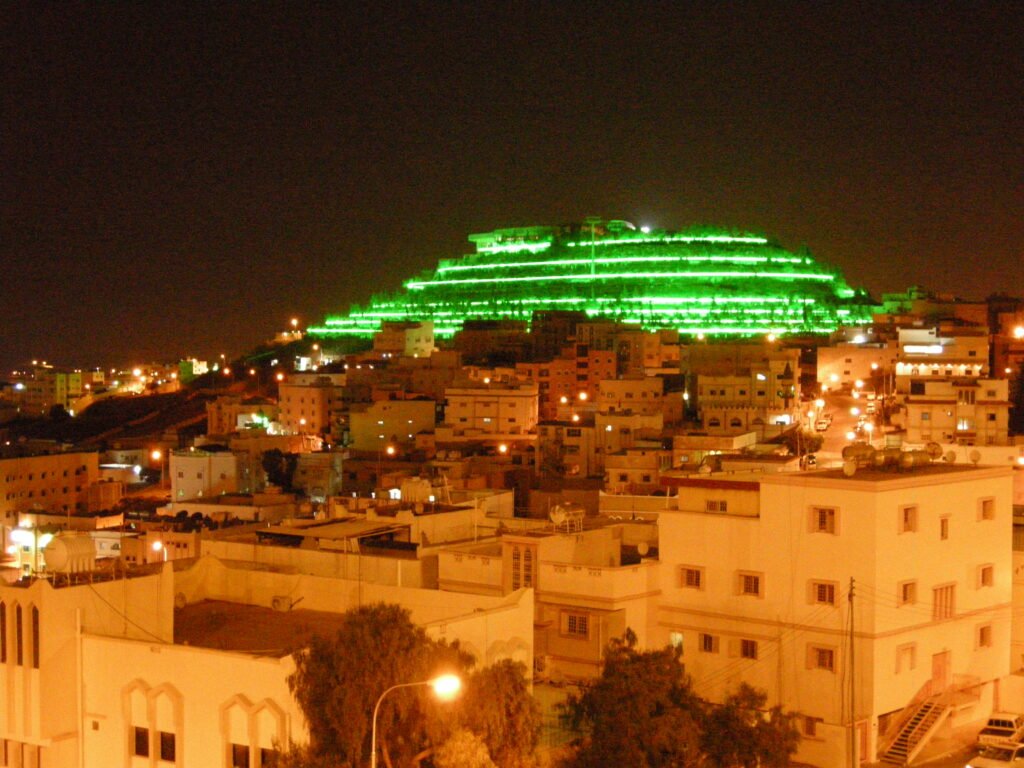
Why the vehicle matters more once you leave the city
Choosing between a sedan and an SUV for an airport run is mostly about luggage space and comfort. Choosing a vehicle for a route into the Asir highlands, the desert plateau around Najd, or the developing roads around NEOM and Tabuk is a different question entirely, because terrain, gradient, and road surface start to matter as much as seating. This guide looks specifically at when an SUV is the right call for desert and mountain routes, and what to check before booking one.

Desert routes: what actually changes
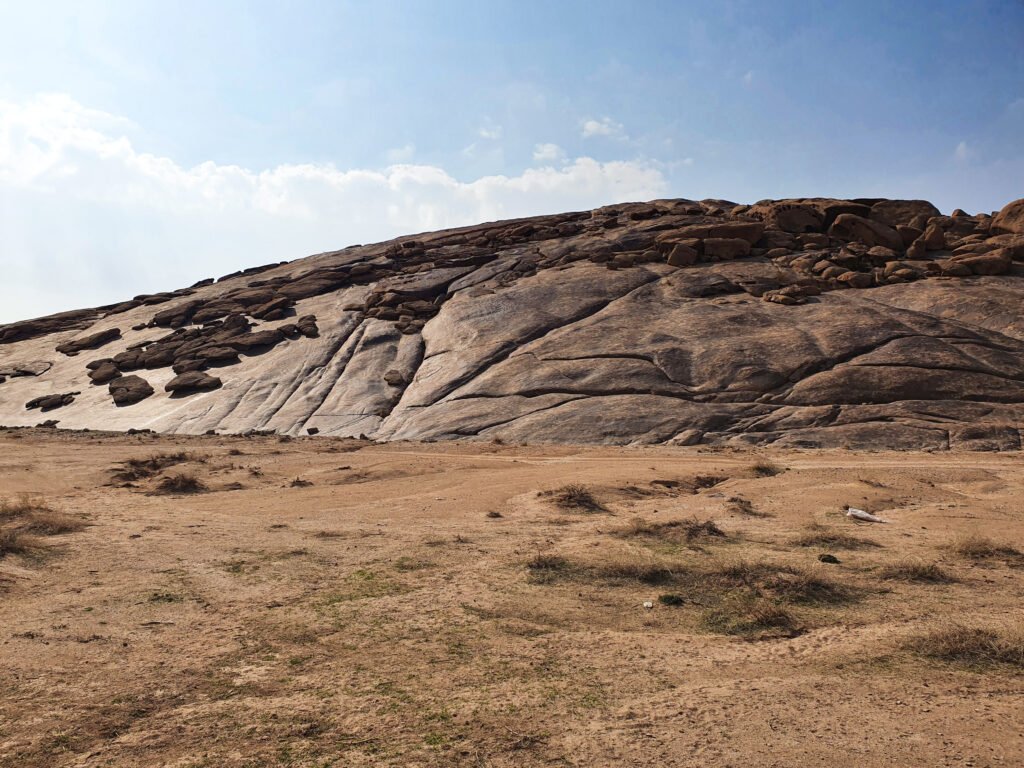
Most of Saudi Arabia’s intercity highways, including the main desert corridors linking Riyadh with the Eastern Province or Qassim, are well maintained dual carriageways. On these roads a standard sedan is perfectly capable. The case for an SUV on desert routes is less about the paved highway and more about what happens at the edges of it: unpaved approach roads to some heritage or natural sites, softer shoulders, and longer stretches between fuel and service stops where higher ground clearance and a larger fuel tank add a margin of safety.
For desert touring that stays on sealed roads throughout, a standard vehicle is usually fine. Where the itinerary includes any unsealed section, even a short one, an SUV with proper ground clearance is the safer default.
Mountain routes: gradient and switchbacks
The road into the Asir highlands from Abha, and the descent toward the Red Sea escarpment, involve steep gradients and continuous switchbacks over a significant change in elevation. This is genuinely different driving to the flat desert corridors further north, and it is where an SUV earns its place.
What to look for in a mountain-route vehicle
- A proven mid-size or full-size SUV rather than a compact crossover, for stability on sustained descents
- Good engine braking performance, since long descents put continuous load on the brakes
- Recent tyre condition, checked before departure rather than assumed
- A driver experienced specifically on mountain roads, not only on highway routes
Fog is a genuine factor on the Asir escarpment at certain times of year, and visibility can drop quickly on the climb. A vehicle with reliable lighting and a driver who knows to slow well ahead of blind bends matters more here than raw horsepower.
SUV or sedan: a simple way to decide
Rather than defaulting to an SUV for every trip outside the main cities, it helps to run through a short checklist:
Choose an SUV when
- The route includes any unsealed or unpaved section
- You are travelling to Abha, Aseer, or another mountain region with sustained gradient
- The trip includes a stop at a natural site reached by a gravel or dirt access road
- You are travelling with bulky equipment, such as photography or outdoor gear, alongside passengers
A standard sedan is usually enough when
- The entire route stays on sealed intercity highway
- You are travelling between major cities such as Riyadh, Jeddah, or Dammam
- The trip is airport to hotel, or a single-city itinerary
Booking the right SUV, not just any SUV
Not every SUV is built the same way, and a soft-road crossover is not the same vehicle as a proper mid-size 4×4. When booking transport for a desert or mountain itinerary, it is worth confirming the exact model and its drivetrain rather than accepting a generic “SUV” label on a quote. A reputable provider will be able to name the vehicle and explain why it suits the specific route, particularly for trips into the Asir region or toward less developed areas near NEOM and Tabuk.
It is also worth asking whether the driver has completed that specific route before. Mountain roads and desert tracks reward local experience in a way that flat city driving does not, and a driver who already knows where the road narrows or where fog tends to settle is a meaningful safety advantage.
Fuel, service stops and distance planning
Desert corridors between major Saudi cities can involve long stretches with limited fuel and service stops, particularly on routes heading toward less developed areas near the northern and eastern edges of the country. An SUV’s larger fuel tank gives a genuine margin on these routes, but it is not a substitute for planning: confirming the location of service stops along a route before departure, and building rest breaks into a long desert drive, matters more than the vehicle type alone.
For any route that runs through sparsely populated desert, it is worth asking your transport provider how familiar the driver is with fuel stop locations along that specific corridor, rather than assuming every route has the same level of infrastructure as the main Riyadh to Jeddah or Riyadh to Dammam highways.
Why local driver experience matters as much as the vehicle
A capable SUV with an inexperienced driver is not automatically safer than a standard vehicle with a driver who knows the route well. On mountain roads especially, local knowledge of where visibility drops, where livestock or pedestrians are more likely to be present, and where the road surface changes is a genuine safety factor that no vehicle specification can replace. When booking transport for a desert or mountain itinerary, it is worth asking directly how many times the assigned driver has covered that specific route, rather than assuming any commercially licensed driver is equally prepared for it.
This is particularly relevant for one-off touring itineraries into less frequently visited areas, where a driver’s day to day experience is more likely to be on standard city or highway routes. A provider that can match an experienced route-specific driver to a mountain or desert booking is offering a meaningfully safer service than one that simply allocates whichever SUV and driver happen to be available.
Packing and preparation for a highland or desert trip
Beyond the vehicle itself, a little preparation makes any desert or mountain journey more comfortable. Layered clothing is worth packing for a highland trip, since temperatures in Abha and the wider Asir region can be noticeably cooler than the lowland cities, particularly in the early morning and evening. For desert routes, carrying water beyond what feels necessary is a sensible habit, and confirming with your driver that the vehicle carries a basic emergency kit is a reasonable question to ask before a longer journey away from major towns.
None of this is about expecting something to go wrong. It reflects the same sensible planning that applies to any long distance road trip through varied terrain, and it pairs naturally with choosing the right vehicle in the first place.
A note on rental versus pre-booked SUVs
Everything above applies whether the SUV is self-driven or arrives with a professional driver. For a visitor unfamiliar with mountain or desert driving specifically, a pre-booked SUV with an experienced local driver removes the single biggest variable in the whole equation, which is driving skill on unfamiliar terrain under genuinely different conditions to flat highway driving. A self-drive SUV suits a confident, experienced driver who wants full control of the itinerary. A pre-booked SUV with a driver suits almost everyone else, and is generally the safer default for a first visit to Saudi Arabia’s mountain or desert regions.
Related guides
- Abha and Aseer: A Transport Guide to Saudi Arabia’s Mountain Region
- Choosing the right vehicle: sedan, SUV or van for your Saudi Arabia trip
- Planning a day trip to AlUla: transport options explained