Reviewed planning guidance. Details can change; use the linked official sources and get a live quote for current pricing and availability.
If you’ve typed “Riyadh to Jeddah” into a map and watched the estimate come back at nine or ten hours, you’ve already found the answer to whether you should drive this route for a business trip. In almost every case, you shouldn’t. The two cities sit on opposite sides of the country, and the sensible way to move between them is by air, with a car handling the short legs at each end. This guide sets out why, what the flight looks like at a high level, and how to plan the road parts of the journey properly so they don’t undo the time you saved by flying.
How far apart Riyadh and Jeddah actually are
By road, Riyadh and Jeddah are separated by roughly 950 kilometres, cutting across the centre of the Arabian Peninsula from the interior plateau down to the Red Sea coast. Depending on the exact route, road conditions, and how many stops you make, the drive takes somewhere in the range of 9 to 11 hours of actual driving time, before you add fuel stops, meal breaks, or any rest. That’s a genuinely long intercity drive by most standards, closer in scale to crossing a mid-sized country than nipping between two nearby cities.
For context, that’s a similar order of distance to driving from London to the south of France, or from one end of Texas to the other. It’s not a trip most people do casually, and it’s rarely something a business traveller should be doing on a tight schedule.
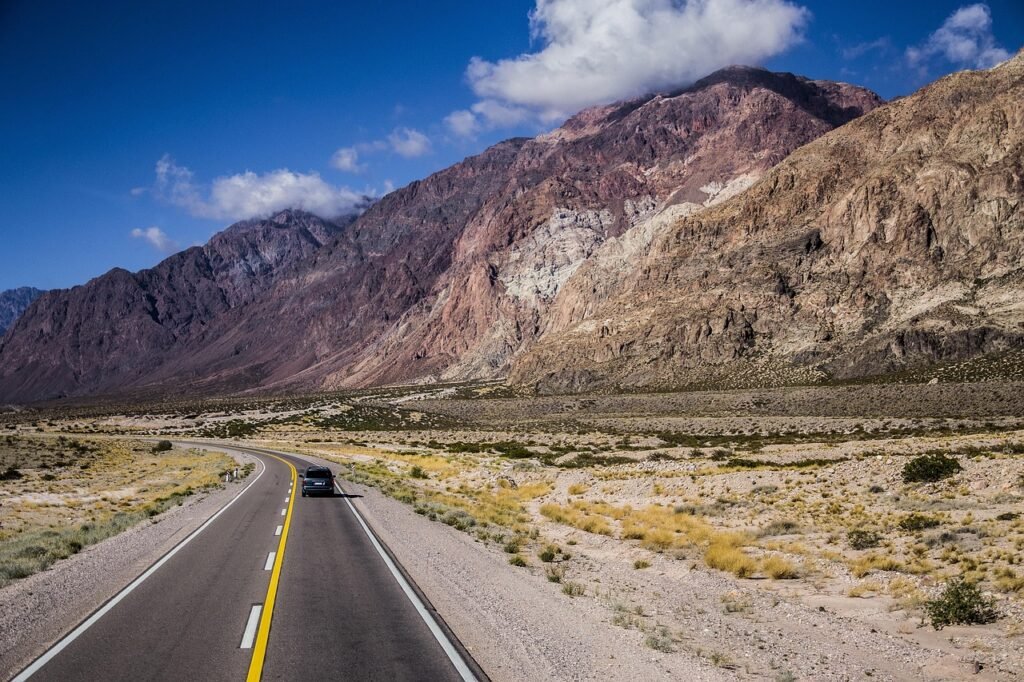
The route itself runs largely along Highway 40, cutting west from Riyadh across the Najd plateau before descending through the Sarawat mountains toward the Tihama coastal plain and Jeddah. It passes near Taif, and the descent from the highlands down to the coast is one of the more dramatic stretches of driving in the country, with a marked change in elevation, temperature and landscape over a fairly short distance. That’s part of what makes the drive appealing to people doing it for its own sake. It’s also part of why it takes as long as it does, since mountain sections naturally slow a journey that’s already long by any measure.
Flying versus driving: an honest comparison
For business travel specifically, flying is the practical choice on this route, and it isn’t close. A domestic flight between Riyadh and Jeddah takes a little over an hour in the air. Even after adding time for check-in, security, boarding and the transfer at each end, you’re looking at a total door-to-door journey of a few hours rather than the better part of a working day. If you have a meeting in Jeddah at midday and one in Riyadh the next morning, flying makes that itinerary realistic. Driving generally doesn’t, unless you’re prepared to lose an entire day to the road in each direction.
Driving does have a place, just not usually for business travel between these two specific cities. It suits people who want to see the country properly, since the route passes through a genuinely varied stretch of Saudi Arabia’s interior and its own version of a coast-to-plateau transition. It also suits anyone with cargo, equipment or specific logistics needs that don’t fit neatly into checked luggage or airfreight, where a dedicated vehicle covering the whole distance is simply more practical than flying and then separately arranging ground transport for goods. And it’s worth doing if you have several days built into a trip specifically for road travel and want the flexibility to stop where you like. What it doesn’t suit is a business traveller trying to fit two cities into a short trip, where every hour on the road is an hour not spent in a meeting, at a hotel, or catching up on the work that justified the trip in the first place.
If your itinerary has any flexibility at all, it’s worth checking flight options first and building the trip around a short domestic flight rather than assuming a hire car or a long private transfer is the default. It rarely is, for this particular route.
What the domestic flight route looks like
Riyadh and Jeddah are connected by frequent domestic flights, reflecting how much business, government and family travel moves between the two cities day to day. Riyadh is served by King Khalid International Airport, and Jeddah by King Abdulaziz International Airport, both major hubs with modern terminal facilities and the kind of frequency you’d expect on a route connecting a country’s political capital with its principal commercial and Red Sea gateway city. Multiple daily departures run in both directions, which gives business travellers real flexibility to build an itinerary around meeting times rather than working around a limited timetable.
We won’t quote specific flight times, schedules or fares here, since these change regularly and vary by airline, booking window and season. For current options, check directly with the airlines serving the route or your usual travel booking channel. What’s worth knowing at a planning stage is simply that the route is well served, domestic flying within Saudi Arabia is a mainstream and normal way to travel, and the constraint on your itinerary is far more likely to be your own schedule than a shortage of available flights.
For general Saudi travel planning, visitsaudi.com is a useful starting point for orientation on the country’s regions and transport options, and the General Authority of Civil Aviation (GACA) is the relevant regulatory body overseeing airports and aviation standards in the Kingdom.
Why the road transport that matters is at each end, not the middle
This is really the core point of this guide. For a Riyadh-Jeddah business trip, the part of the journey worth planning carefully isn’t the 950 kilometres between the cities, since that’s handled by the flight. It’s the two much shorter legs either side of it: from your Riyadh location to King Khalid International Airport, and from King Abdulaziz International Airport to wherever you’re headed in Jeddah, then the same again in reverse if you’re doing a round trip.
These legs are short by comparison, generally 30 to 45 minutes depending on where in each city you’re starting or finishing, but they’re also where a well-planned trip tends to go wrong. A missed pickup, an unfamiliar driver who doesn’t know which terminal you’re arriving into, or a ride-hailing app struggling with demand during a busy period can turn a one-hour flight advantage into a stressful scramble that eats into the time you saved by not driving the whole route. If you’ve built a tight schedule around a short domestic flight specifically to fit more into your trip, the airport transfers at each end need to be as reliable as the flight itself, not an afterthought you sort out on arrival.
Booking both airport legs with one provider
There’s a straightforward case for booking your Riyadh and Jeddah airport transfers through the same provider rather than treating them as two separate, unrelated bookings. A consistent provider means a single point of contact if your flight time shifts, one booking to adjust rather than two, and drivers on both ends who are tracking your actual flight rather than working from a fixed pickup time that doesn’t account for a delay. It also means you’re not relying on your judgement about local ride-hailing availability in two different cities you may not know equally well, particularly if Jeddah is less familiar to you than Riyadh, or the other way round.
For a same-day connection, where you’re flying in and heading straight to a meeting, or flying out after a full day of work, this matters more than it might for a more relaxed trip. A pre-booked driver waiting at arrivals, with your flight already tracked, removes one more variable from a schedule that’s already tight by design. It’s a small piece of planning, but it’s the piece that determines whether the time advantage of flying actually holds up once you’re on the ground.
Planning a same-day or overnight Riyadh-Jeddah trip
For a same-day round trip, the logistics are tighter but genuinely workable. A typical pattern is an early flight out, a transfer straight to your first meeting, a working day in the second city, and an evening flight back, with your return transfer booked to match. It’s a long day, but it’s a realistic one, and it’s precisely the kind of itinerary that a 9 to 11 hour road journey would make impossible.
If your trip runs overnight, the planning is more forgiving. You still want both transfers booked in advance, but you have more flexibility around timing, and less risk of a delay cascading into a missed meeting the same day. Either way, the practical advice is the same: settle your flight times first, then book both ground transfers to match, rather than leaving airport transport as something to sort out after you land.

Time zones, weather and when the drive is more or less sensible
Riyadh and Jeddah sit in the same time zone, so there’s no jet lag or scheduling adjustment to think about either way, which is one less variable than a lot of long-haul business trips involve. Weather is a bigger factor for anyone considering the drive. Summer temperatures across the central and western regions regularly climb well above 40 degrees Celsius, and a breakdown or delay on a long desert stretch in that heat is a genuinely serious problem, not just an inconvenience. If you are driving the full route rather than flying, cooler months make for a considerably more comfortable and lower-risk journey, and it’s worth checking your vehicle’s condition, tyres and air conditioning properly before setting off regardless of season.
None of this affects the flying option, which is why it remains the more resilient choice for a business trip on a schedule. A short domestic flight isn’t meaningfully affected by the kind of heat that turns a ten-hour drive into a genuine endurance exercise.
What affects the cost of your airport transfers
Pricing for the Riyadh and Jeddah airport legs depends mainly on vehicle type, distance from your specific pickup or drop-off point, and timing. A standard sedan for one or two passengers costs less than an SUV or a larger vehicle for a group, and late-night or very early transfers, along with pickups during major conferences or events, tend to sit toward the higher end of what any provider quotes, since demand is higher across the board at those times. We won’t list a fixed figure here, since it depends on your exact route and dates and would be out of date almost as soon as it was published. The more useful step is getting a quote for your specific trip through the booking form, so the price you see is the price you pay, agreed before you land rather than negotiated after.
What to consider if you do decide to drive
If your trip genuinely calls for driving the full Riyadh-Jeddah route, whether for logistics reasons, cargo, or simply wanting to see more of the country, a few practical points are worth factoring in. The distance means fuel stops and a proper break roughly halfway are sensible rather than optional, particularly given the length of some stretches between major towns along the way. Driving overnight reduces heat and traffic but adds fatigue risk over a journey this long, so plan rest accordingly rather than pushing straight through. And if the drive is one leg of a larger trip rather than the whole point of it, it’s worth weighing whether the time cost against a roughly hour-long flight is actually worth it for what you gain, especially if there’s a business commitment waiting at the other end.
None of this changes the core recommendation for business travel. Driving the full route is a choice for a specific kind of trip, not a default, and for most people moving between Riyadh and Jeddah for work, it isn’t the right one.
Frequently asked questions
How far is it from Riyadh to Jeddah by road?
Approximately 950 kilometres. Drive time is roughly 9 to 11 hours depending on route, stops and conditions, which makes it a genuinely long intercity journey rather than a quick hop.
Should I drive or fly between Riyadh and Jeddah for business?
For business travel, flying is generally the practical choice. The flight itself takes a little over an hour, and even with airport time and transfers added, the total journey is far shorter than the 9 to 11 hour drive. Driving suits leisure travellers wanting to see the country, or trips with specific cargo or logistics needs, rather than a standard business itinerary.
Is there a train between Riyadh and Jeddah?
Saudi Arabia’s main intercity passenger rail network, including the Haramain High Speed Railway, connects Makkah, Madinah, Jeddah and other western cities, but Riyadh sits outside that particular network. For Riyadh-Jeddah specifically, domestic flying is the standard fast option; check current options directly with rail and airline providers before you travel.
How long does the airport transfer take at each end?
Generally 30 to 45 minutes from central Riyadh to King Khalid International Airport, and a similar range from King Abdulaziz International Airport into central Jeddah, depending on exactly where you’re starting or finishing and the time of day.
Can I book my Riyadh and Jeddah airport transfers together?
Yes, and it’s usually the more straightforward option for a two-city trip. Booking both legs with one provider means a single point of contact if your flight times change, and drivers on both ends tracking your actual flight rather than a fixed pickup slot.
What if my flight is delayed and it affects my ground transfer?
If your transfer provider is tracking your flight, the pickup should adjust automatically. It’s still worth notifying them directly for a significant delay, particularly if it affects a tight onward meeting or crosses into a driver shift change.
Checked sources
Official information for your planning
Transport, airport, visa and visitor arrangements can change. These official sources are provided so you can check the current position for your journey. Checked 2026-07-25.
If you’re travelling between Riyadh and Jeddah for business, the flight will handle the distance. Book your airport transfers at both ends with Saudi Cab Co and we’ll have a driver tracking your flight in each city, so the ground transport matches the pace of the trip rather than slowing it down. Get a fixed-price quote for your dates through our booking form.