

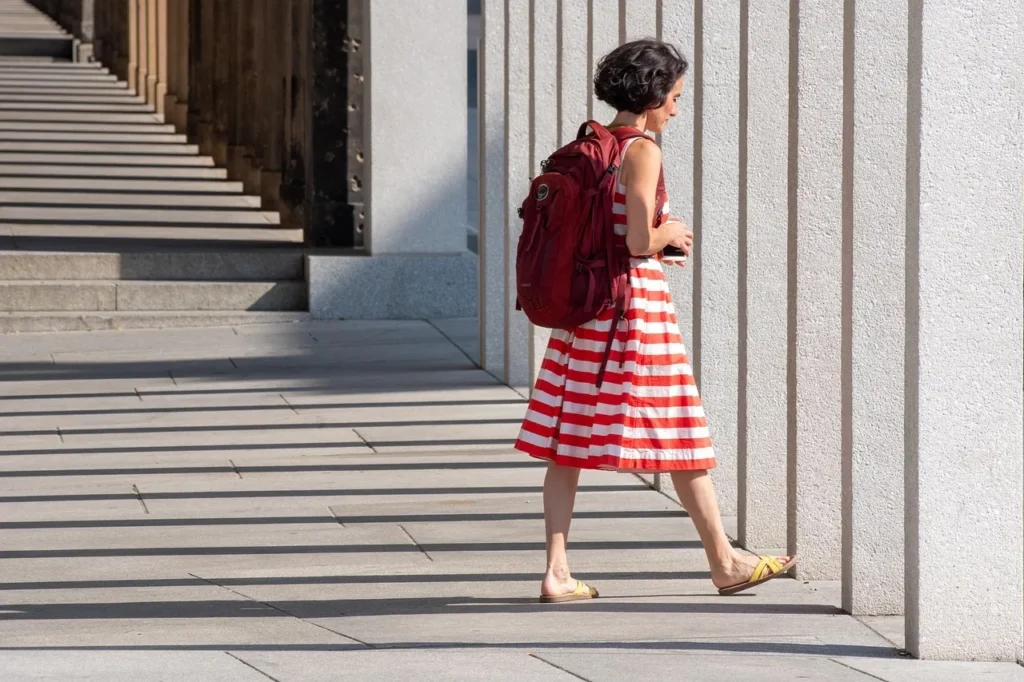
Can women travel alone to Saudi Arabia? Yes. A woman can apply for a Saudi tourist eVisa in her own name, enter and leave the country without a male relative, book a hotel room on her own, hire a driver, and move between cities as she pleases. Solo female travel in Saudi Arabia has been legally straightforward since the tourist visa opened in 2019, and the official rules on dress are looser than most first-time visitors expect. What remains is a conservative society with firm laws on public conduct, a few practical habits worth adopting, and, at the time of writing, a heightened security advisory that every traveller should read before booking. This guide covers each of those in turn, with the facts drawn from government sources rather than travel folklore.
Start with the advisory. In the version dated 13 October 2026, Britain’s foreign office warned against all but essential trips to the very places a first solo itinerary usually begins, Riyadh and Jeddah among them, and to every airport except Madinah’s, because of missile and drone activity in the region. Those warnings may be lifted or tightened before you travel. Read the live FCDO Saudi Arabia page and your own government’s equivalent, and remember that travel against official advice commonly invalidates insurance.
Do women need a male guardian or sponsor to visit Saudi Arabia?
No. The US State Department’s country information page puts it plainly: “non-Saudi women can enter and exit the country without restrictions, regardless of marital status.” The guardianship rules that visitors sometimes read about apply to Saudi citizens and to foreign women married to Saudi nationals, who the FCDO notes need an exit permit from their husband to leave. A tourist on her own passport and her own visa is outside that system entirely.
The official eVisa platform at visa.visitsaudi.com lists eligibility by nationality, currently covering 68 countries, and describes the visa as “a one-year, multiple entry visa, allowing tourists to spend up to 90 days in the country”. It attaches no condition relating to gender, marital status or an accompanying relative. Saudi Cab Co’s guide to Saudi eVisa basics walks through the application itself.
Which visa should a solo female traveller use?
For a British passport holder, the FCDO’s entry requirements page describes three routes. The tourist eVisa is valid for 365 days with multiple entries and a total of 90 days in the country, can be applied for online or on arrival at an international airport, and includes health insurance cover up to 100,000 Saudi riyals. An electronic travel authorisation covers tourism and several other purposes over a longer validity, and an electronic visa waiver allows a single longer stay without included insurance. Your passport needs at least six months’ validity from the date you arrive.
Choose on trip length and insurance rather than on gender, because none of the routes treats women differently. Whatever you choose, carry a copy of your passport and visa with you at all times; the FCDO warns that being unable to show identification can lead to a fine or worse, and a photocopy or a photo on your phone is the sensible way to meet the rule without risking the passport itself.
What do women actually have to wear?
Less than the stereotype. The FCDO’s safety and security page makes clear that neither an abaya nor a head covering is compulsory for women visitors. What is expected, of men as well as women, is loose clothing that covers the elbows and extends below the knees, with nothing tight-fitting and no slogans or images that could be read as profane or political. The State Department’s wording is similar: cover shoulders and knees, even though an abaya and headscarf are not required.
In practice many solo travellers pack one lightweight abaya anyway, because it is the easiest way to be appropriately dressed everywhere from a souq to a smart restaurant, and a loose scarf is useful for mosque visits where head covering is expected. Linen trousers, long skirts, long-sleeved tunics and loose maxi dresses all work. The 2019 public decency regulation, which the State Department mentions in the context of dress, makes “indecent” clothing and clothing with offensive images or slogans a fineable offence, so the rule is real rather than merely social; the company’s practical dress code guide goes through it season by season.
Can a woman check into a hotel alone, or share a room with a partner?
A woman can check into a hotel on her own on a tourist visa; there is no requirement in the official British or American guidance for a male relative or a letter of permission. On sharing, the FCDO is explicit that “unmarried tourists may share hotel rooms”, and the State Department confirms that unmarried foreign couples are allowed to share, while noting that Saudi citizens and dual nationals may be asked for proof of marriage. Both governments also note that sex outside marriage is illegal for everyone, including tourists, which is the legal backdrop to the hotel rule rather than a contradiction of it.
The ordinary common sense of solo travel applies: choose a hotel in a well-lit, central district, ask reception not to announce your room number aloud, and use the hotel’s own transport desk or a pre-booked driver for late returns rather than negotiating with a stranger at the kerb. None of this is Saudi-specific, but a traveller who is new to the Gulf sometimes forgets the basics while concentrating on the unfamiliar rules.
Is Saudi Arabia safe for a woman on her own?
On crime, the official picture is reassuring but not blank. The FCDO describes the crime rate as low with some petty crime, and adds that “more serious crimes, including crimes against women” do occur, advising care when travelling outside towns and cities. The State Department’s general crime advice includes the line “don’t travel alone, if possible”, a precaution it attaches to many countries, and it flags the possibility of harassment linked to dress. The same page explains how to report a sexual assault and how the embassy can help. Read both pages in full rather than relying on this summary.
The bigger day-to-day safety risk, for any visitor, is the road. The FCDO describes driving standards as poor with a high number of serious accidents and advises wearing a seatbelt and sticking to main roads; the State Department advises against driving at night outside the main cities. For a solo woman the lesson is simple: let someone else drive, choose that someone carefully, and keep night-time intercity road travel to a minimum. The emergency number for an ambulance is 911, as the FCDO’s health page notes, and the same page reminds travellers that some UK prescription medicines are controlled in Saudi Arabia and should travel with a doctor’s letter.
Getting around: transport for solo female travel in Saudi Arabia
Three options cover almost every leisure itinerary. In Riyadh the metro is new and air-conditioned and reaches many of the sights on a tourist’s list. Ride-hailing apps work in the big cities and let you see the driver’s name, photo and plate before you get in, which is the minimum a solo traveller should insist on; the company’s comparison of taxi apps in Saudi Arabia covers how they differ. For airport arrivals, day trips, late evenings and anything outside the cities, a pre-booked private driver removes the uncertainty of finding transport on the spot.
Whichever you use, apply the same check every time: match the driver’s name and the vehicle’s plate to your booking before you open the door, sit in the back, and share your live location with someone at home for longer journeys. Saudi Cab Co’s note on checking a driver’s ID and registration describes what a legitimate licensed driver should be able to show you.
Can you request a female driver in Saudi Arabia?
Women drive in Saudi Arabia, and some ride-hailing platforms and private chauffeur companies in the main cities employ female drivers. The honest answer on availability for a specific booking is “sometimes”. Saudi Cab Co’s own guide to female-friendly and family-verified driver options describes a female-friendly booking as one where a female driver is “requested and confirmed in advance, where available”, and is candid that availability varies by city and time of day, with early booking advised outside the largest cities.
Where a female driver cannot be confirmed, the alternative is a standard booking with the procedures that matter most to a woman travelling alone: driver name, photo and vehicle details sent before pickup, an identity check at the kerb, and a company that will tell you in advance if a request cannot be met rather than leaving you to discover it on the pavement. Put the request in writing on the booking note and ask for it to be confirmed before you travel; if it cannot be, you still have time to decide whether to accept a standard driver or adjust the timing.
A fictional solo trip: four days in Riyadh and Diriyah
Consider a fictional traveller, invented for this article and not a real customer: a 34-year-old graphic designer from Leeds taking her first trip to the Gulf alone, with a tourist eVisa approved online and a hotel booked in central Riyadh. Her flight lands late in the evening. She has pre-booked a pickup with her flight number on the booking, has the driver’s name and plate on her phone before she clears passport control, and matches both before getting in. She wears loose trousers, a long tunic and a scarf around her shoulders, and nobody looks twice.
Over the following days she uses the metro to reach the National Museum and the Boulevard districts, a ride-hailing app for a dinner in a converted courtyard restaurant where the tables are mixed and the staff are used to solo diners, and a pre-booked driver for a half-day in Diriyah, the mud-brick birthplace of the Saudi state on the western edge of the city, asking him to wait while she walks the site rather than hunting for a return ride. The one awkward moment comes at a café when she raises her phone to photograph the room and a waiter politely asks her not to include other customers; she remembers that photographing people without permission is a listed public decency offence and takes the picture of the ceiling instead.
Where do solo women travellers tend to go?
Saudi Arabia’s leisure map has a handful of anchors that suit independent travel. Riyadh offers Diriyah, the museums and the Boulevard entertainment districts, with the metro threading them together. Jeddah has the Red Sea Corniche and the coral-stone houses of Al-Balad, the historic quarter inscribed as a UNESCO World Heritage Site. AlUla, in the north-west, is the country’s showpiece for the kind of visitor who travels for landscape and archaeology: the Nabataean tombs of Hegra, canyon drives and a growing calendar of arts and music events, most of which require pre-booked tours or shuttles rather than independent wandering.
Two cautions. Hegra and most AlUla sites are visited on timed tickets with official transport, so check the current booking rules on the destination’s own site before you build a day around them. And desert excursions anywhere in the country, including the popular Edge of the World escarpment outside Riyadh, should be done with a licensed operator or driver on a route they know, in daylight, with water and a charged phone; the FCDO’s advice to stay on main roads and travel in convoy in remote areas exists because the terrain is unforgiving.
What should a woman expect socially?
Day to day, the experience most solo women report is of being left alone, treated with formal courtesy, and occasionally asked, with genuine curiosity, why they came. Some restaurants still have family sections and single-men sections, and a woman on her own is seated in the family section as a matter of course. Some men will not offer a handshake to a woman; wait and mirror what is offered, and a hand on the heart or a verbal greeting is a warm and complete substitute. Staring exists but is rarely followed by anything; if it is, moving to a staffed, public, well-lit space and involving staff resolves almost every situation.
Public displays of affection, swearing, rude gestures and loud music are all flagged by the FCDO as behaviour to avoid, and sexual harassment in public is itself a listed public decency offence that police and tourism personnel can fine. Alcohol is not available to tourists and must not be brought into the country; drinking or being drunk in public is illegal. Social media deserves a thought before you fly: both the FCDO and the State Department warn that comments on the royal family, the government, religion or regional politics, including old posts made outside Saudi Arabia, can be taken into account.
A fictional change of plan on the coast
A second fictional traveller, again invented and not a real customer: a retired teacher from Bristol with three nights in Jeddah, who had planned to take a ride-hailing car back from an evening concert on the Corniche. The event finishes later than advertised, the apps show long waits, and the pavement outside is crowded. Because she had left a note on her hotel’s transport desk earlier in the day with the venue and an approximate end time, a quick message secures a pre-booked car from a known company instead. She waits inside the venue, in the light, until the driver messages that he has arrived and sends his plate; she checks it against the message, and gets in.
The point of the story is not that the apps are unsafe, but that having a second, pre-arranged option for the end of a late evening is the single most useful habit a solo traveller can carry into any city, and that in Saudi Arabia it spares you a long wait on a dark pavement.
Solo female traveller checklist for Saudi Arabia
- Read the live FCDO and State Department advice before booking; check it again before you fly.
- Apply for the eVisa in your own name; no sponsor, guardian or male companion is needed.
- Pack loose clothing covering elbows and knees, one lightweight abaya and a scarf for mosques.
- Carry a copy of your passport and visa at all times.
- Match driver name and plate to your booking before every journey; sit in the back; share your location.
- Request a female driver in writing where you want one and ask for confirmation before travel.
- Keep a pre-booked fallback for late evenings and all airport arrivals.
- Do not photograph people without permission; avoid government and security sites entirely.
- Leave alcohol and controlled medicines without paperwork at home; review old social media posts.
- Save 911 for emergencies and your embassy’s number for anything else.
Female traveller tips for Saudi Arabia: how Saudi Cab Co fits in
Most of the advice above comes down to one principle: remove uncertainty at the moments when a woman on her own is most exposed, which are arrivals, late nights and remote roads. Saudi Cab Co sends driver and vehicle details before pickup, accepts written requests for a female driver and confirms in advance whether one is available for your dates, and shows the quote in the booking tool rather than running a meter. Should the advice change and you cancel 48 hours or more before pickup, your money is returned in full; inside that point the deposit is kept. If you are planning a first solo trip and want to talk through airport pickups, a day in Diriyah or AlUla, or a late return from the Corniche, contact Saudi Cab Co.
Sources reviewed 15 October 2026: GOV.UK advice for women travelling abroad and its Saudi Arabia pages on warnings, safety, entry rules and health; US State Department Saudi Arabia country information page; Saudi Unified National Visa platform (visa.visitsaudi.com) including its Public Decorum charter; Library of Congress Global Legal Monitor summary of the 2019 Public Decency Regulation. Official advice reflects the position on the review date and the heightened security warnings quoted may change; site-specific booking rules for AlUla were not independently verified. Photo: wal_172619 / Pixabay.